


Pull to refresh
Logo
OpenAI publishes internal loss scores and proposes industry-wide training limits

OpenAI publishes internal loss scores and proposes industry-wide training limits

Rule Changes

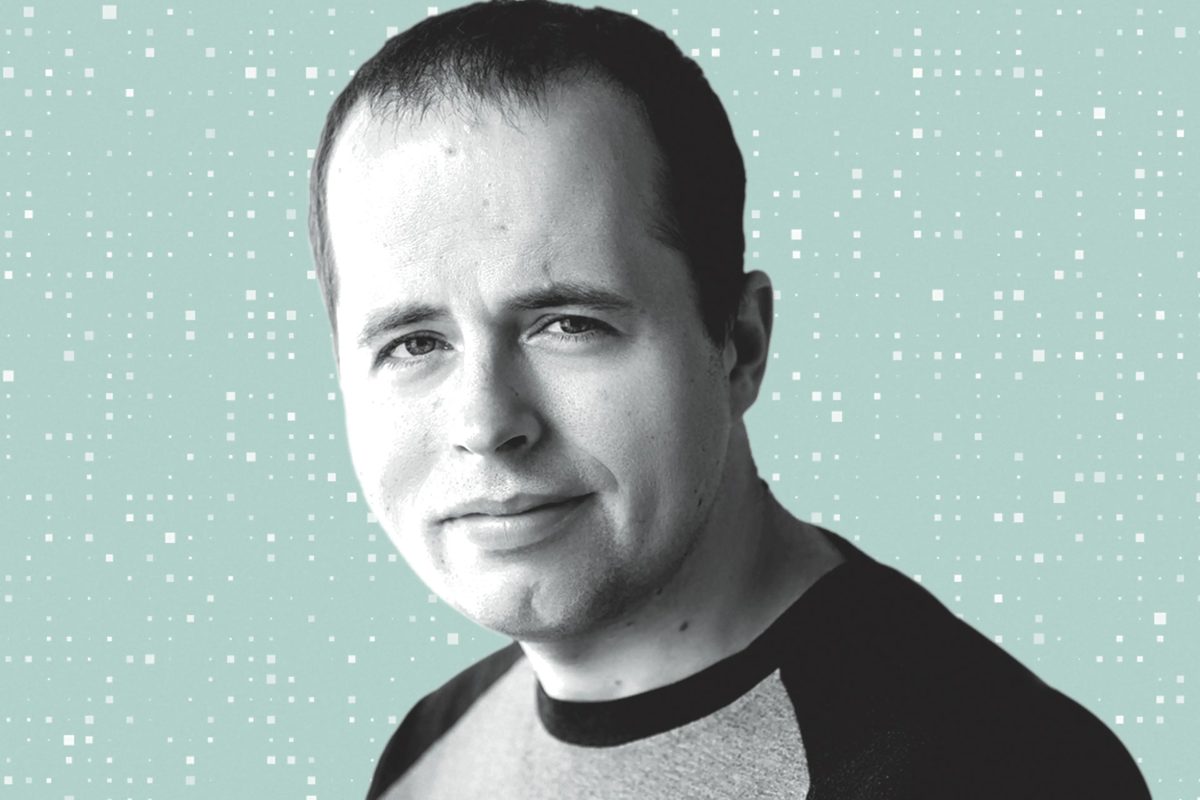
Chief scientist Jakub Pachocki wants perplexity as a shared yardstick. He named no cap, no dataset others can check, and no enforcer.

Overview

Updated 39 minutes ago

OpenAI has judged its own models by one number for years: how well they guess the next chunk of text in data held back from training. Lower is better. On November 22, the company published those numbers for the first time, running from about 0.99 for GPT-3.5 down to 0.732 for a model it has not released. Chief scientist Jakub Pachocki says the slide tracks every capability jump the company has shipped, from fluent chat to solving open math problems.

Pachocki wants rival labs to report the same score and to agree on common limits they would not cross until monitoring catches up. He set no number and named no body to check compliance. OpenAI's figures come from its own private code dataset, so no outside lab can compare them directly with its own models, a gap the post itself lists as the first obstacle.

Why it matters

If labs adopt a shared loss threshold, frontier training could pause at a fixed line. Without one, the metric is a single company's chart.

Questions about this story

Free account needed to ask — your question is kept and asked for you right after sign-up. Answers are public.

No questions yet — be the first to ask.

Key Indicators

0.732
Lowest published log-perplexity
Score for an unreleased internal OpenAI model, the best figure the company disclosed.
0.68–0.7
Projected next capability window
Range Pachocki expects to bring further capabilities, without saying which.
0.99
GPT-3.5 log-perplexity
The model behind the original ChatGPT, and the starting point of the published series.
0.91
GPT-4 log-perplexity
Score at which OpenAI says chain-of-thought reasoning became usable.
0.761
Astra model log-perplexity
Labeled 'solved a Millennium Prize math problem' in a chart described by Neural Daily.

Voices

Curated perspectives — historical figures and your fellow readers.

Sign up to generate historical perspectives on this story.

People Involved

Organizations Involved

Timeline

2 events Latest: Today
  1. OpenAI publishes pretraining loss figures and proposes limits

    Today Statement

    Pachocki's post links falling log-perplexity to new capabilities and calls for joint limits.

  2. Amodei publishes 'pace the frontier' plan

    Today Statement

    Calls on major labs to agree safety standards and limits on the rate of progress.

Scenarios

1

Rival labs publish loss on a shared public test set

Possible Resolves by Q2 2027

Discussed by: OpenAI's post and the LessWrong discussion that followed it, including responses from Yo Shavit, Boaz Barak and Joshua Achiam

The proposal's own list of problems starts with comparability: different labs use different datasets, so their scores cannot be lined up. The fix would be a single named public evaluation set that several labs report against. That is the least ambitious version of Pachocki's idea, and the one that would make a joint cap meaningful later. It requires rivals to disclose numbers they currently keep private.

2

Frontier labs agree a numeric cap on pretraining loss

Unlikely Resolves by End of 2027

Discussed by: OpenAI's proposal; Anthropic's rival 'pace the frontier' plan

Pachocki asks for a first limit that labs commit not to cross until monitoring improves, such as a successor to chain-of-thought monitors. He does not say whether 0.68 to 0.7 on his dataset is the candidate, and he does not say who would verify compliance. A real agreement would need both: a threshold and an auditor. Anthropic's plan calls for limits on the rate of progress, which is a different variable and a different negotiation.

3

Perplexity stays an OpenAI-only disclosure

Possible Resolves by End of 2027

Discussed by: Advance Intelligence, which noted the post sets no cap and names no enforcer

OpenAI disclosed its scores and asked others to follow. If no rival does, the number becomes a marketing chart rather than an industry standard, and the safety argument attached to it loses its cross-lab function. The post's release of proprietary figures would then have bought goodwill and little else.

Historical Context

3 moments from history that rhyme with this story — and how they unfolded.

February 1975

Asilomar conference on recombinant DNA (1975)

Scientists who had just learned to splice DNA had already called a voluntary moratorium on certain experiments in 1974. They met at Asilomar in February 1975 to write containment rules for themselves, before any government had regulated the field.

Then

The guidelines were voluntary and applied unevenly across institutions.

Now

The National Institutes of Health issued binding rules in 1976, and the episode became the reference case for researchers proposing limits ahead of regulators.

Why this matters now

Pachocki's proposal has the same shape: a researcher asking peers to accept limits before anyone imposes them, with no enforcement mechanism in the document itself.

July 1988

Basel I capital accord (1988)

Central bank governors from the Group of Ten countries agreed that internationally active banks should hold capital equal to at least 8% of their risk-weighted assets. Every country then wrote the rule into its own books.

Then

Banks shifted holdings toward the assets the shared formula scored as low-risk.

Now

Comparability stayed contested for decades, because each country weighted risk differently and competitors argued over the definitions behind the single number.

Why this matters now

It shows what happens when competitors adopt one metric: the fight moves to how the metric is measured, which is exactly where OpenAI's private dataset leaves the perplexity proposal.

September 1987

Montreal Protocol on ozone-depleting substances (1987)

Countries agreed to halve production of chlorofluorocarbons, measured in a common unit of ozone-depleting potential, with scientific reviews scheduled in advance.

Then

The phase-out schedules tightened as cheaper substitutes reached the market.

Now

The treaty's pairing of a shared measurement with a fixed schedule and outside review became a template for later environmental agreements.

Why this matters now

It is the closest working example of a measurable cap with independent verification, the two pieces Pachocki's proposal leaves open.

Sources

(9)