


Pull to refresh
Logo
Backflip AI turns 2D drawings and phone photos into editable 3D CAD models

Backflip AI turns 2D drawings and phone photos into editable 3D CAD models

New Capabilities

New tool cuts reverse-engineering cost from $1,500 to $10 a part

Yesterday: Backflip launches Drawing to CAD and Photo to CAD

Overview

Updated 1 hour ago

A machine part breaks on a factory line, and the only documentation is a 2D engineering drawing from the 1980s. Rebuilding it in 3D by hand costs about $1,500 and takes two to three days.

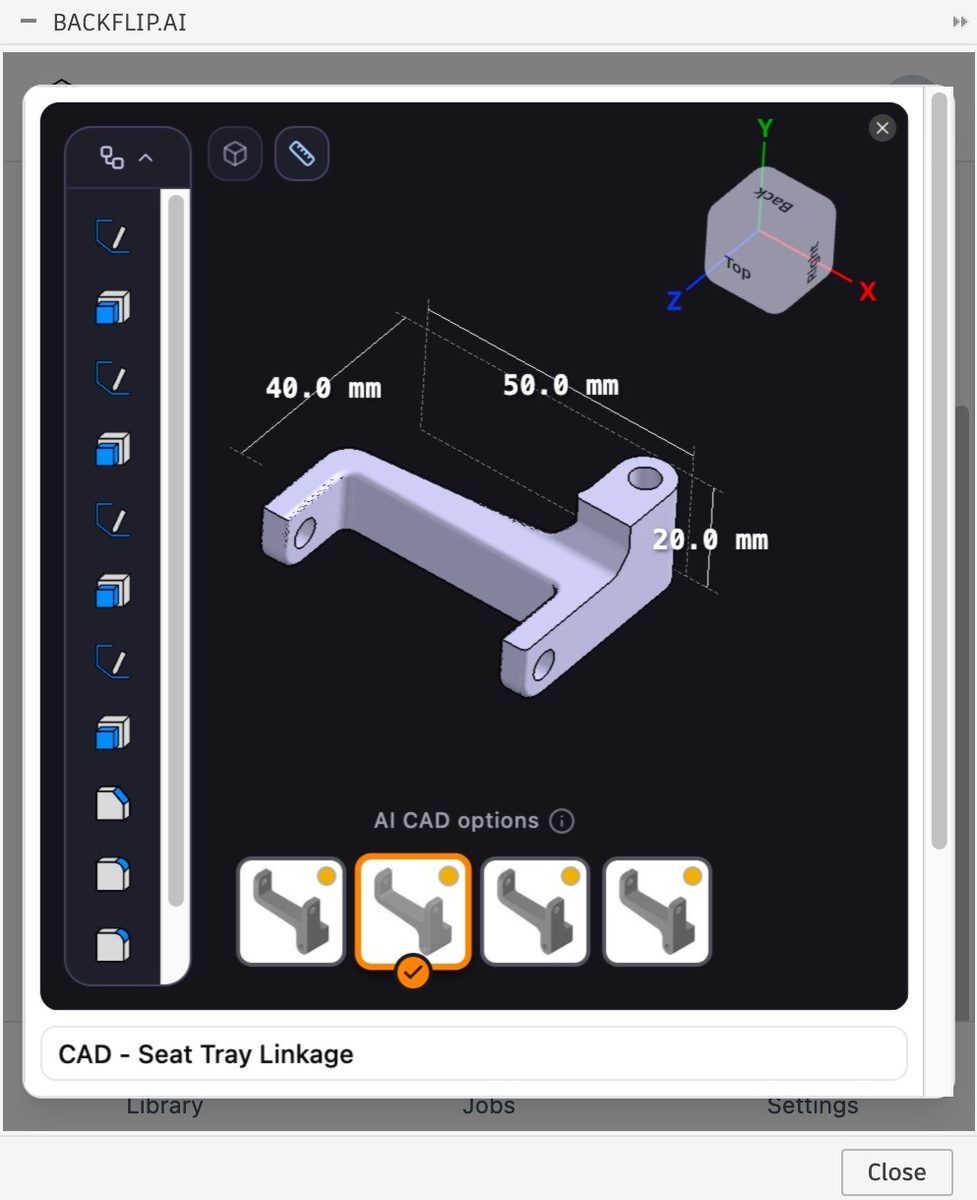
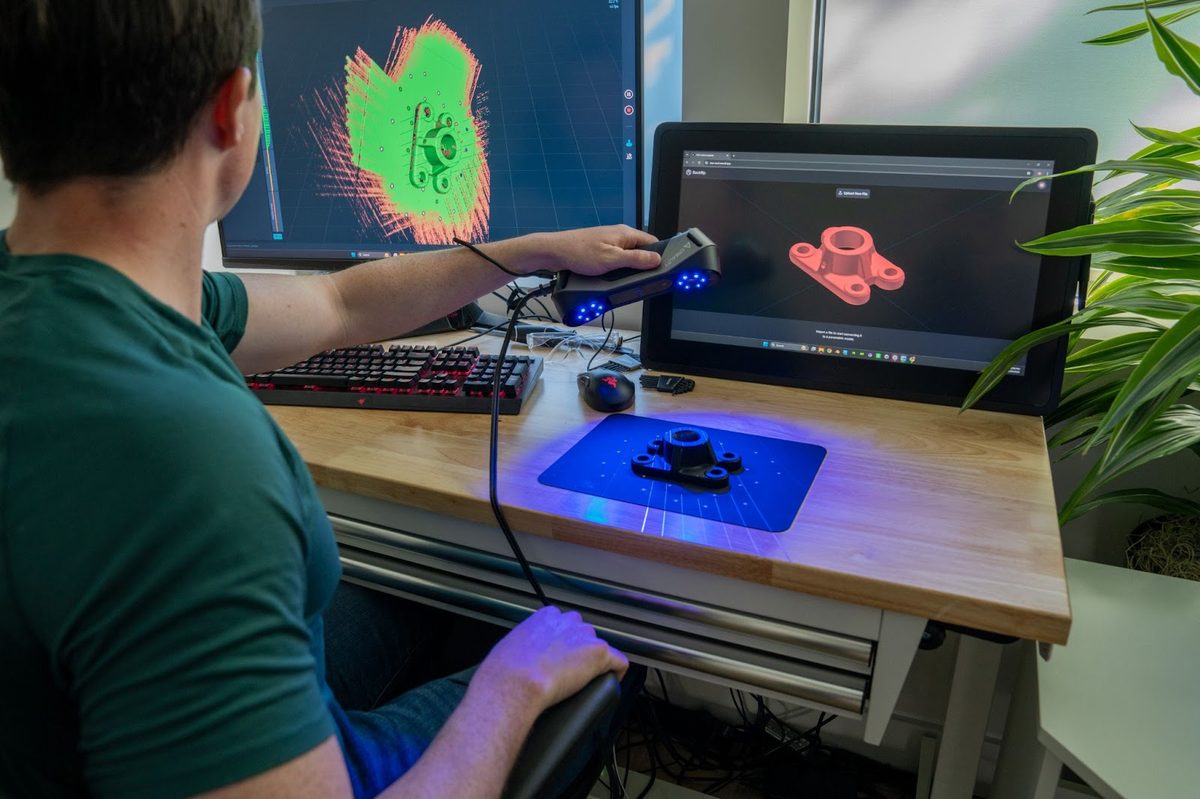
Backflip AI launched a tool that does the same job in five to thirty minutes for about $10. Its Drawing to CAD tool reads the views and dimensions on a 2D drawing and builds a parametric model with an editable feature tree in computer-aided design (CAD) software. A companion tool, Photo to CAD, reconstructs parts from three to six smartphone photos and one known dimension.

The economics flip a factory's incentive. At $10 a part, digitizing an entire spare-parts archive becomes practical, rather than a scramble when a production line goes down. Backflip's chief executive says most plants hold 3D CAD for less than 1% of their equipment.

Why it matters

At $10 a part, factories can digitize entire spare-parts libraries, cutting repair downtime from days to minutes when a line breaks.

Questions about this story

Free account needed to ask — your question is kept and asked for you right after sign-up. Answers are public.

No questions yet — be the first to ask.

Key Indicators

$10
Cost per part conversion
Backflip's AI reconstructs a part model for about $10, versus roughly $1,500 for manual reverse engineering.
$1,500
Traditional reverse-engineering cost
A manual rebuild of a single part runs about $1,500 and takes two to three days.
5–30 min
Time per conversion
Reconstruction completes in five to thirty minutes depending on part complexity.
4
Free conversions per account
Backflip's web app gives free accounts four reconstructions; paid plans start at $20 per month.
<1%
Plant equipment with 3D CAD
Backflip CEO Greg Mark's estimate of how little legacy factory equipment is documented in CAD.

Voices

Curated perspectives — historical figures and your fellow readers.

Ever wondered what historical figures would say about today's headlines?

Sign up to generate historical perspectives on this story.

People Involved

Organizations Involved

Timeline

December 2024 September 2026

3 events Latest: Yesterday
  1. Backflip launches Drawing to CAD and Photo to CAD

    Latest Product launch

    At Autodesk University, Backflip unveils tools that turn 2D engineering drawings or smartphone photos into parametric 3D CAD models, live in Autodesk Fusion.

  2. AI copilot for CAD goes general availability

    Product launch

    Backflip's second-generation model converts 3D scans and STL files into parametric CAD with editable feature trees.

  3. Backflip releases first foundation model

    Product launch

    Backflip debuts a model converting text, drawings, and photos into printable 3D models.

Scenarios

1

Backflip Drawing-to-CAD spreads across manufacturing

Possible Resolves by Sep 18, 2027

Discussed by: Company's own announcements and press materials citing early automotive deployment

The cost drop from $1,500 to $10 per part makes proactive archive digitization economic. Plants scan spares shelves and paper drawing vaults into CAD before parts break. The unnamed automotive manufacturer already using Backflip expands from half to nearly all of its parts, and other large manufacturers follow with public case studies.

2

Independent tests find accuracy limits on complex parts

Possible Resolves by Mar 18, 2027

Discussed by: Filament Feed's cautious launch coverage and analysts noting drawing ambiguities

Engineering drawings carry tolerances, notes, and views that sometimes disagree. Independent benchmarks on complex or heavily annotated drawings may reveal errors requiring manual rework. Engineers already treating Backflip output as a strong first draft would keep verifying critical features manually, slowing adoption for load-bearing parts.

3

Major CAD vendor acquires Backflip

Uncertain Resolves by Sep 18, 2028

Discussed by: Depth of the Autodesk integration and typical CAD-industry consolidation patterns

Backflip's Fusion integration is deep, and Autodesk has history absorbing AI and manufacturing startups. A rival such as PTC, Siemens, or Dassault Systèmes could also buy the company to match the capability in-house. Backers NEA and Andreessen Horowitz would need a return, and acquisition is a standard exit in this market.

Historical Context

2 moments from history that rhyme with this story — and how they unfolded.

December 1982

AutoCAD 1.0 (1982)

Autodesk released AutoCAD 1.0, putting engineering drawing tools on personal computers. Before that, drawings lived on paper in drafting rooms. The software let engineers create, edit, and store drawings digitally.

Then

Drafting work migrated to computers over the following decade as CAD became standard.

Now

Digital drawings replaced paper, but the models stayed 2D and the knowledge stayed locked in views and dimensions.

Why this matters now

AutoCAD digitized the drawings; Backflip now reads those drawings and rebuilds the geometry as editable 3D models. It's the second step of the same digitization.

1990s–2000s

OCR document digitization (1990s–2000s)

As optical character recognition matured, organizations could convert scanned documents into searchable, editable text for pennies a page. Libraries, banks, and government agencies digitized entire paper archives.

Then

Paper records became searchable digital assets, transforming how institutions stored and retrieved documents.

Now

Digitization became a baseline expectation across industries, and the technology spread far beyond its early adopters.

Why this matters now

Backflip frames itself as doing for physical parts what OCR did for documents: turning static, hard-to-reuse records into editable digital assets at a price that makes bulk conversion practical.

Sources

(8)