

Pull to refresh
Logo
Landlord sues Groupon founder over shuttered WNDR museum

Landlord sues Groupon founder over shuttered WNDR museum

Money Moves Boston, MA local

Abbey Lafayette accuses WNDR of moving exhibits to shield assets from creditors

Today: Landlord files $2.8M lawsuit

Overview

Updated 54 minutes ago

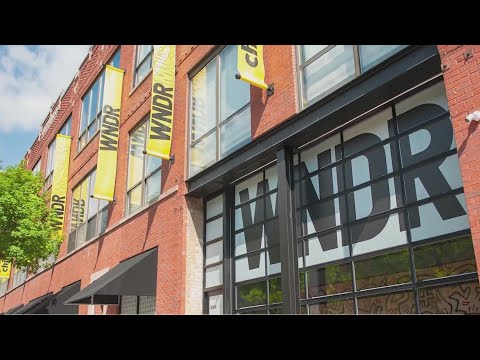
WNDR, the interactive art museum in Boston's Downtown Crossing, closed abruptly this summer after skipping two rent payments. Its landlord, Abbey Lafayette, filed suit Sept. 18 in Suffolk Superior Court seeking at least $2.8 million in back rent, taxes, and damages.

The suit names WNDR owner Bradley Keywell, the Groupon co-founder, and accuses him of removing exhibits including a Yayoi Kusama installation to keep them from creditors. Abbey Lafayette says it drew down a $400,000 letter of credit to cover the missed payments, with nearly a year left on the 5.5-year lease.

Why it matters

The case tests whether a museum founder's personal wealth is reachable when his company's lease goes bad.

Questions about this story

Free account needed to ask — your question is kept and asked for you right after sign-up. Answers are public.

No questions yet — be the first to ask.

Key Indicators

$2.8M
Damages sought
Back rent, taxes, operating expenses, and damages claimed by Abbey Lafayette in the lawsuit. Amount could grow with interest and fees.
$93,911.08
July 1 rent bill
Monthly rent, taxes, and operating-expense bill WNDR failed to pay on July 1, triggering default.
$400K
Letter of credit
Security deposit WNDR posted with Bank of America when signing the lease; Abbey Lafayette has already drawn it down.
5.5 years
Lease term
Length of WNDR's lease at Lafayette City Center; nearly a year remained when it closed.

Voices

Curated perspectives — historical figures and your fellow readers.

Ever wondered what historical figures would say about today's headlines?

Sign up to generate historical perspectives on this story.

People Involved

Organizations Involved

Timeline

January 2022 September 2026

5 events Latest: Today
Tap a bar to jump to that date
  1. WNDR Boston closes abruptly

    Closure

    WNDR shuts its Downtown Crossing doors after skipping two rent payments, removing exhibits such as Yayoi Kusama's 'Let's Survive Forever'.

  2. WNDR misses second rent bill

    Financial

    A slightly smaller rent bill goes unpaid, leaving two consecutive months of missed obligations.

  3. WNDR misses July rent payment

    Financial

    WNDR fails to pay its $93,911.08 monthly rent, taxes, and operating-expenses bill while facing shutdown.

  4. WNDR signs Boston lease

    Contract

    WNDR commits to Lafayette City Center space with a 5.5-year lease and $400,000 letter of credit.

Scenarios

1

WNDR settles with Abbey Lafayette before trial

Likely Resolves by Sep 18, 2027

Discussed by: Boston Business Journal; commercial real estate analysts; Suffolk Superior Court docket watchers

Most commercial lease disputes in Massachusetts settle before trial, especially when a defendant like Keywell has substantial personal wealth. The parties could agree on a confidential settlement in the low seven figures, trading a drawn-out courtroom fight for certainty. Abbey Lafayette has already drawn the $400,000 letter of credit, so the incremental settlement would resolve the gap between that security and what the landlord says it's owed.

2

Court awards Abbey Lafayette full judgment against WNDR and Keywell

Possible Resolves by Q1 2028

Discussed by: Sherin & Lodgen real estate practice; Boston landlord-side attorneys

If the lease contains the standard liquidated-damages or rent-acceleration provisions, and if the court finds Keywell personally orchestrated the exhibit removals, Abbey Lafayette could secure a judgment for the full $2.8 million plus interest and attorneys' fees. A judgment against Keywell personally would be a major escalation because his Groupon-derived wealth is far beyond WNDR's corporate assets. The key issue is whether the lease language survives Massachusetts' strict common-law requirements for post-termination damages, which the Supreme Judicial Court tightened in the Hudson River case.

3

WNDR entity is judgment-proof; landlord recovers little

Unlikely Resolves by Sep 18, 2028

Discussed by: Bankruptcy lawyers; turnaround specialists

If the entity that signed the lease is a stripped-down LLC with no assets, and if Keywell isn't personally liable under the lease or for fraudulent transfer, Abbey Lafayette could win a judgment it can't collect. Keywell's WNDR entity could file for bankruptcy protection, in which case the landlord becomes an unsecured creditor alongside others. This scenario is a worst-case for the landlord: high legal costs, a drawn-out bankruptcy, and pennies on the dollar recovery. The $400,000 letter of credit would be the only meaningful recovery.

Historical Context

3 moments from history that rhyme with this story — and how they unfolded.

April 2013

275 Washington Street Corp. v. Hudson River Int'l (2013)

Massachusetts' Supreme Judicial Court ruled that a landlord could not recover post-termination damages from a defaulting tenant because the lease's indemnification clause didn't set a date to measure damages. The court said the amount wasn't due until the original lease term ended.

Then

The landlord was left with virtually no remedy and had to wait until the original lease term expired to determine damages.

Now

The decision pushed Massachusetts commercial landlords to draft detailed liquidated-damages and rent-acceleration clauses rather than relying on bare indemnification language.

Why this matters now

Abbey Lafayette's recovery in the WNDR case may hinge on the exact language in its lease. If it relied on an indemnification clause without a fixed damages date, it could face the same problem the landlord in Hudson River faced.

February 2021

Caffe Nero v. UMNV (2021)

A Suffolk Superior Court judge ruled that Caffe Nero's obligation to pay rent at its Newbury Street Boston location was discharged under the doctrine of frustration of purpose. COVID-19 restrictions had barred the cafe from offering on-premises consumption, making the lease's purpose impossible.

Then

Caffe Nero avoided paying the landlord's claim for rent and liquidated damages for the remainder of its 15-year lease.

Now

The ruling set a precedent that pandemic-era restrictions could excuse commercial tenants from rent obligations, and it emboldened tenants in subsequent disputes.

Why this matters now

The case shows Massachusetts courts have been willing to side with tenants when the business purpose of a lease is destroyed. WNDR can't claim pandemic frustration here, but the precedent shows courts scrutinize lease language and enforce strict requirements on landlords.

2024-2026

Faneuil Hall tenant evictions and landlord lawsuits (2024-2026)

J. Safra Real Estate, which took over management of Faneuil Hall Marketplace in 2024, sued seven current or former tenants for more than $2 million in alleged unpaid rent. The lawsuits came amid a broader struggle to fill vacancies at the historic marketplace.

Then

Most of the sued businesses left Faneuil Hall, leaving the marketplace with a growing number of empty storefronts and reputational damage.

Now

The suits reflect a hard-nosed legal strategy on the part of Boston's commercial landlords as retail foot traffic remains uncertain in the post-pandemic era.

Why this matters now

J. Safra's litigation and Abbey Lafayette's suit against WNDR suggest Boston commercial landlords are increasingly using the courts to enforce lease obligations as experiential retail concepts struggle to stay afloat.

Sources

(5)