

Pull to refresh
Logo
FDA authorizes first standalone robotic blood-draw device

FDA authorizes first standalone robotic blood-draw device

New Capabilities

Aletta, made by Netherlands-based Vitestro, wins US clearance to draw blood without a person guiding the needle

2 days ago: FDA authorizes Aletta

Overview

Updated Yesterday

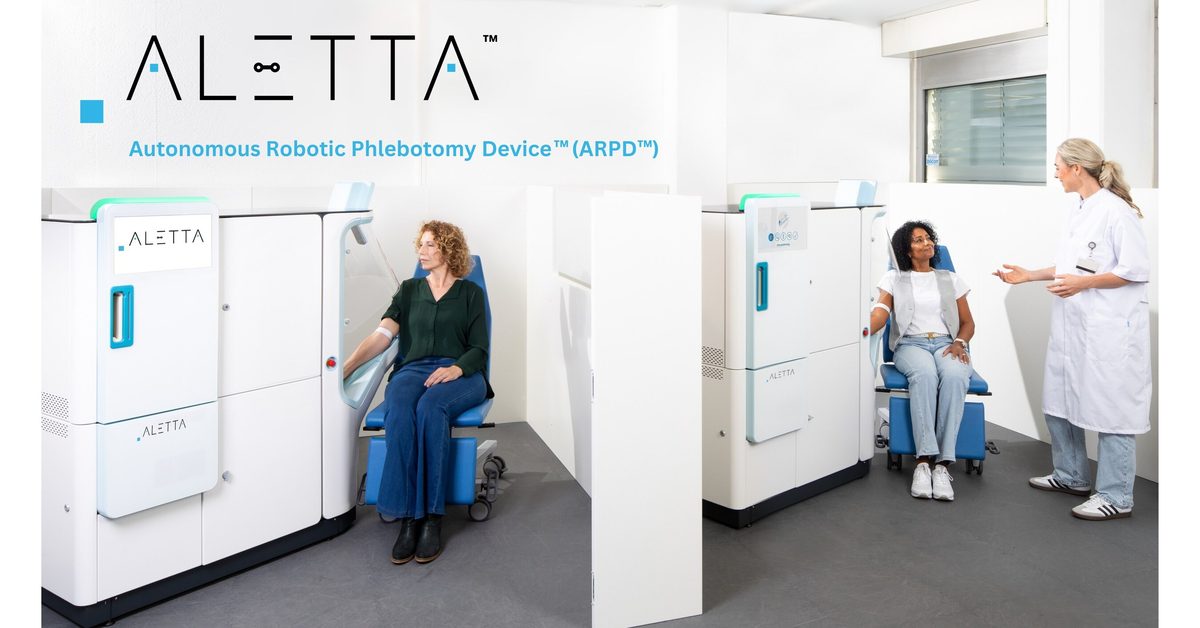
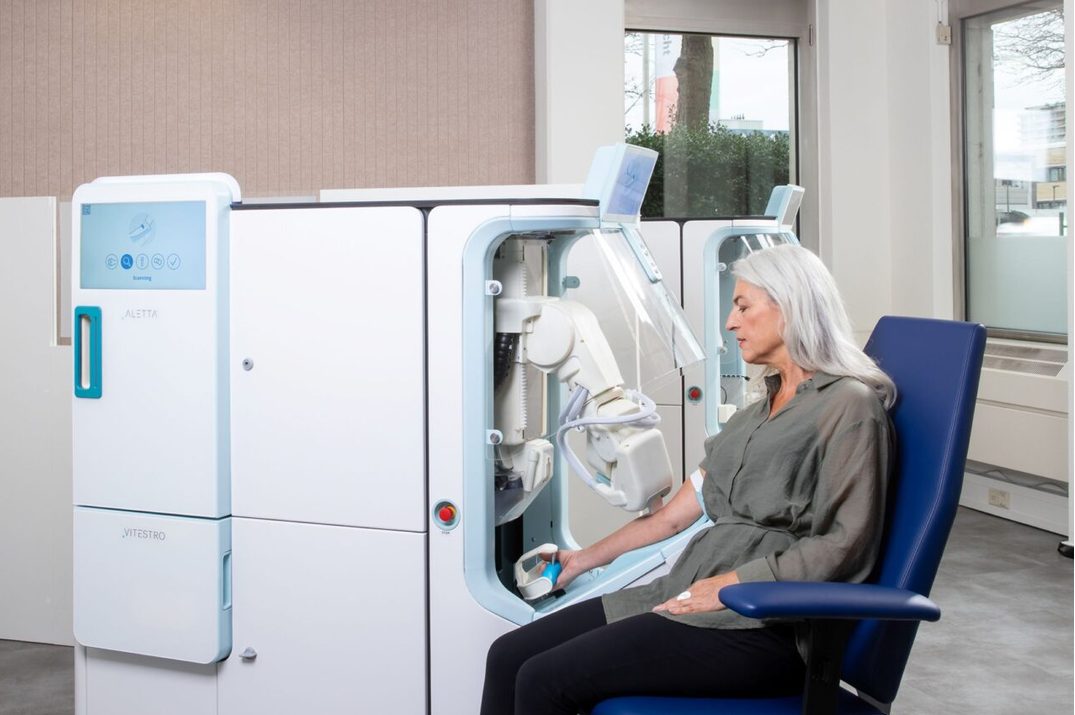
A robot can now draw your blood. On August 19, 2026, the U.S. Food and Drug Administration (FDA) authorized Aletta, the first standalone device that finds a vein and takes a blood sample with no one guiding the needle by hand.

The machine uses near-infrared light and Doppler ultrasound to locate a vein and tell it apart from an artery. One trained phlebotomist can watch up to three devices at once. That ratio is the point: the United States is short on people trained to draw blood, and this is the first tool cleared to stretch the ones it has.

Why it matters

For the first time, a routine medical procedure most Americans go through can be done by a machine, with one human supervising three at a time.

Questions about this story

Free account needed to ask — your question is kept and asked for you right after sign-up. Answers are public.

No questions yet — be the first to ask.

Key Indicators

3
Devices per supervisor
One trained phlebotomist can oversee up to three Aletta units at the same time.
4,000+
Patients in clinical testing
Vitestro says Aletta was validated across more than 4,000 patients before US clearance.
$70M
Funding raised March 2026
Vitestro's latest round, months before the FDA decision, to fund broader adoption.
18,400
Annual US phlebotomist openings
Bureau of Labor Statistics projection of average yearly openings through 2034.

Voices

Curated perspectives — historical figures and your fellow readers.

Ever wondered what historical figures would say about today's headlines?

Sign up to generate historical perspectives on this story.

Play

Exploring all sides of a story is often best achieved with Play.

Most of these play right now — no account needed. Sign up to save scores, keep a streak, and unlock Debate and Predict. Log in Sign Up
Predict 3 ways this could play out. Back the one you believe — contrarian picks score more when a scenario has a resolution date. Log in to play

People Involved

Organizations Involved

Timeline

January 2017 August 2026

4 events Latest: 2 days ago
Tap a bar to jump to that date
  1. FDA authorizes Aletta

    Latest Regulatory

    The FDA clears the first standalone robotic blood-draw device through the De Novo pathway, creating a new device category.

  2. Vitestro raises $70 million

    Funding

    A larger round funds broader clinical adoption, months before the US regulatory decision.

  3. Vitestro raises $22 million

    Funding

    The company secures roughly €20 million to advance its autonomous blood-draw device and European rollout.

  4. Vitestro founded in Utrecht

    Origin

    Toon Overbeeke and Brian Joseph start Vitestro to automate diagnostic blood collection.

Historical Context

3 moments from history that rhyme with this story — and how they unfolded.

July 2000

FDA clears the da Vinci Surgical System (2000)

The FDA cleared Intuitive Surgical's da Vinci system, letting surgeons operate through a robotic console instead of directly by hand. It was the first robotic system cleared for general soft-tissue surgery in the United States.

Then

Adoption was slow at first, limited by cost and surgeon training.

Now

Robotic surgery became routine for many procedures, and da Vinci systems are now in thousands of hospitals worldwide.

Why this matters now

It shows the usual arc for a first-of-its-kind clinical robot: clearance is the start, and real adoption takes years of training, pricing, and trust-building.

2015-2018

Theranos collapses over false blood-test claims (2015-2018)

Theranos claimed it could run hundreds of tests from a finger-prick of blood. Reporting and regulators found the technology did not work, and founder Elizabeth Holmes was later convicted of fraud.

Then

The company voided years of test results and shut down.

Now

It left lasting skepticism toward startups promising to reinvent blood testing.

Why this matters now

It is the cautionary contrast: Theranos avoided regulatory validation, while Aletta cleared the FDA on clinical data it can point to. The comparison is why FDA review matters here.

April 2018

FDA authorizes IDx-DR autonomous AI diagnostic (2018)

The FDA permitted marketing of IDx-DR, the first artificial-intelligence system cleared to make a medical diagnosis on its own. It screens for diabetic retinopathy from eye images without a doctor reading the result.

Then

It let primary-care clinics screen for the disease without an eye specialist on site.

Now

It set an early template for how the FDA reviews autonomous systems that act without a clinician in the loop.

Why this matters now

Like Aletta, it cleared the De Novo pathway and removed the human from a step long assumed to need one, raising the same questions about oversight and liability.

Sources

(7)