
Pull to refresh
Logo
Dallas weighs groundwater ban to allow redevelopment of contaminated Singleton Boulevard site

Dallas weighs groundwater ban to allow redevelopment of contaminated Singleton Boulevard site

Rule Changes Dallas, TX local

A municipal setting designation would permanently block use of groundwater beneath a Nucor Harris Rebar property, sidestepping full cleanup.

Today: Dallas City Council agenda published

Overview

Updated 1 hour ago

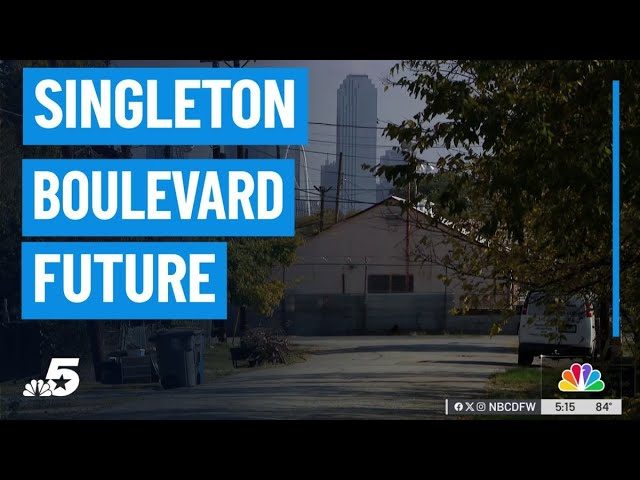
On Wednesday, Dallas residents can speak for or against a plan to legally poison-proof the groundwater beneath a rebar factory in West Dallas. The council will vote on an ordinance supporting a municipal setting designation (MSD) for 4700 Singleton Boulevard — a move that permanently bans use of the contaminated groundwater as drinking water, without requiring the owner to clean it up.

The property, currently leased to Nucor Harris Rebar, sits atop groundwater contaminated by chlorinated solvents from nearby industrial operations. The MSD is a common Texas tool: it lets a property owner avoid costly groundwater remediation by agreeing that the water will never be used. The tradeoff is that contamination remains in place, and critics say it removes pressure to actually clean the site.

Why it matters

If approved, this MSD sets a precedent for dozens of West Dallas industrial sites where redevelopment can proceed without full groundwater cleanup.

Questions about this story

Free account needed to ask — your question is kept and asked for you right after sign-up. Answers are public.

No questions yet — be the first to ask.

Key Indicators

1
MSD public hearing scheduled
One hearing on September 23, 2026, before Dallas City Council.
11-18 ft
Depth of groundwater contamination
Chlorinated solvents found 11 to 18 feet below ground surface.
90 days
TCEQ decision window
TCEQ must certify or deny MSD application within 90 days of receiving it.
120+
MSDs approved in Houston
Houston has approved roughly 120 MSD applications, only one denied.

Voices

Curated perspectives — historical figures and your fellow readers.

Ever wondered what historical figures would say about today's headlines?

Sign up to generate historical perspectives on this story.

People Involved

Organizations Involved

Timeline

3 events Latest: Today
  1. Public hearing on Singleton Boulevard MSD

    Upcoming Hearing

    Dallas City Council hears public comments on proposed MSD ordinance supported by GoodRE Singleton Investments.

  2. Council vote on MSD ordinance

    Upcoming Decision

    Council votes whether to adopt ordinance authorizing support of MSD; if approved, application moves to TCEQ.

  3. Dallas City Council agenda published

    Today Procedural

    Agenda lists public hearing for September 23 to consider MSD for Singleton Boulevard property.

Scenarios

1

Dallas approves MSD, TCEQ certifies within 90 days

Likely Resolves by Dec 23, 2026

Discussed by: Most Dallas city staff; similar approvals in Houston

The council votes in favor, and TCEQ certifies the designation after verifying the property meets eligibility. The groundwater ban becomes permanent, and Nucor Harris Rebar continues operations. Redevelopment of the site is hindered only by industrial zoning, not contamination liability.

2

Council delays or denies MSD after public opposition

Unlikely Resolves by Oct 31, 2026

Discussed by: Residents near West Dallas, environmental advocates

Community members argue that the MSD removes any incentive for cleanup and maintains a toxic legacy. The council could postpone the vote or deny the ordinance, forcing the applicant to pursue a more expensive cleanup or seek a restrictive covenant.

3

MSD approved but TCEQ requests additional information, delaying decision

Possible Resolves by Mar 23, 2027

Discussed by: TCEQ staff; past MSD applications with incomplete data

TCEQ finds the application lacking, perhaps questioning the extent of contamination or nearby groundwater use. The 90-day clock restarts, and the process stalls for months. This outcome would delay redevelopment but not kill the MSD.

Historical Context

2 moments from history that rhyme with this story — and how they unfolded.

2003

Texas MSD Program Creation (2003)

The Texas legislature authorized the Texas Commission on Environmental Quality to create the MSD program. The tool lets cities and property owners ban groundwater use to avoid cleanup, provided a public water supply exists.

Then

Industry welcomed the reduced liability; environmental groups warned about leaving contamination in place.

Now

Hundreds of MSDs have been certified across Texas, particularly in Houston, Dallas, and other industrial cities. The program is now a standard tool in brownfield redevelopment.

Why this matters now

The Singleton Boulevard application is part of this 23-year-old program. Understanding its origin explains why Dallas considers it routine.

November 2022

Houston's ChemCentral MSD (2022)

Houston City Council approved an MSD for a five-acre site on Market Street where ChemCentral had operated a chemical blending facility since the 1940s. Groundwater was contaminated, and the property owner, Univar USA, sought the MSD to avoid cleanup while allowing future industrial use.

Then

The MSD was approved, preventing groundwater use. Councilwoman Tarsha Jackson worried that less testing would occur after designation.

Now

Houston set a precedent for approving MSDs with public input but also added requirements for continuous testing on some sites.

Why this matters now

Shows the tension between redevelopment and environmental justice that Dallas faces now; also highlights that MSDs are routine in Texas industrial areas.

Sources

(4)

More from Dallas, TX

Openings, permits and council decisions in Dallas, TX, in your inbox every Monday.