
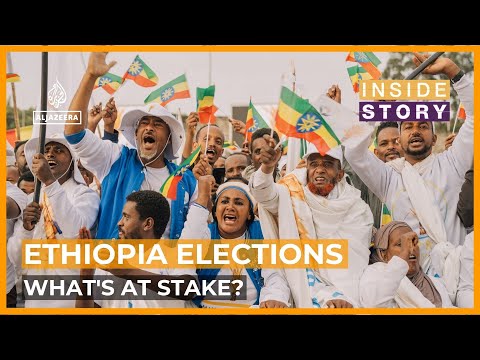
Ethiopia holds 2026 election with Tigray region excluded
Rule ChangesAbiy Ahmed's Prosperity Party faces fragmented opposition in a vote that could open the path to constitutional changes
June 1st, 2026: Ethiopia holds 2026 general electionNew here? Follow stories to track developments over time. Create a free account to get updates when stories you care about change.
Overview
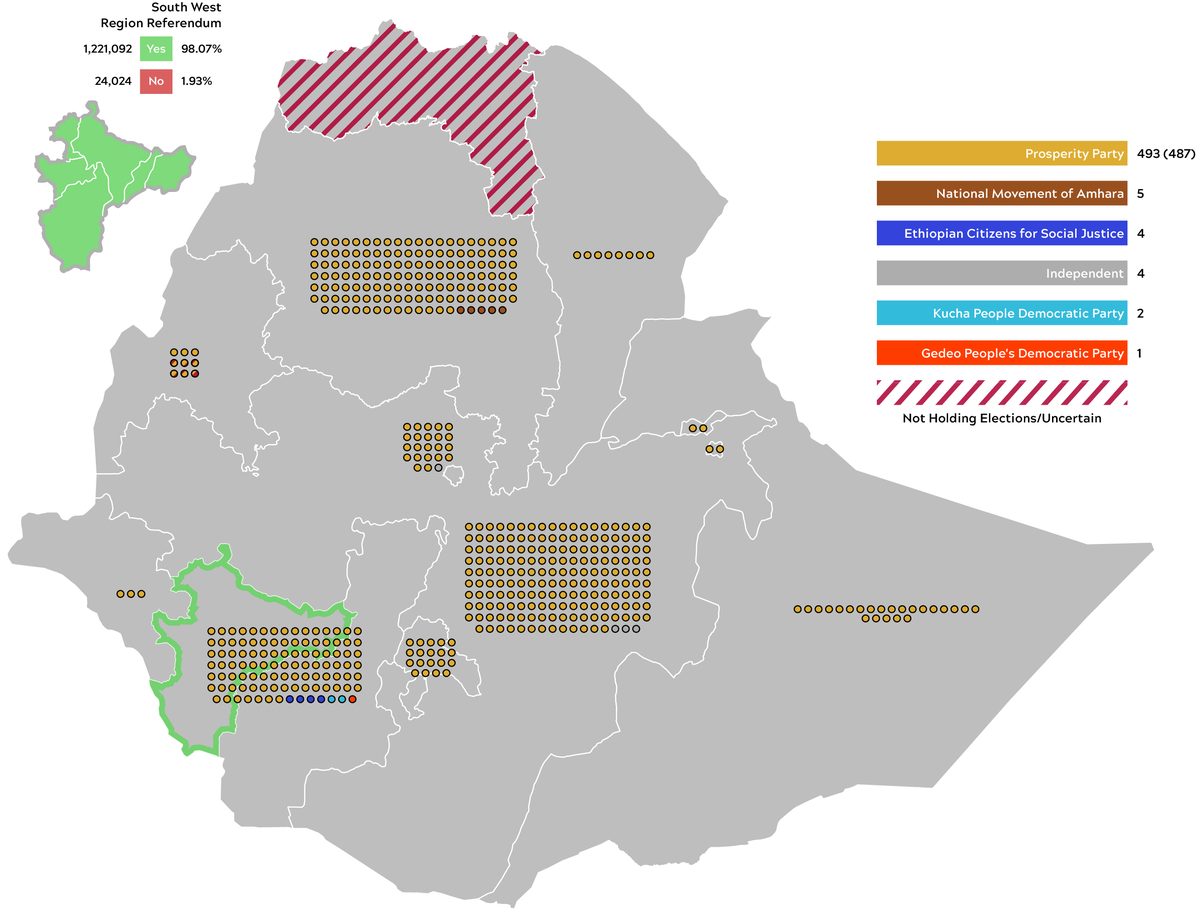
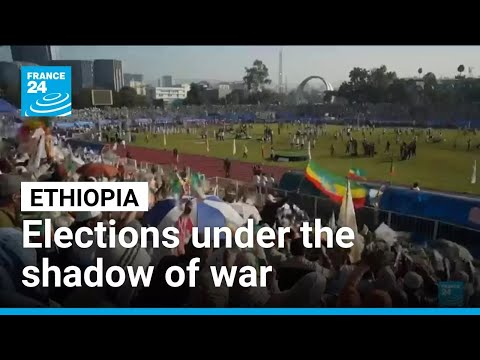
Ethiopia's entire Tigray region was excluded from Monday's vote. Polls closed at 6 p.m. across the rest of the country at roughly 48,000 stations. Results are expected by June 11.
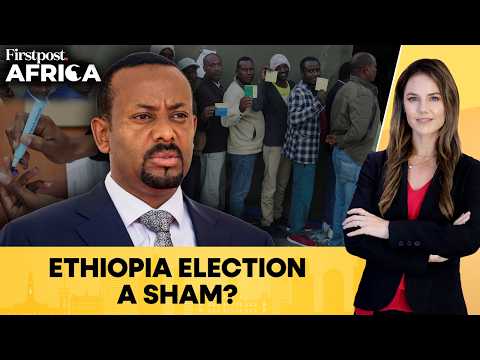
Prime Minister Abiy Ahmed's Prosperity Party faces a splintered opposition. Reuters and Al Jazeera both reported a projected landslide before polls opened. A dominant majority gives Abiy the parliamentary votes to amend the 1995 federal constitution, which defines Ethiopia's regions partly by ethnic group.
Why it matters
A dominant majority gives Abiy the votes to rewrite Ethiopia's federal constitution and change governance for 130 million people.
Questions about this story
No questions yet — be the first to ask.
Key Indicators
Voices
Curated perspectives — historical figures and your fellow readers.
Play
Exploring all sides of a story is often best achieved with Play.
Higher or Lower
A number from this story, against one from elsewhere in the news — guess which is bigger, then keep the chain going. 5 rounds, 3 strikes; a miss costs a strike and resets your streak.
Keyboard: ↓/L lower · ↑/H higher
0 points — sign up to put that on the leaderboard.
Connections
Sixteen names from the news. Find the four hidden groups of four. Four mistakes max.
Sign up to keep a daily streak — a new puzzle lands every day.
Exit debate?
Your progress in this debate will be lost.
- 1 Two AI personas square off on this story.
- 2 You predict who'll win each round — correct picks earn XP.
- 3 One crossfire question is yours to fire. Pick it carefully.
Couldn't generate a topic
Select Your Champions
Choose one persona for each side of the debate
DEBATE TOPIC
Choose personas with different perspectives for a more dynamic debate.
Select debater for this side:
No debate personas available right now.
Select debater for this side:
No debate personas available right now.
Who's Got This Round?
Make your prediction before the referee scores
The referee scores both sides on
Round Results
Set the Crossfire
Pick the question both personas must answer in the final round
Debate Oracle! You called every round!
Sharp Instincts! You know your debaters!
The Coin Flip Strategist! Perfectly balanced!
The Contrarian! Bold predictions!
Inverse Genius! Try betting the opposite next time!
XP Breakdown
Prediction History
People Involved
Organizations Involved
Ethiopia's ruling party, formed when Abiy Ahmed merged the previous ruling coalition into a single national party in late 2019.
The independent federal body charged with running Ethiopia's elections.
Ethiopia's main centrist opposition party, formed after Abiy's 2018 reforms opened political space to exiled groups.
Timeline
April 2018 June 2026
-
Ethiopia holds 2026 general election
Latest ElectionVoting takes place at roughly 48,000 stations across the country except in Tigray. Results expected by June 11.
-
Pretoria peace agreement ends Tigray war
Peace agreementFederal government and TPLF sign a cessation of hostilities agreement. African Union mediates.
-
Prosperity Party wins first election under Abiy
ElectionProsperity Party wins 410 of 436 contested seats; Tigray does not vote.
-
Federal forces enter Tigray
ConflictAbiy orders military operation in Tigray after a TPLF attack on a federal army base.
-
Prosperity Party replaces EPRDF coalition
Political reorganizationAbiy dissolves the EPRDF coalition. TPLF refuses to join the new single national party.
-
Abiy wins Nobel Peace Prize
RecognitionNobel Committee cites the peace agreement with Eritrea ending two decades of frozen conflict.
-
Abiy Ahmed becomes prime minister
Political transitionAbiy takes office after Hailemariam Desalegn resigns. He launches political and economic reforms.
Historical Context
3 moments from history that rhyme with this story — and how they unfolded.
Ethiopian general election (2005)
Ethiopia held a parliamentary election in May 2005 in which the Coalition for Unity and Democracy won most seats in Addis Ababa and contested results nationally. The ruling Ethiopian People's Revolutionary Democratic Front (EPRDF) declared overall victory. Security forces killed roughly 193 people in protests during June and November.
Most opposition leaders were arrested and tried for treason. Some served years in prison before pardons.
The crackdown ended Ethiopia's opening toward multi-party competition. The next two elections in 2010 and 2015 returned the EPRDF with more than 99% of seats.
The 2005 vote is the closest parallel for organized opposition gains in Ethiopia. The 2026 election tests whether Abiy's government handles opposition challenges differently than the earlier EPRDF leadership did.
Ethiopian general election (2021)
Ethiopia held its first general election under Abiy in June 2021. The Prosperity Party won 410 of 436 contested seats in the House of Peoples' Representatives. Voting was postponed in several constituencies and never held in Tigray, where federal forces were fighting the TPLF.
Abiy was sworn in for a five-year term in October 2021. The Tigray war continued for another 16 months.
The result gave Prosperity Party dominance over a unicameral parliament with no meaningful opposition bloc. International observers largely declined to monitor the vote.
The 2026 election repeats the 2021 pattern: dominant ruling party, partial geographic coverage, limited opposition. The difference is what Abiy can now do with that majority in his second term.
Rwandan presidential election (2017)
Paul Kagame won Rwanda's 2017 presidential election with 98.8% of the vote. A 2015 constitutional referendum had removed term limits, letting him stand for a third term and potentially remain in office until 2034. Two opposition candidates each won under 1%.
Kagame began a third term. The Rwandan Patriotic Front extended its control over national politics.
Rwanda became the case study of a developmental authoritarian state: strong service delivery, GDP growth above 7%, near-total political control by one party. Kagame remains president in 2026.
Rwanda is the closest African case of economic modernization paired with single-party dominance enforced through elections and constitutional revision. The 2026 Ethiopian vote is the next test of whether that model can fit a country of 130 million.
