
Pull to refresh
Logo
Granite wins final contract in Tucson airport's airfield rebuild

Granite wins final contract in Tucson airport's airfield rebuild

Built World

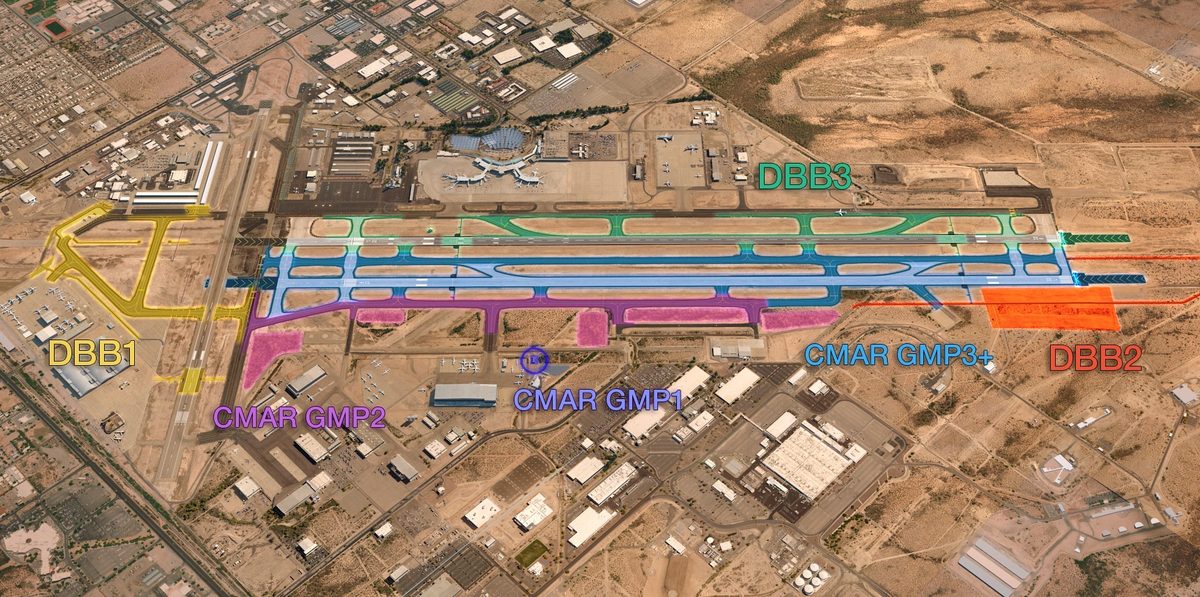
The $52 million award makes Granite the builder of every package in the Tucson Airport Authority's more than $400 million Airfield Safety Enhancement Program.

Overview

Updated 7 hours ago

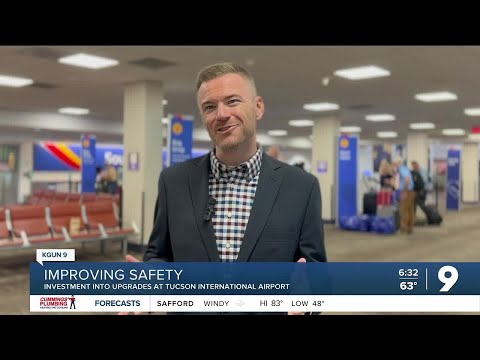
Tucson International Airport's runways and taxiways were laid out to standards the Federal Aviation Administration has since replaced. Fixing the geometry means rebuilding it while airlines, the Arizona Air National Guard and private pilots keep flying.

The Tucson Airport Authority has spent more than $400 million on that rebuild since January 2023. On Nov. 4 it awarded Granite Construction the final piece, a $52 million contract, making Granite the builder of every package in the program.

Why it matters

Tucson is rebuilding its airfield geometry to reduce runway incursions. The last contract is out; the runway work runs to 2029.

Questions about this story

Free account needed to ask — your question is kept and asked for you right after sign-up. Answers are public.

No questions yet — be the first to ask.

Key Indicators

$52M
Final CMAR2 contract
Awarded to Granite on Nov. 4, 2026, and carried in the company's third-quarter 2026 capital plan.
$400M+
Airfield Safety Enhancement Program
Program total in 2023 dollars, per the Tucson Airport Authority.
80,000 tons
FAA-spec aggregate
To come from Granite's Swan Facility a few miles from the airfield.
50,000 tons
FAA-spec asphalt
Also from Swan, feeding compressed overnight paving windows.

Voices

Curated perspectives — historical figures and your fellow readers.

Sign up to generate historical perspectives on this story.

People Involved

Organizations Involved

Timeline

2023 November 2026

7 events Latest: Yesterday
Tap a bar to jump to that date
  1. Granite's sweep of the program is confirmed

    Latest Report

    With the award, Granite has completed or won every project in the Airfield Safety Enhancement Program.

  2. Tucson Airport Authority awards Granite the $52 million final contract

    Award

    The construction manager at risk deal covers taxiway modifications and relocated FAA navigational aids.

  3. Granite starts preconstruction on the final package

    Construction

    Design coordination, utility verification, phasing and guaranteed maximum price work begin.

  4. Taxiway C reaches substantial completion

    Construction

    The outboard taxiway opens as a permanent part of the reconfigured layout.

  5. More federal money covers the concrete runway surface

    Funding

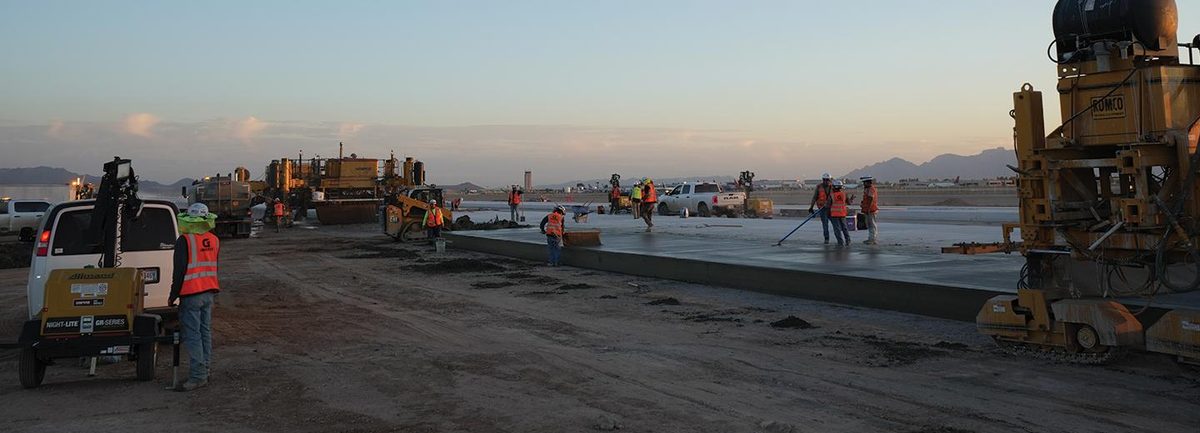
    Additional grants in 2024 and 2025 let concrete paving of Runway 12R/30L begin.

  6. Construction starts on outer Taxiway C

    Construction

    Work begins on a new outboard taxiway serving the west and south sides of the airfield.

  7. FAA funds rebuild of the small general aviation runway

    Funding

    Grants let the authority close and reconstruct Runway 12R/30L, including grading and drainage.

Scenarios

1

Runway 12R/30L opens in 2027 as planned

Possible Resolves by End of 2027

Discussed by: Tucson Airport Authority program page

The authority lists 2027 completion for the new 11,000-foot commercial runway, contingent on more FAA money. If the grants arrive, the runway is carrying traffic before Granite's final package starts field work in 2028.

2

Granite starts major field work in the third quarter of 2028

Likely Resolves by End of 2028

Discussed by: Engineering News-Record, citing Granite area manager Zach Thompson

Granite has said major field construction on CMAR2 begins in the third quarter of 2028, timed around a planned closure of Runway 12-30. Getting there depends on finishing utility verification and phasing plans for an airfield shared with airlines, private pilots and F-16s.

3

Runway 12L/30R reopens by the end of 2029, closing the program

Possible Resolves by End of 2029

Discussed by: Tucson Airport Authority program page

The authority expects the main commercial runway back in service in 2028 or 2029, after its landing threshold, glide slope and edge lighting are moved. Granite's final package is scheduled around that closure.

Historical Context

2 moments from history that rhyme with this story — and how they unfolded.

March 1977

Tenerife runway collision (1977)

Two Boeing 747s collided on a fog-covered runway at Tenerife after one began its takeoff roll while the other was still on the runway. 583 people died, still the deadliest accident in aviation history.

Then

Investigators focused on radio phraseology and the absence of ground surveillance radar at the airport.

Now

Regulators rewrote takeoff clearances and pushed airports toward surface radar and clearer taxiway geometry.

Why this matters now

The failure mode was a runway incursion. Tucson's rebuild is aimed at the same problem, using layout rather than procedure.

August 2006

Comair Flight 5191 at Lexington (2006)

A regional jet cleared for one runway at Lexington, Kentucky, lined up instead on a shorter, unlit runway and crashed on takeoff. 49 of the 50 people aboard died.

Then

The FAA and airlines revised cockpit procedures and airport surface markings.

Now

Runway and taxiway signage, lighting and geometry became a formal part of federal runway-safety programs.

Why this matters now

Tucson's authority names confusion between parallel runways as the specific risk its new layout is meant to remove.

Sources

(4)