Anchor

One-time CRISPR therapy keeps cholesterol lower for a full year in early trial
New CapabilitiesCleveland Clinic trial shows ANGPTL3 gene editing cut LDL by about half at 12 months
2 days ago: Results reach wider public audienceNew here? Follow stories to track developments over time. Create a free account to get updates when stories you care about change.
Overview
Updated 1 hour agoA single infusion of a CRISPR gene-editing therapy kept LDL cholesterol about 52% lower and triglycerides about 48% lower for a full year. The results, from a 15-patient trial, are the longest durability data yet for in vivo CRISPR in heart disease. They were presented at the European Society of Cardiology meeting and published in the New England Journal of Medicine.
CTX310, from CRISPR Therapeutics, switches off the ANGPTL3 gene in liver cells, mimicking a rare genetic state that protects against heart disease. No treatment-related serious adverse events occurred in the first year, though one participant with advanced cardiovascular disease died six months after the lowest dose. If the effect holds in larger trials, a single infusion could replace daily statins for the many patients who stop taking them.
Why it matters
If the effect holds in larger trials, a single infusion could replace daily statins for millions of patients.
Questions about this story
Free account needed to ask — your question is kept and asked for you right after sign-up. Answers are public.
No questions yet — be the first to ask.
Key Indicators
52.5%
LDL cholesterol reduction at 12 months
Mean reduction from baseline at the highest dose in the Phase 1a trial.
47.8%
Triglyceride reduction at 12 months
Mean reduction from baseline at the highest dose.
79%
ANGPTL3 protein reduction
Mean reduction at the highest dose, with a maximum of 89%.
15
Patients in Phase 1a trial
All completed at least one year of follow-up.
15 years
Planned safety follow-up
FDA-recommended long-term monitoring for gene-editing therapy recipients.
Related Media

CRISPR Therapeutics building in Boston May 2026
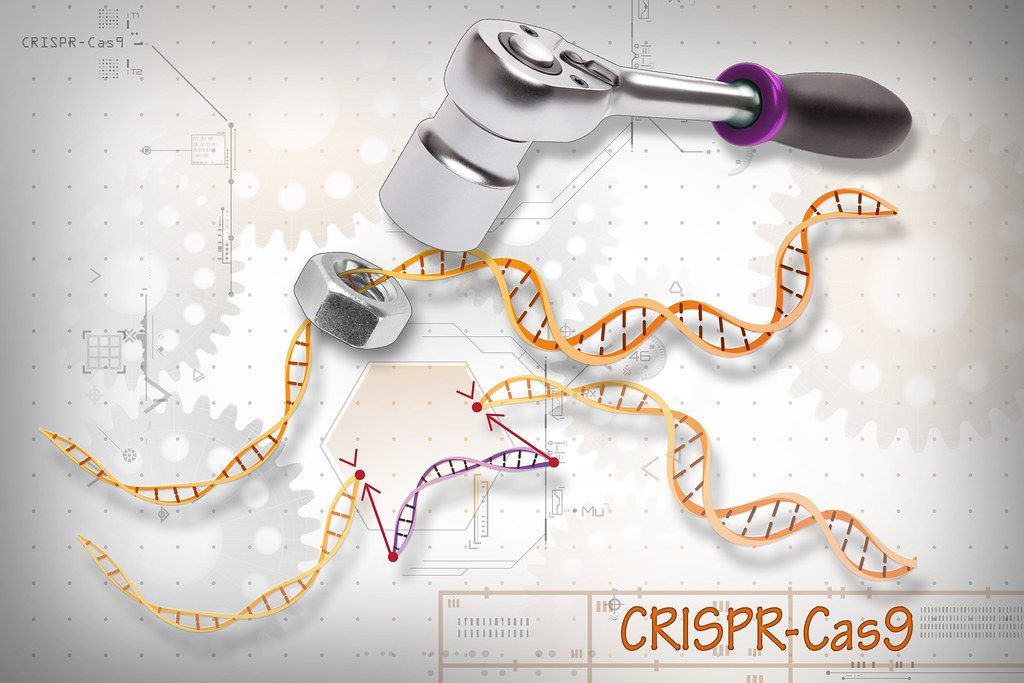
CRISPR-Cas9 editing of the genome
64 views
3:14
Can One CRISPR Dose Lower Cholesterol for Years? With ...
HCPLive

4.1K views
3:26
Eli Lilly's Gene-Based Cholesterol Therapy Shows Promise In ...
CNBC-TV18

4.0K views
1:50
New experimental treatment could cut cholesterol levels in half ...
NBC News
Images from Openverse under Creative Commons licenses. Videos from YouTube.
Voices
Curated perspectives — historical figures and your fellow readers.
Play
Exploring all sides of a story is often best achieved with Play.
Most of these play right now — no account needed. Sign up to save scores, keep a streak, and unlock Debate and Predict.
Log in
Sign Up
Higher or Lower
A number from this story, against one from elsewhere in the news — guess which is bigger, then keep the chain going. 5 rounds, 3 strikes; a miss costs a strike and resets your streak.
Example
Anchor
EU tariff revenue
$52B
Big for this kind of number
Mystery
Pentagon AI contract
?
Round 1
Streak: 0
Mystery
?
Keyboard: ↓/L lower · ↑/H higher
0 pts
Best streak: 0 · Rounds: 0
0 points — sign up to put that on the leaderboard.
Now try on this story
Connections
Sixteen names from the news. Find the four hidden groups of four. Four mistakes max.
Loading today's puzzle…
0/4 groups
Mistakes
Sign up to keep a daily streak — a new puzzle lands every day.
Now try on this story
Exit debate?
Your progress in this debate will be lost.
How it works
- 1 Two AI personas square off on this story.
- 2 You predict who'll win each round — correct picks earn XP.
- 3 One crossfire question is yours to fire. Pick it carefully.
Couldn't generate a topic
Select Your Champions
Choose one persona for each side of the debate
DEBATE TOPIC
Choose personas with different perspectives for a more dynamic debate.
SIDE A (PRO)
Select debater for this side:
No debate personas available right now.
SIDE B (CON)
Select debater for this side:
No debate personas available right now.
VS
Get ready to make your prediction...
Round of
Claim
Evidence
Stakes
Crossfire Answer
Closing Statement
Claim
Evidence
Stakes
Crossfire Answer
Closing Statement
Your Crossfire Question
Generating arguments...
Who's Got This Round?
Make your prediction before the referee scores
The referee scores both sides on
Correct predictions earn +20 XP
· Press 1 or 2 to pick
Evidence
40%
Logic
30%
Detail
20%
Style
10%
Round Results
Your Pick
Not this time
(%)
Overall Score
/10
Your Pick
Not this time
(%)
Overall Score
/10
Set the Crossfire
Pick the question both personas must answer in the final round
Crafting crossfire questions...
Choosing a question earns +10 XP crossfire bonus
🏆
Total XP Earned
Cred Change
Predictions
Debate Oracle! You called every round!
Sharp Instincts! You know your debaters!
The Coin Flip Strategist! Perfectly balanced!
The Contrarian! Bold predictions!
Inverse Genius! Try betting the opposite next time!
XP Breakdown
Base completion
+20 XP
Rounds played ( rounds x 5 XP)
+ XP
Correct predictions ( correct x 20 XP)
+ XP
Crossfire bonus
+10 XP
Accuracy
%
Prediction History
Round
You picked:
✓
✗
Now try on this story
Keep debating to level up your credibility and unlock achievements
People Involved
Organizations Involved
CRISPR Therapeutics
Biotechnology company
Developer of CTX310, presenting Phase 1a data
The company developing CTX310, an in vivo CRISPR-Cas9 therapy targeting ANGPTL3.
Cleveland Clinic
Academic medical center
Conducted the Phase 1a trial
The hospital system that ran the first-in-human trial of CTX310.
Timeline
November 2025 September 2026
3 events
Latest: 2 days ago
-
Results reach wider public audience
Latest MediaHuman Progress publishes an alert on the yearlong cholesterol reduction results.
-
One-year durability data presented at ESC Congress
Clinical DataNEJM-published results show LDL down 52.5% and triglycerides down 47.8% at 12 months.
-
Initial CTX310 data shows two-month lipid drops
Clinical DataEarly Phase 1a results show CTX310 lowers LDL and triglycerides at two months.
Historical Context
3 moments from history that rhyme with this story — and how they unfolded.
2003-2015
PCSK9 discovery to drug approval (2003-2015)
In 2003, researchers found that people with loss-of-function mutations in the PCSK9 gene had very low LDL cholesterol and low rates of heart disease. That genetic insight led to injectable antibody drugs approved in 2015 that block PCSK9 and lower LDL by about 60%.
Then
The drugs became major sellers but require injections every two to four weeks for life.
Now
They validated using human genetics to find cholesterol targets, the same path that led to ANGPTL3.
Why this matters now
CTX310 uses the same genetics-first logic as PCSK9 inhibitors but aims to make the effect permanent with one infusion.
2017
ANGPTL3 human genetics validation (2017)
A 2017 New England Journal of Medicine study of nearly 60,000 people found that carriers of ANGPTL3 loss-of-function mutations had lower LDL, lower triglycerides, and 34% lower odds of coronary artery disease, with no apparent health downsides.
Then
The study made ANGPTL3 a validated drug target and prompted development of antibody and gene-silencing approaches.
Now
It provided the natural experiment that CTX310 aims to replicate permanently.
Why this matters now
CTX310 is an attempt to convert any patient into a lifelong ANGPTL3 loss-of-function carrier.
November 2022
Hemgenix approval (2022)
The FDA approved Hemgenix (etranacogene dezaparvovec) in 2022 as the first one-time gene therapy for hemophilia B, delivered as a single infusion that lets patients produce clotting factor themselves.
Then
The therapy freed patients from regular factor infusions, at a cost of millions per dose.
Now
It established the regulatory and manufacturing precedent for one-time in vivo gene therapies.
Why this matters now
CTX310 follows the same one-time in vivo model but targets a common condition affecting millions, not a rare disease affecting thousands.