

Pull to refresh
Logo
Two Clark County school trustees sue board over free-speech policies

Two Clark County school trustees sue board over free-speech policies

Rule Changes Las Vegas, NV local

Lorena Biassotti and Lydia Dominguez challenge governance rules after a T-shirt reprimand.

Overview

Updated 1 hour ago

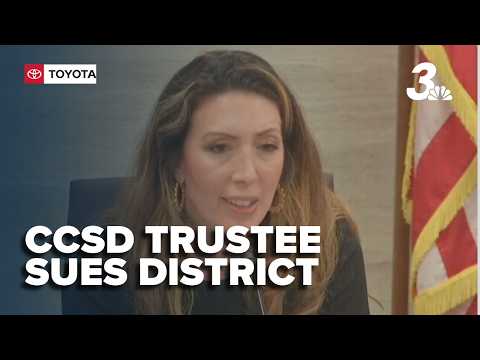
Lorena Biassotti wore an XX-XY Athletics T-shirt to an August Clark County School Board meeting. The board reprimanded her two weeks later. On Nov. 9, Biassotti and fellow trustee Lydia Dominguez sued the district, the board and its president, Emily Stevens, arguing the rules used against Biassotti violate the First Amendment.

The lawsuit targets two governance policies, GP-2 and GP-3, that the board adopted in April. The plaintiffs say the rules let the board majority discipline trustees for criticizing the board while shielding itself from reply. The case asks a court to decide whether elected school board members keep free-speech protections when they speak as trustees.

Why it matters

If the rules stand, elected trustees in Clark County can be disciplined for criticizing the board they sit on.

Last Monday's email for Las Vegas, NV

Sent Nov 9. It carried:

Get next Monday's: one short email a week. Free. Unsubscribe in one click.

Questions about this story

Free account needed to ask — your question is kept and asked for you right after sign-up. Answers are public.

No questions yet — be the first to ask.

Key Indicators

2
Trustees suing
Lorena Biassotti and Lydia Dominguez filed the complaint.
2
Governance policies challenged
GP-2 covers conduct and ethics; GP-3 covers public communication.
1
Board president named
Emily Stevens is a defendant in her official capacity.
22
Governance policies adopted in April
The board passed GP-2 and GP-3 with 20 other policies on April 23.

Voices

Curated perspectives — historical figures and your fellow readers.

Sign up to generate historical perspectives on this story.

People Involved

Organizations Involved

Timeline

April 2026 November 2026

6 events Latest: Today
Tap a bar to jump to that date
  1. KLAS reports on the lawsuit

    Today Media

    KLAS publishes report on the trustees' free-speech lawsuit.

  2. Board reprimands Biassotti

    Discipline

    Board reprimands Biassotti; she and Dominguez announce lawsuit plans from dais.

  3. Stevens removes Biassotti from national council role

    Personnel

    Stevens removes Biassotti as CCSD representative to Council of the Great City Schools.

  4. Biassotti wears XX-XY Athletics shirt

    Speech

    Biassotti wears XX-XY Athletics shirt to board meeting; posts photo with Dominguez.

  5. Board adopts governance policies

    Policy

    Board adopts 22 governance policies, including GP-2 and GP-3; two trustees dissent.

Scenarios

1

Judge blocks enforcement of GP-2 and GP-3

Possible Resolves by Q2 2027

Discussed by: The plaintiffs' complaint asks for an injunction; the district has not publicly responded.

Biassotti and Dominguez want a judge to bar the board from enforcing the two policies against protected trustee speech. A preliminary injunction would let them speak without discipline while the case proceeds. The court would weigh whether the policies are vague or viewpoint-discriminatory.

2

Court dismisses trustees' free-speech claims

Possible Resolves by End of 2027

Discussed by: The district declined to comment, so its defense is not yet public.

The board could argue the policies regulate internal conduct and communication rather than public speech, or that the trustees lack standing. A dismissal would leave the policies in place.

3

Board revises or repeals speech policies

Unlikely Resolves by Q2 2027

Discussed by: Plaintiffs' complaint; the board has not proposed changes publicly.

The board could vote to amend GP-2 and GP-3 to avoid litigation. That would moot part of the lawsuit and change how trustees can criticize the board.

Historical Context

2 moments from history that rhyme with this story — and how they unfolded.

1965-1966

Bond v. Floyd (1966)

Julian Bond, elected to the Georgia House of Representatives, endorsed a Student Nonviolent Coordinating Committee statement opposing the Vietnam War. The House refused to seat him, saying his statements discredited the legislature. Bond sued.

Then

The Supreme Court ruled unanimously that the House violated Bond's First Amendment rights.

Now

The decision established that elected officials cannot be excluded for political speech.

Why this matters now

The CCSD case asks whether a board can discipline an elected member for speech the majority dislikes, a similar conflict between institutional rules and political expression.

2002

Republican Party of Minnesota v. White (2002)

Minnesota barred judicial candidates from announcing their views on disputed political issues. The Supreme Court struck down the rule.

Then

The Court ruled the announce clause violated the First Amendment.

Now

The decision limited how much states can restrict speech by candidates for elected office.

Why this matters now

It shows courts scrutinize rules that silence elected officials or candidates on matters they may decide.

Sources

(3)