


Pull to refresh
Logo
Study finds LLMs close the gap on power outage prediction without training data

Study finds LLMs close the gap on power outage prediction without training data

New Capabilities

Zero-shot models trail supervised classifiers on accuracy but show competitive scores in newer generations, prompting calls for hybrid systems.

Yesterday: Press coverage spotlights LLM outage prediction

Overview

Updated 49 minutes ago

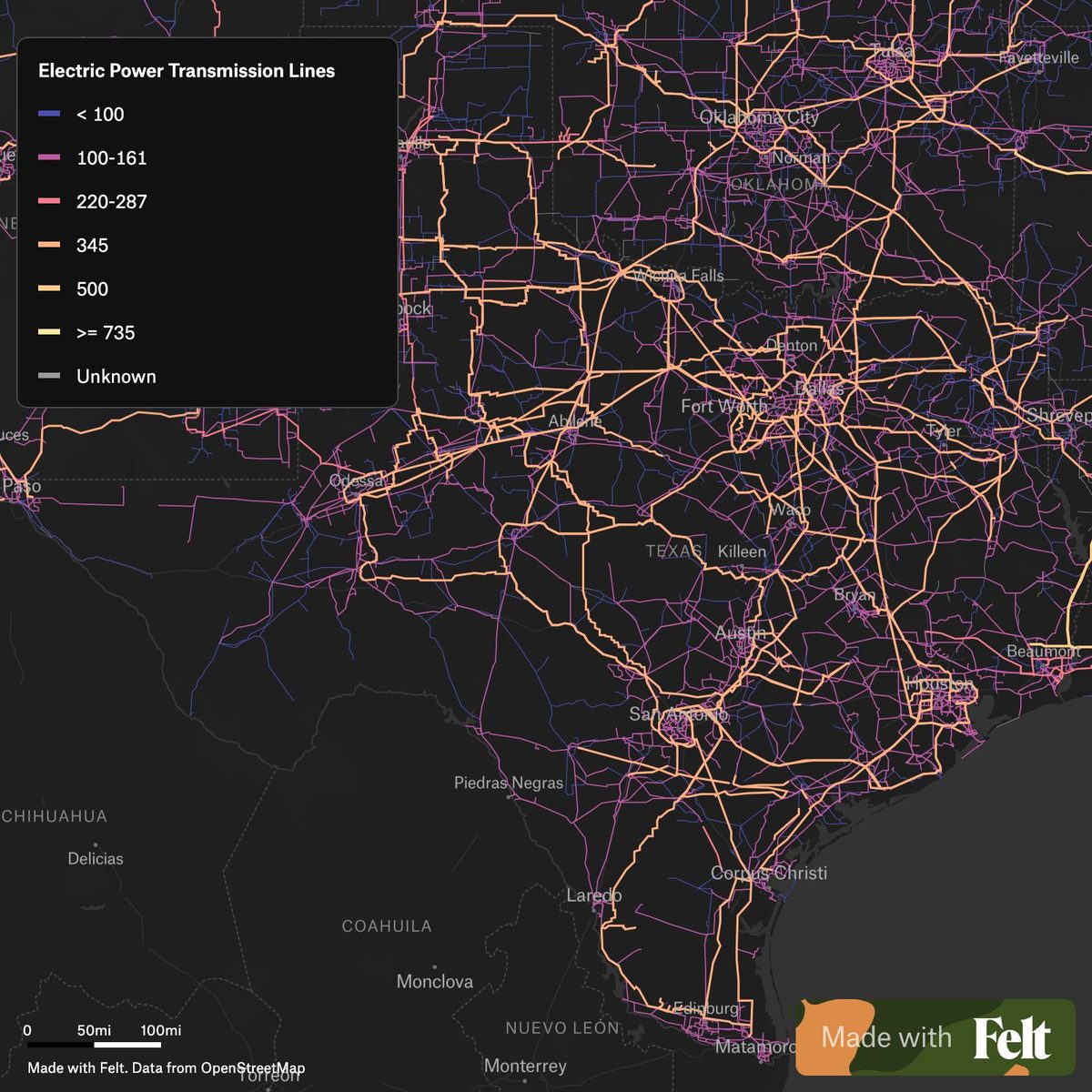
A preprint posted September 2 asked whether an off-the-shelf language model, trained on no utility data at all, can predict which storms cause the worst power outages. Four zero-shot LLMs were benchmarked against two supervised machine learning models on six years of central Texas outage records.

The supervised models won on precision and F1. But the newest LLM generations came close, and they added two things supervised models lack: readable explanations of each risk call, and the ability to transfer to a new region without labeled outage data. The authors conclude that combining LLMs with supervised models is the best practice.

The practical payoff is crew dispatch. Utilities position repair crews before storms, and better severity prediction means putting them where damage will actually hit. The study is one of at least five papers in six months testing LLMs for grid outage risk, a sign that the approach is moving from curiosity to serious evaluation.

Why it matters

If hybrid LLM-ML outage prediction reaches operations, utilities get storm-severity forecasts without years of labeled data — and can dispatch crews before the damage hits.

Questions about this story

Free account needed to ask — your question is kept and asked for you right after sign-up. Answers are public.

No questions yet — be the first to ask.

Key Indicators

4
Zero-shot LLMs benchmarked
Four off-the-shelf LLMs tested without fine-tuning against two supervised classifiers.
2
Supervised classifiers used as baseline
Traditional machine learning models trained on the same Texas data held the accuracy edge.
6 years
Historical outage records used
Six years of outage and weather records from a central Texas utility service area.
3
Forecast horizons tested
Severity classification at 3, 6, and 12 hours ahead.

Voices

Curated perspectives — historical figures and your fellow readers.

Ever wondered what historical figures would say about today's headlines?

Sign up to generate historical perspectives on this story.

Play

Exploring all sides of a story is often best achieved with Play.

Most of these play right now — no account needed. Sign up to save scores, keep a streak, and unlock Debate and Predict. Log in Sign Up
Predict 3 ways this could play out. Back the one you believe — contrarian picks score more when a scenario has a resolution date. Log in to play

People Involved

Organizations Involved

Timeline

March 2026 September 2026

4 events Latest: Yesterday
Tap a bar to jump to that date
  1. Press coverage spotlights LLM outage prediction

    Latest Media Coverage

    PulseAugur reports the study, noting newer LLM generations show competitive performance with added reasoning and scalability strengths.

  2. Zero-shot LLM outage study posted to arXiv

    Research Publication

    Petridis, Obradovic, and Kezunovic benchmark four LLMs against two supervised classifiers on six years of Texas outage data. Supervised models win on precision and F1; newer LLMs come close.

  3. OutageDiT foundation model posted to arXiv

    Research Publication

    Generates seven-day outage trajectories at quarter-hour resolution from US-wide weather and outage records.

  4. OutageGPT paper proposes multi-agent LLM for outage queries

    Research Publication

    Proposes retrieval-augmented multi-agent LLM that beats open models on 2021 severe-weather outage queries.

Historical Context

2 moments from history that rhyme with this story — and how they unfolded.

2013–2018

IBM Watson for Oncology (2013–2018)

IBM marketed its Watson AI as recommending cancer treatments based on trained datasets, with Memorial Sloan Kettering as a launch partner. By 2017, investigations found Watson's recommendations were often based on hypothetical or unvalidated cases, and some hospitals reported unsafe advice.

Then

IBM wound down Watson Health, selling parts in 2022; medical AI pivoted to narrower, rigorously validated tools.

Now

A defining cautionary tale that high-stakes AI deployment requires clinical-grade validation, not just impressive demos.

Why this matters now

LLMs for grid outage prediction face the same validation threshold: accuracy on historical data plus proven operational safety before a utility bets crews and dollars on them.

July–November 2023

GraphCast and Pangu-Weather (2023)

Two machine-learning weather models matched or beat the physics-based European Centre for Medium-Range Weather Forecasts system for 10-day forecasts at a fraction of the compute cost. Google DeepMind's GraphCast and Huawei's Pangu-Weather showed learned models could challenge numerical weather prediction.

Then

Both were tested in operational forecasting pipelines within months; agencies ran AI models alongside physics models to compare outputs.

Now

ML weather forecasting became a standard benchmark, and operational agencies adopted hybrid physics-ML systems rather than replacing physics models outright.

Why this matters now

The outage study tracks the same adoption pattern: a new ML paradigm proves competitive against incumbent methods, then earns a role in hybrid deployment.

Sources

(8)