


North Carolina tightens mail-in ballot rules as 2026 voting begins
Rule ChangesState board's party-line vote changes which absentee ballots will count
Yesterday: Board votes 3-2 to pass numbered memosNew here? Follow stories to track developments over time. Create a free account to get updates when stories you care about change.
Overview
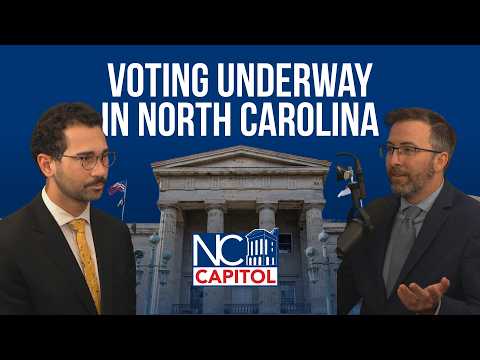
Updated 2 hours agoNorth Carolina began voting in the 2026 midterms on September 4, the first state to do so. That same morning, the GOP-majority State Board of Elections voted 3-2 along party lines to tighten which mailed ballots will count.
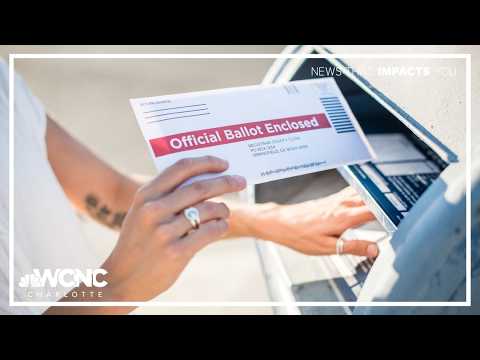
The new guidance tells counties to invalidate ballots returned with an unsealed inner envelope, a signature that doesn't match the voter's name, or more than one ballot in an envelope. Affected voters get a call and can request a replacement, though officials say late returns may leave no time to fix errors.
Why it matters
Mail-in ballots in North Carolina were already rejected at a 6% rate this spring; tighter rules could raise that number in a close midterm election.
Questions about this story
Free account needed to ask — your question is kept and asked for you right after sign-up. Answers are public.
No questions yet — be the first to ask.
Key Indicators
Voices
Curated perspectives — historical figures and your fellow readers.
Play
Exploring all sides of a story is often best achieved with Play.
WHO SAID WHAT?
Can you match the quotes to the right people?
- points for each correct match.
- time bonus when you answer in under seconds.
- streak bonus once you hit correct in a row.
— Who said this?
Tip: press 1– to answer.
points — sign up to put that on the leaderboard.
Higher or Lower
A number from this story, against one from elsewhere in the news — guess which is bigger, then keep the chain going. 5 rounds, 3 strikes; a miss costs a strike and resets your streak.
Keyboard: ↓/L lower · ↑/H higher
0 points — sign up to put that on the leaderboard.
Connections
Sixteen names from the news. Find the four hidden groups of four. Four mistakes max.
Sign up to keep a daily streak — a new puzzle lands every day.
Exit debate?
Your progress in this debate will be lost.
- 1 Two AI personas square off on this story.
- 2 You predict who'll win each round — correct picks earn XP.
- 3 One crossfire question is yours to fire. Pick it carefully.
Couldn't generate a topic
Select Your Champions
Choose one persona for each side of the debate
DEBATE TOPIC
Choose personas with different perspectives for a more dynamic debate.
Select debater for this side:
No debate personas available right now.
Select debater for this side:
No debate personas available right now.
Who's Got This Round?
Make your prediction before the referee scores
The referee scores both sides on
Round Results
Set the Crossfire
Pick the question both personas must answer in the final round
Debate Oracle! You called every round!
Sharp Instincts! You know your debaters!
The Coin Flip Strategist! Perfectly balanced!
The Contrarian! Bold predictions!
Inverse Genius! Try betting the opposite next time!
XP Breakdown
Prediction History
People Involved
Organizations Involved
The five-member body that administers elections in North Carolina.
A state body that reviews proposed administrative rules for legality and consistency with legislative intent.
The state's bicameral legislature, currently controlled by Republicans.
Timeline
February 2026 November 2026
-
Election Day; absentee ballots due
Upcoming UpcomingAll mail-in ballots must arrive at county boards by 7:30 p.m. No post-Election Day grace period.
-
Board votes 3-2 to pass numbered memos
Latest DecisionThe board passed the same standards as numbered memos, effective immediately — hours before ballots mailed.
-
North Carolina mails first 2026 ballots
MilestoneNorth Carolina became the first state to begin voting in the 2026 midterm elections.
-
Stein files comments to block rules
OppositionGov. Josh Stein filed enough written comments to force a delay beyond the November election.
-
Rules Review Commission approves; objections delay them
ProceduralCommission approved unanimously, but 10 objections triggered legislative review, delaying rules past midterms.
-
Board adopts permanent absentee rules
RulemakingThe board approved permanent rules tightening how counties process returned absentee ballots.
-
March primary sees 6% mail-in rejection rate
ElectionMore than 6% of mailed ballots were rejected under the old, more lenient rules.
-
Board issues revised declaratory ruling
RulingThe elections board said some absentee ballot guidance needed to change.
Historical Context
3 moments from history that rhyme with this story — and how they unfolded.
Florida 2000 recount
The presidential election came down to Florida's 537-vote margin. Ballot design and counting rules — hanging chads on punch-card ballots, confusion over the butterfly ballot in Palm Beach County — determined who became president.
The Supreme Court's decision in Bush v. Gore ended the recount on December 12, 2000.
The episode showed how arcane ballot-handling decisions decide elections, and it triggered a national push to modernize voting equipment.
It's the cautionary tale behind fears that envelope-sealing rules and signature checks will determine who controls Congress after the 2026 midterms.
North Carolina 9th District absentee fraud (2018)
An operative working for Republican congressional candidate Mark Harris collected absentee ballots from voters in Bladen County, some of which were later found to have been filled in illegally. The scheme came to light after Harris's narrow victory.
The state elections board refused to certify the result and ordered a new election, which Republican Dan Bishop won by a wider margin.
The case drove stricter absentee ballot laws in North Carolina and deepened Republican concerns about mail-in voting integrity.
It's the main factual basis North Carolina Republicans cite for tightening mail-in ballot rules — and the reason Democrats say the new rules target technicalities, not actual fraud.
Georgia Election Integrity Act (2021)
Georgia's Republican-controlled legislature passed a sweeping voting law that added ID requirements for absentee ballots, limited ballot drop boxes, and shortened the run-off window. Democrats called it a suppression law; Republicans called it an integrity measure.
President Biden called it 'Jim Crow in the 21st century.' Major corporations including Coca-Cola and Delta publicly opposed it, and MLB moved the All-Star Game out of Atlanta.
The law became a template for other Republican states and a rallying point for voting-rights groups ahead of the 2022 and 2024 cycles.
The same integrity-versus-access debate is playing out in North Carolina, where the board's GOP majority says tighter rules restore confidence in mail voting and Democrats say they disenfranchise legitimate voters.
