

Pull to refresh
Logo
Odyssey releases Odyssey-3 world model as free public research preview

Odyssey releases Odyssey-3 world model as free public research preview

New Capabilities

The 14-billion-parameter model generates interactive environments from text and is positioned as a foundation for robots, drones, and video games

Today: Free public preview goes live

Overview

Updated 43 minutes ago

Type a description of a street, a forest, or a spaceship interior, and Odyssey-3 builds it as a navigable world in real time. The California AI company released the model as a free public research preview, letting anyone walk through generated environments in first or third person and trigger events the model simulates on the fly.

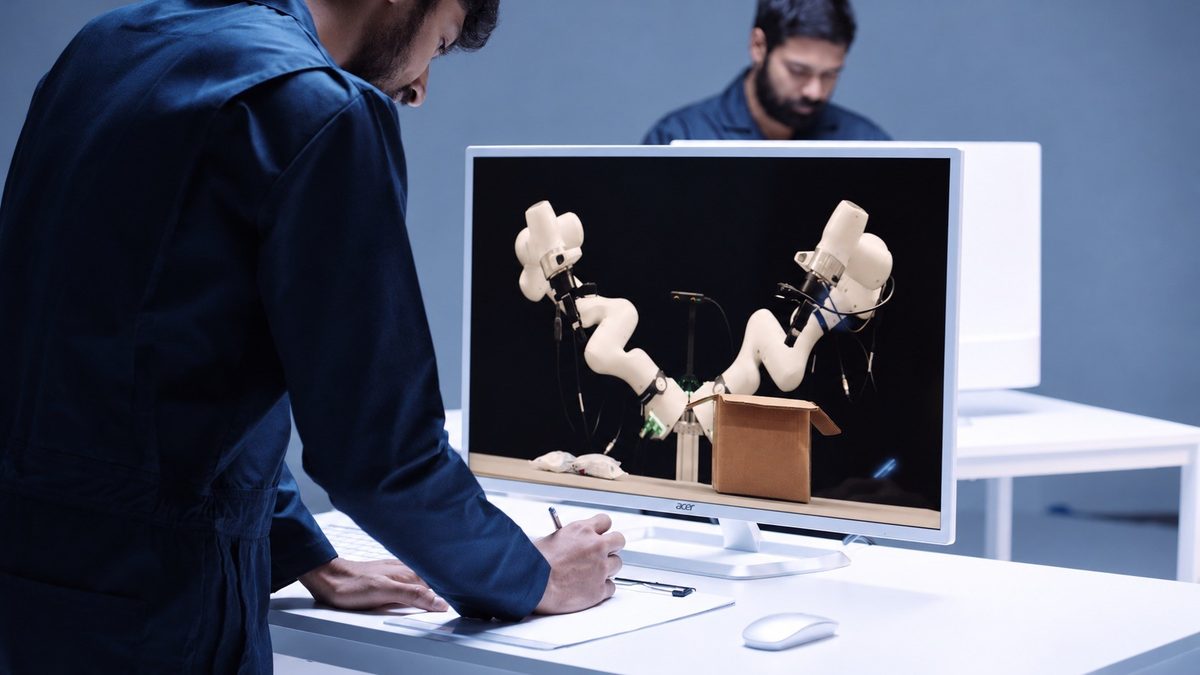
Odyssey positions the 14-billion-parameter model as a foundation for physical intelligence. The same system that generates game worlds can, with a trained controller, drive a car, operate a robotic arm, or pilot a drone. The company says a controller trained on about two hours of GTA V footage transferred to Red Dead Redemption 2 without additional training.

Why it matters

If world models work as Odyssey claims, simulated environments become training grounds for robots and vehicles, cutting the cost of physical-world testing.

Questions about this story

Free account needed to ask — your question is kept and asked for you right after sign-up. Answers are public.

No questions yet — be the first to ask.

Key Indicators

14B
Base model parameters
Odyssey-3's base model has 14 billion parameters and generates 832×480 video.
66.1
Physics-IQ Verified score (best-of-eight)
Odyssey-3 Pro's top score on the video-to-video benchmark, from a single run with best-of-eight selection.
63.37
Physics-IQ Verified four-run average
The average across four runs without selection, which meets the benchmark's methodology for record claims.
3 of 4
WorldMark categories ranked 1st
Odyssey-3 Pro ranks first in three of four WorldMark categories in company evaluations.
20 hours
Driving data for policy training
Hours of driving data used to train a driving policy on real roads in India, with the Odyssey-3 backbone frozen.

Voices

Curated perspectives — historical figures and your fellow readers.

Ever wondered what historical figures would say about today's headlines?

Sign up to generate historical perspectives on this story.

Organizations Involved

Timeline

September 2026 October 2026

3 events Latest: Today
  1. Free public preview goes live

    Today Product Launch

    The Decoder reports on the free public research preview, letting anyone generate and explore interactive environments from text prompts.

  2. Odyssey launches research preview

    Product Launch

    The company announced the research preview was available, with a free demo running on the Odyssey-3 Flash variant.

  3. Odyssey first unveils Odyssey-3

    Announcement

    Odyssey showed the model and said a public release would come in the coming weeks.

Scenarios

1

Odyssey-3 becomes a validated robotics platform

Possible Resolves by Apr 11, 2027

Discussed by: The Decoder, AI in Context

Independent labs replicate Odyssey's robot and driving demos. API access opens with disclosed pricing, and developers build controllers on the frozen backbone. The four-run Physics-IQ average holds up under external testing.

2

Benchmark scrutiny limits Odyssey-3 to research-preview status

Possible Resolves by Apr 11, 2027

Discussed by: TPS Report

The best-of-eight Physics-IQ score draws criticism, and without independent verification the model stays a demo. Robotics and autonomous-systems use requires further work, as Odyssey itself notes. The free preview remains popular but commercial adoption stalls.

3

World models become the next AI frontier, competitors follow

Likely Resolves by Oct 11, 2027

Discussed by: AI in Context

Odyssey's public preview pushes other labs to release their own world models. The category moves from closed research to open competition, with multiple free previews and API offerings within a year.

Historical Context

3 moments from history that rhyme with this story — and how they unfolded.

February 2024

DeepMind Genie (2024)

DeepMind showed Genie, a model that generated playable 2D platformer worlds from a single image or text prompt. It was a research demonstration, not a product.

Then

Genie remained a research paper with no public release.

Now

It established the concept of generative interactive environments but left the field open for others.

Why this matters now

Odyssey-3 is the first major public release of a similar capability, moving from paper to playable preview.

February 2024

OpenAI Sora (2024)

OpenAI unveiled Sora, a text-to-video model that generated minute-long clips with consistent physics. It was shown to select creators, not the public.

Then

Sora generated intense interest but limited access.

Now

It took over a year for Sora to reach public availability, showing the gap between demo and product.

Why this matters now

Odyssey-3's free preview skips that gap, letting anyone test the model immediately.

January 2025

NVIDIA Cosmos (2025)

NVIDIA released Cosmos, a family of world foundation models aimed at robotics and autonomous vehicle training, with open weights.

Then

Cosmos gave developers a base for synthetic data generation.

Now

It established world models as a robotics training tool.

Why this matters now

Odyssey-3 competes directly in this space, adding real-time interactive generation and a free preview.

Sources

(6)