

Pull to refresh
Logo
OpenAI launches GPT-5.6 and ChatGPT Work after federal clearance

OpenAI launches GPT-5.6 and ChatGPT Work after federal clearance

New Capabilities

Three-model family goes public after a two-week federal review; a new agent automates office workflows

Today: GPT-5.6 and ChatGPT Work launch publicly

Overview

Updated 1 hour ago

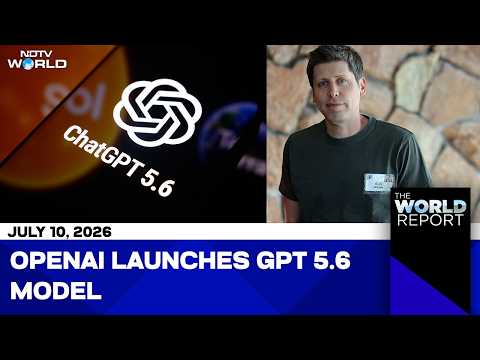
OpenAI's newest AI models sat in a federal holding pen for two weeks, limited to about 20 government-approved partners while the Commerce Department audited their abilities in coding, biology, and cybersecurity. On Thursday the Trump administration cleared the GPT-5.6 family for public release, and OpenAI switched on a new workplace agent at the same time.

The release pairs three models (Sol, the flagship; Terra, the mid-tier; Luna, the cheapest) with ChatGPT Work, an agent that turns a plain-language goal into finished documents, spreadsheets, and web apps. It is the clearest case yet of the U.S. government gating a frontier AI launch, and it sets the pattern for every release that follows.

Why it matters

Federal review now gates frontier AI releases, and non-technical workers can deploy an agent that drafts documents, spreadsheets, and web apps.

Questions about this story

Free account needed to ask — your question is kept and asked for you right after sign-up. Answers are public.

No questions yet — be the first to ask.

Key Indicators

3
Model tiers in the GPT-5.6 family
Sol (flagship), Terra (mid-tier), and Luna (budget) share one generation but advance on separate cadences.
$5 / $30
Sol flagship API price per 1M tokens (input / output)
Terra costs $2.50/$15 and Luna $1/$6, all per million tokens.
2 weeks
Length of restricted federal preview
Access was limited to government-vetted partners while the Commerce Department evaluated the model.
~20
Government-approved partners in initial preview
A curated access list went beyond the voluntary review framework the president signed in June.

Voices

Curated perspectives — historical figures and your fellow readers.

Ever wondered what historical figures would say about today's headlines?

Sign up to generate historical perspectives on this story.

People Involved

Organizations Involved

Timeline

June 2026 October 2026

3 events Latest: Today
  1. GPT-5.6 and ChatGPT Work launch publicly

    Today Product Launch

    OpenAI received federal clearance, released Sol, Terra, and Luna across ChatGPT, Codex, and the API, and introduced the ChatGPT Work agent.

  2. GPT-5.6 enters restricted preview

    Regulatory

    Federal officials asked OpenAI to stagger the release; about 20 government-vetted partners got access while Commerce evaluated the model.

  3. Voluntary federal AI review framework signed

    Policy

    President Trump signed a framework asking companies to let agencies check powerful AI systems before launch. Participation was voluntary.

Scenarios

1

GPT-5.6 and ChatGPT Work become the enterprise standard

Possible Resolves by Jul 31, 2027

Discussed by: OpenAI, industry analysts

ChatGPT Work pairs the agent with plugin connections to Slack, Teams, Google Drive, email, calendars, and CRMs, aiming directly at office-workflow automation. If Sol's per-dollar performance claims hold in enterprise buyers' tests, the agent becomes a default tool for mid-size firms and large teams alike over the next year.

2

Federal review becomes the norm for every frontier AI release

Likely Resolves by Jan 31, 2027

Discussed by: Sam Altman, Commerce Department officials

The June 2 framework was voluntary, but GPT-5.6's rollout went further, producing a government-curated access list. Altman told employees that arrangement is not sustainable long-term. If future frontier models face similar holds, a predictable staggered-deployment pattern will be the new normal for the industry.

3

Rivals answer with cheaper frontier models

Possible Resolves by Jan 31, 2027

Discussed by: TechCrunch, market analysts

Sol's $5/$30 per-million-token pricing sets a new benchmark, and the cheaper Terra and Luna tiers put pressure on competitors' mid-range offerings. Rival labs racing to close the gap may cut prices or ship new budget tiers, turning frontier pricing into a contest rather than a premium.

Historical Context

3 moments from history that rhyme with this story — and how they unfolded.

March 2023

GPT-4 pause letter (2023)

The Future of Life Institute published an open letter signed by thousands, including Elon Musk, calling for a six-month pause on training AI systems more powerful than GPT-4, citing risks to society and humanity.

Then

No pause happened; OpenAI and rivals kept releasing models on their own schedules.

Now

The letter established voluntary safety pressure as a failed lever, pushing governments toward binding review.

Why this matters now

The pause was a plea. The GPT-5.6 held release is the first time a government actually stopped a frontier model's public launch.

October 2023

Biden executive order on AI (2023)

President Biden's order required developers of the most powerful AI models to share safety test results with the federal government before releasing them to the public.

Then

Lead AI labs agreed to submit pre-release safety reports.

Now

It was the first U.S. federal structure for pre-release AI review, though it relied on cooperation.

Why this matters now

That order is the direct ancestor of the June 2026 framework that gated GPT-5.6, turning a reporting requirement into an actual approval hold.

March 2024

EU AI Act approval (2024)

The European Parliament approved the world's first comprehensive AI law, assigning obligations by risk tier, from minimal to unacceptable.

Then

High-risk AI systems gained binding compliance duties phased in over months.

Now

Risk-tiered regulation became the global template for governing AI capability.

Why this matters now

GPT-5.6's three-tier structure (Sol, Terra, Luna) mirrors that risk-tiered logic, pricing capability rather than regulating it.

Sources

(8)