

Pull to refresh
Logo
Ivonescimab regimen tops durvalumab in biliary tract cancer trial

Ivonescimab regimen tops durvalumab in biliary tract cancer trial

New Capabilities

Bispecific antibody meets survival endpoint in head-to-head with standard of care at ESMO 2026

Today: Full HARMONi-GI1 results presented at ESMO 2026 Presidential Symposium

Overview

Updated 1 hour ago

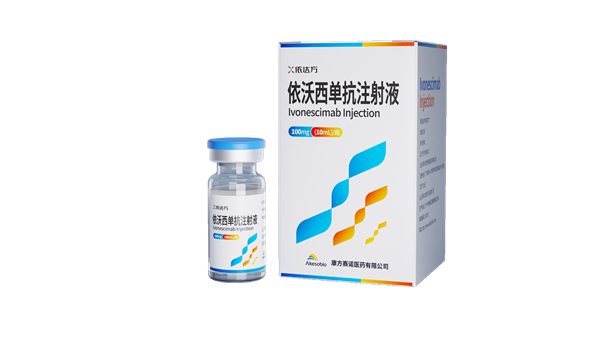
Patients with advanced biliary tract cancer lived a median of 14.9 months on ivonescimab plus chemotherapy, versus 12.1 months on the current standard—a 25% reduction in the risk of death. The results, presented October 25 at the ESMO 2026 Presidential Symposium in Madrid, came from HARMONi-GI1, a Phase III trial conducted entirely in China that pitted the bispecific antibody against durvalumab (Imfinzi) plus chemo.

The win is ivonescimab's first Phase III success in a gastrointestinal cancer, after multiple wins in lung cancer. It is also the first trial to beat the durvalumab-chemo regimen head-to-head in this disease. Whether the benefit holds outside China is the central open question, since ivonescimab's earlier lung cancer gains in Chinese patients were not matched to the same degree in international trials.

Why it matters

If confirmed globally, ivonescimab could replace durvalumab as first-line biliary tract cancer treatment—a disease with median survival under a year.

Questions about this story

Free account needed to ask — your question is kept and asked for you right after sign-up. Answers are public.

No questions yet — be the first to ask.

Key Indicators

0.75
Overall survival hazard ratio
25% lower death risk for ivonescimab versus durvalumab (95% CI 0.61–0.92; P=0.0031)
14.9 months
Median overall survival, ivonescimab arm
Versus 12.1 months for durvalumab arm—a 2.8-month absolute gain
8.4 months
Median progression-free survival, ivonescimab arm
Versus 5.8 months for durvalumab arm (HR 0.61; P<0.0001)
53.8%
Objective response rate, ivonescimab arm
Versus 32.5% for durvalumab arm—a 21.3-percentage-point gap (P<0.0001)

Voices

Curated perspectives — historical figures and your fellow readers.

Ever wondered what historical figures would say about today's headlines?

Sign up to generate historical perspectives on this story.

People Involved

Organizations Involved

Timeline

2022 October 2026

4 events Latest: Today
Tap a bar to jump to that date
  1. Full HARMONi-GI1 results presented at ESMO 2026 Presidential Symposium

    Today Conference presentation

    Jian Zhou presented final data: median OS 14.9 vs 12.1 months, HR 0.75 (P=0.0031), with all secondary endpoints met.

  2. Summit and ECOG-ACRIN announce EA2251 registration-enabling trial

    Partnership

    US Phase II/III study will compare ivonescimab against pembrolizumab or durvalumab regimens in first-line biliary tract cancer.

  3. Akeso announces positive topline results from HARMONi-GI1

    Trial results

    At a prespecified interim analysis, ivonescimab plus chemo met the overall survival endpoint versus durvalumab plus chemo.

  4. TOPAZ-1 trial establishes durvalumab-chemo as standard of care

    Background

    Durvalumab plus chemo improved OS versus chemo alone (12.8 vs 11.5 months), becoming the international first-line standard.

Scenarios

1

NMPA approves ivonescimab for first-line biliary tract cancer

Likely Resolves by Q2 2027

Discussed by: Akeso and Summit Therapeutics, which proposed Priority Review; the ESMO press program

Akeso has proposed ivonescimab plus chemo for Priority Review by China's NMPA. The trial met overall survival, progression-free survival, and objective response rate, and regulatory approval in China is the most direct path from these results. Given the data strength across all endpoints, approval is widely expected within a year of the filing.

2

EA2251 international trial shows weaker or absent benefit versus China results

Possible Resolves by End of 2029

Discussed by: Mustafa Özdoğan and independent oncologists cautioning that China-only interim results often overstate benefit

EA2251, the US Phase II/III trial launched with ECOG-ACRIN, will test whether ivonescimab beats pembrolizumab or durvalumab outside China. If the OS hazard ratio lands meaningfully above the China trial's 0.75, or misses statistical significance, global adoption would stall even if China approves the drug first. This matches the lung cancer pattern, where international trials showed smaller gains than Chinese ones.

3

EA2251 confirms benefit, ivonescimab moves toward global approval

Possible Resolves by End of 2029

Discussed by: Summit Therapeutics and Akeso, which positioned ivonescimab as a potential new first-line standard

If international results match or approach the China data, ivonescimab would be on track for global regulatory filings. Summit holds commercialization rights outside China and is running EA2251 with ECOG-ACRIN. Positive international data would make ivonescimab the first bispecific antibody to displace a PD-L1 standard in a head-to-head first-line cancer trial.

Historical Context

2 moments from history that rhyme with this story — and how they unfolded.

2022

TOPAZ-1 trial (2022)

The global Phase III TOPAZ-1 trial tested durvalumab plus chemotherapy against chemotherapy alone in first-line advanced biliary tract cancer. Median overall survival was 12.8 months versus 11.5 months (HR 0.80), a modest but real gain.

Then

Durvalumab plus chemotherapy was adopted as the preferred first-line immunotherapy regimen in both domestic and international guidelines.

Now

It became the benchmark that every new drug in biliary tract cancer would need to beat.

Why this matters now

HARMONi-GI1 used the TOPAZ-1 durvalumab-chemo regimen as its control arm and beat it on overall survival—the first Phase III trial to do so in this disease.

2024–2026

Ivonescimab in non-small cell lung cancer (2024–2026)

Ivonescimab showed strong results in China-only Phase III lung cancer trials, winning approvals from China's drug regulator. But independent oncologists noted the early gains in Chinese patients were not matched to the same degree in international trials.

Then

Ivonescimab was approved in China for EGFR-mutant non-small cell lung cancer, with the US partner Summit pushing global development.

Now

The gap between China-only and international results became the standard cautionary note for anyone interpreting Chinese single-region trial data.

Why this matters now

HARMONi-GI1 is also a China-only trial. Whether its survival gains translate internationally is the same question that shaped the lung cancer story.

Sources

(8)