



Pull to refresh
Logo
Qnity buys Meridian's electronics adhesives unit for $840 million

Qnity buys Meridian's electronics adhesives unit for $840 million

Money Moves

A one-year-old DuPont spin-off pays about 8.4 times revenue for glues used in optical chips, thermal joints and AI data centers

Overview

Updated 2 hours ago

Qnity Electronics will pay $840 million for the electronics business of Meridian Adhesives Group, using cash on hand and borrowings from its existing revolving credit line. The unit makes epoxy glues that hold optical parts in place and carry heat across chip joints, and Qnity expects about $100 million of revenue from it in 2026.

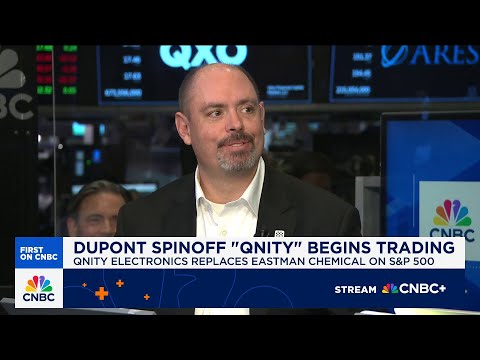
That is roughly 8.4 times expected revenue. Qnity was created in November 2025 when DuPont spun out its electronics business, and its interconnect segment, which will absorb the adhesives unit, posted $759 million in third-quarter sales, up about 30% from a year earlier.

Why it matters

AI chips are hitting heat and wiring limits, so the companies that supply the adhesives and packaging materials between the silicon are buying each other.

Questions about this story

Free account needed to ask — your question is kept and asked for you right after sign-up. Answers are public.

No questions yet — be the first to ask.

Key Indicators

$840M
Purchase price
Paid in cash on hand plus incremental borrowings under Qnity's existing revolving credit facility.
~$100M
Meridian electronics revenue, 2026
Qnity's projection for calendar year 2026, with double-digit growth expected in 2027.
8.4x
Price to expected 2026 revenue
Computed from the $840 million price and the $100 million revenue projection.
~$1.2B
New addressable market
Qnity's estimate of the market the adhesives open up, which it says grows double digits a year.
97%
Customer revenue retained over five years
Measured by revenue, so it tracks dollars kept rather than the share of accounts.
$759M
Interconnect segment sales, Q3 2026
Up about 30% year over year; segment sales passed $2 billion for the year through September.

Voices

Curated perspectives — historical figures and your fellow readers.

Sign up to generate historical perspectives on this story.

People Involved

Organizations Involved

Timeline

2022 November 2026

4 events Latest: 2 days ago
Tap a bar to jump to that date
  1. Qnity agrees to buy Meridian's electronics unit

    Latest Deal

    Qnity will pay $840 million in cash and credit-line borrowings for the adhesives business, with closing expected in the first quarter of 2027 after antitrust review.

  2. Interconnect segment sales jump 30%

    Earnings

    Qnity reports $759 million in third-quarter interconnect sales, with the segment up about 29% for the year through September.

  3. DuPont spins out Qnity

    Corporate

    DuPont's electronics business becomes a separate public company listed on the New York Stock Exchange.

  4. American Securities buys Meridian

    Ownership

    The private equity firm acquires Meridian Adhesives Group from Arsenal Capital Partners.

Scenarios

1

Deal closes in the first quarter of 2027

Likely Resolves by Q1 2027

Discussed by: Qnity's own announcement and trade coverage of the signing

The agreement is signed, and the stated conditions are customary closing terms plus the Hart-Scott-Rodino antitrust waiting period. Qnity is paying with cash on hand and an existing credit line, so no financing condition stands between signing and close.

2

Antitrust review pushes the close past the first quarter

Possible Resolves by Q2 2027

Discussed by: Chip Dispatch, which flagged Hart-Scott-Rodino review as the gating step

A second request from the Federal Trade Commission or the Justice Department's antitrust division would extend the waiting period beyond the companies' target. The overlap between the two businesses is narrow, since Qnity sells packaging dielectrics and thermal materials while Meridian sells adhesives, but the review clock is the schedule risk named in coverage of the deal.

3

Qnity announces another materials acquisition by the end of 2027

Possible Resolves by End of 2027

Discussed by: Qnity chief executive Jon Kemp, who described a disciplined acquisition strategy aimed at high-value technologies

The company presents this purchase as one step in a program rather than a one-off. With the interconnect segment growing about 30% and the Meridian unit adding roughly $100 million in annual revenue, another bolt-on in packaging, thermal or photonics materials is the next move the stated strategy implies.

Historical Context

3 moments from history that rhyme with this story — and how they unfolded.

2019

DuPont splits into three (2019)

The company formed by the Dow and DuPont merger separated into Dow, Corteva and a slimmed-down DuPont. DuPont kept the electronics materials business among its remaining units.

Then

All three companies began trading separately that year, each with a narrower business than the combined firm.

Now

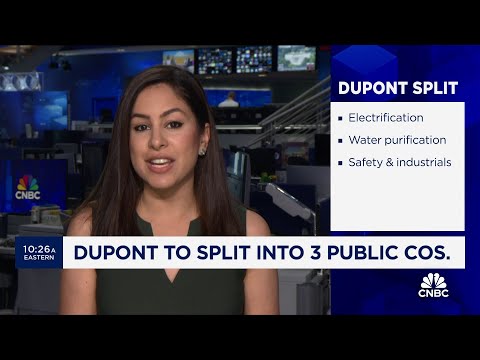
DuPont kept shedding units, and in November 2025 it spun the electronics business out as Qnity, which joined the S&P 500.

Why this matters now

The buyer is a one-year-old company with a narrow mandate and cash to spend, which is why an $840 million bolt-on is plausible for it.

2019

Merck KGaA outbids Entegris for Versum Materials (2019)

Two suppliers of chipmaking materials competed to buy Versum Materials, a maker of specialty materials used in semiconductor manufacturing. Merck KGaA won and folded the business into its electronics division.

Then

Chipmakers lost one independent materials supplier and gained a broader one.

Now

The largest materials vendors kept assembling wider portfolios, on the argument that fabs prefer fewer suppliers covering more steps.

Why this matters now

Qnity is making the same bet at smaller scale: buy a specialist, then sell it alongside dielectrics and thermal materials to the same customers.

2021-2022

DuPont's Rogers Corporation purchase collapses (2022)

DuPont agreed to buy specialty materials maker Rogers Corporation in 2021. The companies terminated the deal in November 2022 after failing to secure regulatory approval, with China's review the main obstacle.

Then

Both sides walked away after more than a year of work.

Now

The episode became the standard example of a specialty materials deal dying on approval timing rather than price.

Why this matters now

Qnity's purchase faces a lighter review, but the gap between signing and closing is still where a completed deal can turn into a stalled one.

Sources

(7)