Ukraine’s drone war reaches deeper into Russia as Moscow claims another Kharkiv gain
Force in Play
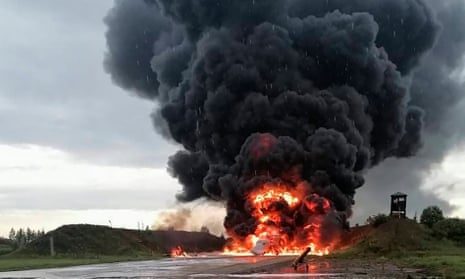
A drone-led Ukrainian counteroffensive north of Lyman threatens to encircle Russian troops as both sides trade record barrages against refineries and ports.
A drone-led Ukrainian counteroffensive north of Lyman threatens to encircle Russian troops as both sides trade record barrages against refineries and ports.
Since early December 2025, the war has featured intensified winter ground operations in Kharkiv and Donetsk alongside massive drone and missile campaigns targeting each side's war economies. Russia's February 16-17 barrage of 425 drones and 29 missiles coincided with Geneva talks that concluded February 18 with limited military progress but no political breakthroughs on territorial compromises or security guarantees. Zelenskyy deemed the outcomes 'not sufficient' and requested a follow-up meeting later in February.
Ukraine responded with deep strikes, including a February 21 hit on the Votkinsk missile plant 1,300 km inside Russia using indigenous cruise missiles, and reported marginal advances in central Kupyansk as of February 19. Russia's stalled momentum in Kharkiv, where Ukrainian forces are repelling assaults near Kupyansk, contrasts with Ukraine's expanding deep-strike reach into Russian defense production.
Zelenskyy has signaled readiness for ceasefire monitoring but highlighted territorial issues as the impasse, while Russia launched further drone waves (120+ on February 20). Viability questions surround U.S.-European security guarantees amid Trump's June deadline and Congressional hurdles, while Geneva diplomacy remains fragile as Russia insists on maximalist goals beyond territory. With Ukraine's fastest gains since 2023 now tempered by attritional fighting, the economic-military toll endures amid diplomatic deadlock.
Why it matters
Russia and Ukraine now trade near-record drone barrages that hit oil ports and missile plants, pulling energy and arms production into the crossfire.
Questions about this story
Free account needed to ask — your question is kept and asked for you right after sign-up. Answers are public.
No questions yet — be the first to ask.
Key Indicators
15 km
Ukrainian advance north of Lyman
Drone-led 3rd Corps counteroffensive pushed Russian forces back up to 15 km, carving a 5 by 10 km salient and cutting a key supply road near Drobysheve.
800
Russian jet-powered drones in four days
Late August barrage strained Ukrainian air defenses; about half of 174 drones in the Sept 2 attack were jet-powered models that are hard to stop.
516
Drones in Ukrainian wave at Ust-Luga
Strike on Russia's biggest Baltic oil port caused a fire; Russia claimed 516 drones destroyed overnight across Russia, Crimea, and the Black Sea.
130
Sq km Ukraine liberated in August
Ukraine recaptured 130 sq km while Russia seized just over 90, as the fight for Kostiantynivka sapped Russian troop strength.
263
Russian air defense elements destroyed in 2026
Ukraine's Unmanned Systems Forces destroyed 33 in August alone, opening corridors for drones against refineries and ports.
39 events
Latest: September 4th, 2026 · 1 month ago
Showing 8 of 39
JK to step
Tap a bar to jump to that date
Jump to
September 2026
Ukraine strikes Ust-Luga port as 516 drones swarm Russian skies
LatestStrike
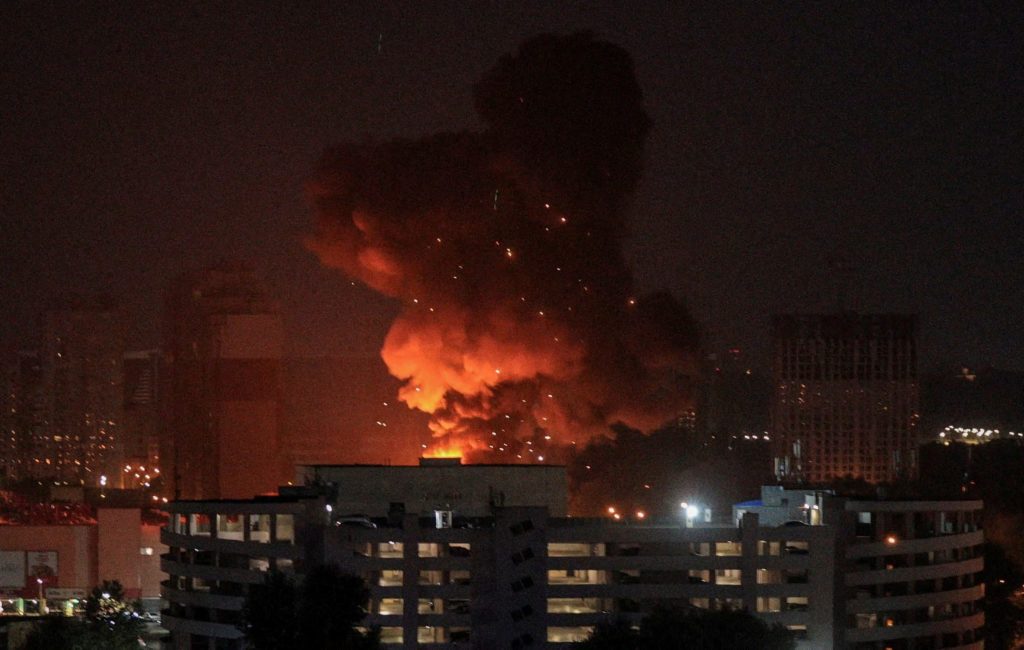
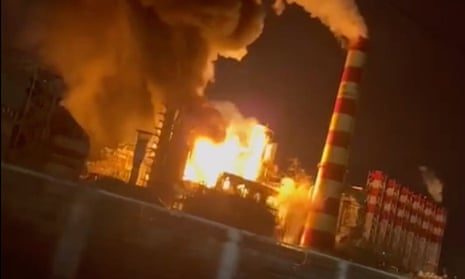
Ukrainian drones hit Russia's biggest Baltic oil port, Ust-Luga, starting a fire. Russia's defense ministry claimed 516 drones destroyed overnight over 18 Russian regions, Crimea, and the Black Sea.
Drone-led Ukrainian counteroffensive pushes Russian forces back 15 km near Lyman
Battlefield
Ukraine's 3rd Corps carved a 5 by 10 km salient into Russian defenses north of Lyman near Drobysheve, cutting a key supply road. An ISW assessment from Aug 31 showed Ukrainian forces at Zarichne's outskirts, threatening a 15 by 45 km encirclement pocket.
Ukraine liberated 130 sq km in August; Russia gained just over 90
Battlefield
ISW estimated Ukraine recaptured 130 sq km in August while Russia seized just over 90 sq km, as the fight for Kostiantynivka sapped Russian troop strength.
Russia fires 174 drones, half jet-powered; Putin and Zelenskyy trade threats
Strike
Russia fired 174 attack drones, about half jet-powered models that are hard to stop, plus two ballistic and two cruise missiles, per the Ukrainian Air Force. Putin and Zelenskyy exchanged threats as strikes hit both countries.
Ukraine fires nearly 800 drones at Russia
Strike
Ukrainian forces launched one of their biggest drone attacks of the war, firing almost 800 drones two days after a similar salvo. A Russian missile strike on a Kharkiv village killed at least 10 people the same day.
August 2026
Russia fires 800 jet-powered drones into Ukraine in four days
Strike
Russia launched about 800 jet-powered drones over four days, mixing daytime waves that kept Kyiv under air alert for hours. Eight alerts sounded by lunchtime Monday.
February 2026
Russia launches 120 drones and Iskander-M at Ukraine
Strike
Overnight attack from multiple regions; Ukraine downed 106 drones, debris and hits in 11+ locations including Odesa (2 injured).
Ukrainian forces advance marginally in central Kupyansk
Battlefield
Geolocated footage confirms slight gains amid Russian assaults near Petropavlivka, Fyholivka; no major Russian advances.
Geneva trilateral talks end without political agreement
Diplomacy
Talks conclude abruptly after 2 hours; military ceasefire monitoring discussed constructively but political issues (territory, guarantees) stalled; Zelenskyy calls results insufficient.
SBU strikes Metafrax Chemicals plant 1,600km inside Russia
Strike
Ukraine's Security Service Alpha unit conducted deep-strike drone operation hitting Metafrax Chemicals in Perm Krai, one of Russia's largest methanol producers. At least 6 explosions reported; facility produces hexamine, urea, and pentaerythritol—key explosives components.
Ukraine strikes Taman oil terminal in Krasnodar for second time since January
Strike
SBU drones hit Russia's largest Black Sea oil facility; second attack on terminal since January 22.
Geneva trilateral talks begin with military chiefs; Russia launches 425 drones and missiles
Diplomacy/Strike
US-brokered negotiations between Ukraine, Russia, and US resumed in Geneva with military delegations present. Coinciding with talks, Russia launched 396 drones and 29 missiles targeting energy infrastructure; Ukraine intercepted 367 drones and 25 missiles. Over 28,000 consumers lost power in Kharkiv; tens of thousands without heating in Odesa.
Ukraine reports fastest territorial gains since 2023—200 km² in five days
Battlefield
Ukrainian forces retook 200 square kilometers of previously Russian-occupied territory during Feb 10-15 operations, marking fastest gains in nearly three years.
Zelenskyy addresses Munich Security Conference; demands 20-50 year US guarantees
Diplomacy
Ukrainian president told world leaders that security guarantees are key to ending war; emphasized need for Congressional backing and longer-term commitments to restore investor confidence.
Trump using security guarantees as leverage in peace negotiations
Diplomacy
US official revealed Trump conditioning security guarantee signing on finalizing all details first; Trump wants agreement finalized before signing to avoid impeding further talks.
Zelenskyy pushes back on Trump's summer deadline for peace deal
Diplomacy
Ukrainian president told Munich Security Conference that Congress must vote on security guarantees; warned that Kremlin is stringing US along in talks to normalize relations and ease sanctions.
Small non-combat-capable Russian group remains trapped in Kupiansk
Battlefield
Ukrainian defense forces report only a small, non-combat-capable group of Russian troops remains in Kupiansk; Russian forces attempting to advance east toward Kupiansk-Vuzlovyi but failing to break through.
US and Russia agree to resume military dialogue after Abu Dhabi talks
Diplomacy
Hotlines reestablished following US-brokered peace discussions; Ukraine secures prisoner exchange of 150 servicemen amid Zelenskyy's call for security guarantees.
Ukraine strikes Oreshnik missile production infrastructure in Russia
Strike
Defense Forces confirm long-range hits on facilities linked to Oreshnik IRBM amid ongoing drone campaign.
Russia launches record 521-drone/missile barrage before Abu Dhabi talks
Strike
Largest single attack of war with 450+ drones and 70+ missiles targets energy infrastructure; Zelenskyy urges more air defenses amid blackouts.
January 2026
Moscow court holds closed preliminary hearing in Russia vs Euroclear lawsuit
Legal
Russia seeks $232B over frozen assets; judge seals proceedings at Central Bank request amid EU loan debates.
Russia rejects European peacekeeping plan as 'axis of war'
Statement
Moscow called UK-France peacekeeping proposal dangerous; vowed to treat any such units as legitimate military targets.
Russia deploys Oreshnik missile against Lviv region
Strike
First Oreshnik intermediate-range ballistic missile use in over a year; SBU confirmed fragments recovered from Lviv strike.
Massive 242-drone Russian strike hits Kyiv in freezing weather
Strike
Russia launched 242 drones and 36 missiles at Ukraine; Kyiv bore brunt with 4 dead, 19 injured, water and power disruptions during extreme cold.
Zelenskyy says US security guarantee text ready for Trump finalization
Diplomacy
Ukrainian president announced bilateral security guarantee document is essentially ready for highest-level finalization with incoming Trump administration.
Western allies agree Ukraine security guarantees framework
Diplomacy
U.S.-led monitoring mechanism and European multinational peacekeeping force agreed after Paris talks; UK-France to establish military hubs in Ukraine post-ceasefire.
Russia launches 205+ drones at Ukraine; million lose power
Strike
New Year attack targeted energy infrastructure in seven regions; Zaporizhzhia and Dnipropetrovsk hit hardest, cutting power to ~1M people.
December 2025
Ukrainian drones strike Russian energy sites on New Year's Eve
Air War
Drones hit energy infrastructure and homes across Krasnodar region; oil refinery and dock struck in Tuapse, 2 injured.
Putin claims Russia seized 5,100+ sq km of Ukraine in 2025
Statement
Year-end messaging emphasized momentum; Putin claimed half of Lyman and all of Vovchansk in Kharkiv region, though ISW estimated max 7% Lyman control.
EU approves €105B Ukraine loan without using frozen Russian assets
Money Moves
EU leaders chose market borrowing over controversial loan backed by Russian reserves after Belgian PM rejected plan as legally risky to Euroclear.
Ukraine claims destruction of Kupiansk infiltration pipeline
Strike
Ukraine's 429th Drone Regiment released video showing destruction of a pipeline Russia used to move troops into Kupiansk.
Zelensky visits Kupiansk as Ukraine claims an encirclement
Battlefield
Ukraine said it retook northern districts and cut supply lines, trapping Russian troops in the city center.
Russia’s central bank sues Euroclear as EU weighs asset-backed Ukraine financing
Money Moves
Moscow called any use of its frozen assets illegal and opened a legal front against Euroclear.
NATO messaging hardens as drone war widens
Statement
NATO’s secretary general warned the threat could extend beyond Ukraine, pressing allies toward urgency.
Russia reports 287 drones shot down; Moscow airports disrupted
Air War
Russia said air defenses downed drones across many regions, including near Moscow, amid flight restrictions.
Ukraine confirms strikes on Russian chemical plants tied to explosives
Strike
Ukraine’s unmanned forces said drones hit plants in Novgorod and Smolensk regions producing key inputs.
Russia claims it captured “Lyman” in Kharkiv region
Battlefield
Russian state-linked reporting cited the defense ministry saying Lyman fell; independent confirmation was limited.
Mass strike night: drones and missiles slam Ukrainian infrastructure
Strike
Ukraine reported a huge overnight attack wave hitting infrastructure, with energy a main target.
Russia signals a winter push with bold capture claims
Battlefield
Russia claimed major gains in the east, feeding a momentum narrative as winter began.
Scenarios
1
Russia Turns Kharkiv Pressure Into a Winter Breakthrough
Possible
Discussed by: ISW/criticalthreats assessments and daily reporting from Reuters and regional outlets
Russia keeps attacking in narrow corridors where weather and manpower can blunt Ukrainian drone defenses, then amplifies small gains as strategic collapse. The trigger is sustained Russian pressure around Kharkiv and Donetsk logistics nodes—plus Ukraine forced to prioritize air defense for cities over the front. This ends with Kupiansk destabilized again and new “liberation” claims rolled into bargaining demands.
2
Ukraine Holds the Line—and Makes Russia’s Rear the New Front
Possible
Discussed by: Reuters battlefield reporting, Ukrainian official statements, and coverage of Russian air-defense strain
Ukraine stabilizes key ground nodes (especially Kupiansk) while scaling the drone campaign from refineries toward chemicals, platforms, and military-linked industry. The trigger is repeatable strike success—fires, outages, halted production—combined with visible Russian disruption (airport shutdowns, forced redeployments of air defenses). Russia responds with harsher strikes on Ukrainian energy, but the political cost of “rear vulnerability” becomes permanent.
3
Europe Weaponizes Frozen Russian Assets; Russia Retaliates in Courts and Seizures
Likely
Discussed by: Reuters, AP, and European economic policy debate around Euroclear protections
The EU moves from freezing to leveraging—using immobilized Russian assets to back larger, longer-term Ukraine financing. The trigger is a formal EU plan with legal shielding for Euroclear and other institutions. Russia escalates with lawsuits, pressure on Western firms still exposed in Russia, and selective asset seizures, turning sanctions enforcement into a rolling financial tit-for-tat that runs alongside the drone war.
4
Ceasefire Collapses Under Oreshnik Shadow and Peacekeeping Stalemate
Possible
Discussed by: Analysis from Russia Matters, Moscow Times coverage of Russian rejection of peacekeeping proposals
Russia's deployment of Oreshnik missiles and explicit threats against Western peacekeepers create impossible conditions for ceasefire implementation. Moscow demands Donbas territorial concessions that Kyiv cannot accept; Western guarantees stall without consensus on enforcement. Russia uses talks as cover for consolidating winter gains while rejecting monitoring mechanisms. The diplomatic window closes as both sides conclude the other is negotiating in bad faith, triggering renewed military escalation through spring 2026.
5
Trump Pressures Zelenskyy Into 'Frozen Conflict' Accepting Temporary Territorial Losses
Possible
Discussed by: Washington Post opinion analysis, reporting on Trump-Zelenskyy dynamics and security guarantee negotiations
Trump finalizes security guarantees but conditions military aid on Ukraine accepting de facto partition: Russia keeps current holdings, demilitarized zones monitored by European (not NATO) forces, no formal Ukrainian NATO membership timeline. Zelenskyy faces choice between losing Western support or accepting 'Korea-style' frozen conflict. Key trigger is Trump threatening to cut aid if Ukraine rejects terms. European allies provide guarantees but cannot replace U.S. military assistance volume, forcing Kyiv's hand despite domestic opposition to territorial concessions.
6
Geneva Talks Collapse Over Territorial Demands; Escalation Resumes
Possible
Discussed by: Military.com, ISW assessments, diplomatic reporting from AP and Reuters
Geneva negotiations fail to produce framework by Trump's June deadline as Russia insists on Donbas cession and Ukraine refuses territorial concessions without security guarantees. Military chiefs cannot agree on ceasefire monitoring mechanisms or demilitarized zone arrangements. Both sides resume full-scale operations, with Russia attempting to consolidate winter gains around Kupiansk and Ukraine expanding deep-strike campaign into Russian industrial heartland. Trump threatens to cut aid if Ukraine rejects terms; European allies struggle to fill gap.
7
Deep-Strike Campaign Forces Russia to Divert Air Defenses from Front
Likely
Discussed by: Ukrainian military statements, ISW analysis of Russian logistics strain
Ukraine's expanding drone campaign—now reaching 1,600km into Russia to hit chemical plants and oil terminals—forces Russia to redeploy air defense systems from front lines to protect critical infrastructure. This creates tactical openings for Ukrainian ground forces, particularly around Kupiansk and Kharkiv. Russia's February territorial gains slow as air defense gaps widen. Ukraine's 200 km² gain in five days becomes a pattern rather than anomaly, shifting momentum despite Russian numerical advantage.
8
Lyman Cauldron Closes on Russian Troops
Possible
Resolves by Oct 31, 2026
Discussed by: Kyiv Post field reports, ISW Aug 31 assessment, 3rd Corps statements
Ukraine's 3rd Corps keeps pushing north and east of Lyman with drone-led infantry assaults. If Ukrainian forces take Zarichne, a 15 by 45 km pocket could form, isolating hundreds of Russian troops from supply and reinforcement. Russia would then choose between feeding reserves into a shrinking salient or pulling back, ceding territory it spent months claiming.
9
Jet-Powered Drone Barrages Become the New Normal
Likely
Resolves by End of 2026
Discussed by: Ukrainian Air Force briefings, RBC-Ukraine analysis, Al Jazeera reporting
Russia is shifting its drone fleet toward jet-powered models that fly faster and are harder to intercept. About half of the 174 drones in the September 2 attack were jet-powered, and RBC-Ukraine reports Moscow plans four large-scale combined attacks in September. Ukraine's air defense network, already stretched, faces rising attrition. Ukraine is responding by striking Russian air defense systems and drone launch sites, claiming 263 destroyed in 2026.
Historical Context
3 moments from history that rhyme with this story — and how they unfolded.
1 of 3
2022-05 to 2022-10
Battle of Lyman (2022): Capture, then sudden reversal
Russia captured Lyman during its 2022 offensive, then lost it months later after Ukraine’s counteroffensive momentum shifted the map fast. Lyman became a symbol of how “done deals” on the ground can snap back when logistics fail and pressure concentrates.
Then
Ukraine retook Lyman, puncturing Russia’s narrative of irreversible gains.
Now
Lyman stayed a recurring flashpoint tied to rail hubs and Donbas approaches.
Why this matters now
It’s the cautionary tale behind every new “capture” claim: control can be temporary.
2 of 3
2022-10 to 2023-03 (recurring in later winters)
Winter energy campaign against Ukraine
Russia used missiles and drones to target Ukraine’s power and heating systems, aiming to freeze civilians and strain governance. Ukraine adapted with dispersion, repairs, and air-defense layering, but each winter became a test of endurance.
Then
Blackouts and damage were severe, but Ukraine avoided systemic collapse.
Now
Energy infrastructure became a standing battlefield, not a one-off target set.
Why this matters now
Today’s drone escalation is a continuation of winter-as-weapon—now hitting both directions.
3 of 3
2023-01 to 2025-12
Deep-strike drone normalization (2023–2025)
What began as sporadic drone hits evolved into campaigns: refineries, depots, airfields, and now industrial inputs like chemicals and offshore platforms. Air defense became a national economic factor, not just a military one.
Then
Both sides learned to live with frequent rear-area attacks and disruption.
Now
The war expanded into a persistent contest over production, repair capacity, and investor confidence.
Why this matters now
The 287-drone wave is less an anomaly than a marker of a new baseline.