Anchor

Google signs record enhanced geothermal deal to power Utah data center
New Capabilities Salt Lake City, UT local396 MW initial commitment for Fervo's Cape Station, expandable to nearly 1 GW
2 days ago: Google signs 396 MW Fervo geothermal PPA, expandable to 1 GWNew here? Follow stories to track developments over time. Create a free account to get updates when stories you care about change.
Overview
Updated 2 hours agoGoogle agreed to buy up to 1 gigawatt of power from Fervo Energy's Cape Station geothermal project in southwest Utah. The 396 MW initial commitment is the largest enhanced geothermal power purchase ever signed.
Enhanced geothermal systems drill into hot, dry rock, inject water, and capture the steam to spin turbines. Unlike solar or wind, they run around the clock. Geothermal now supplies just 0.4% of U.S. electricity.
Why it matters
AI data centers need round-the-clock carbon-free power. This deal is the largest test yet of whether enhanced geothermal can provide it at commercial scale.
Questions about this story
Free account needed to ask — your question is kept and asked for you right after sign-up. Answers are public.
No questions yet — be the first to ask.
Key Indicators
396 MW
Initial power purchase commitment
Google's guaranteed purchase from Cape Station Phase II
1 GW
Potential total commitment with expansion option
Google can expand by roughly 600 MW by June 2030
0.4%
Geothermal's share of U.S. electricity
Conventional geothermal depends on rare natural hot-water reservoirs
$2B
Fervo's investment in Cape Station
Expected cost to build what could become the world's largest enhanced geothermal system
15%
Fervo stock jump after deal announcement
Investor optimism about enhanced geothermal commercial prospects
Related Media
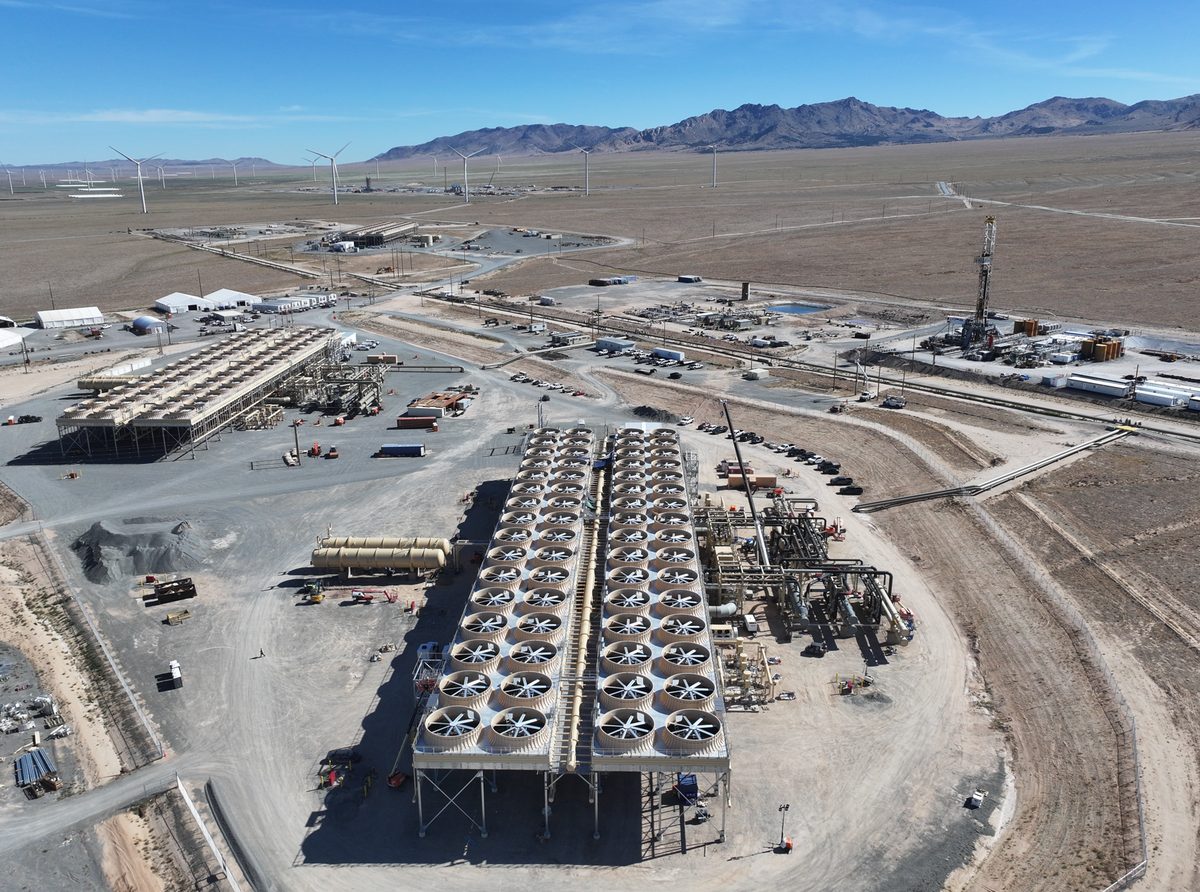
Fervo Energy and Google Sign 396 MW PPA - Fervo Energy
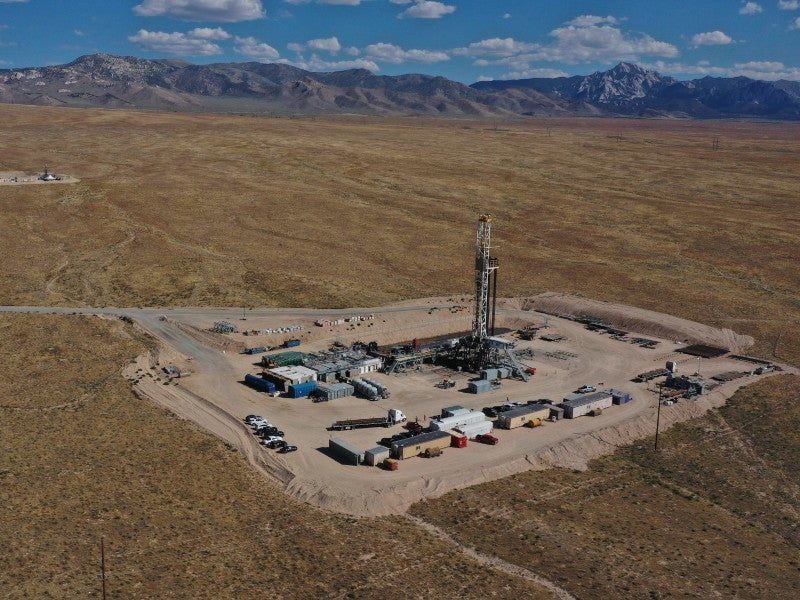
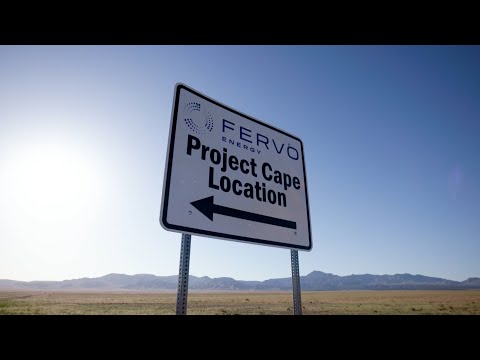
Cape Station Geothermal Project, Utah, US
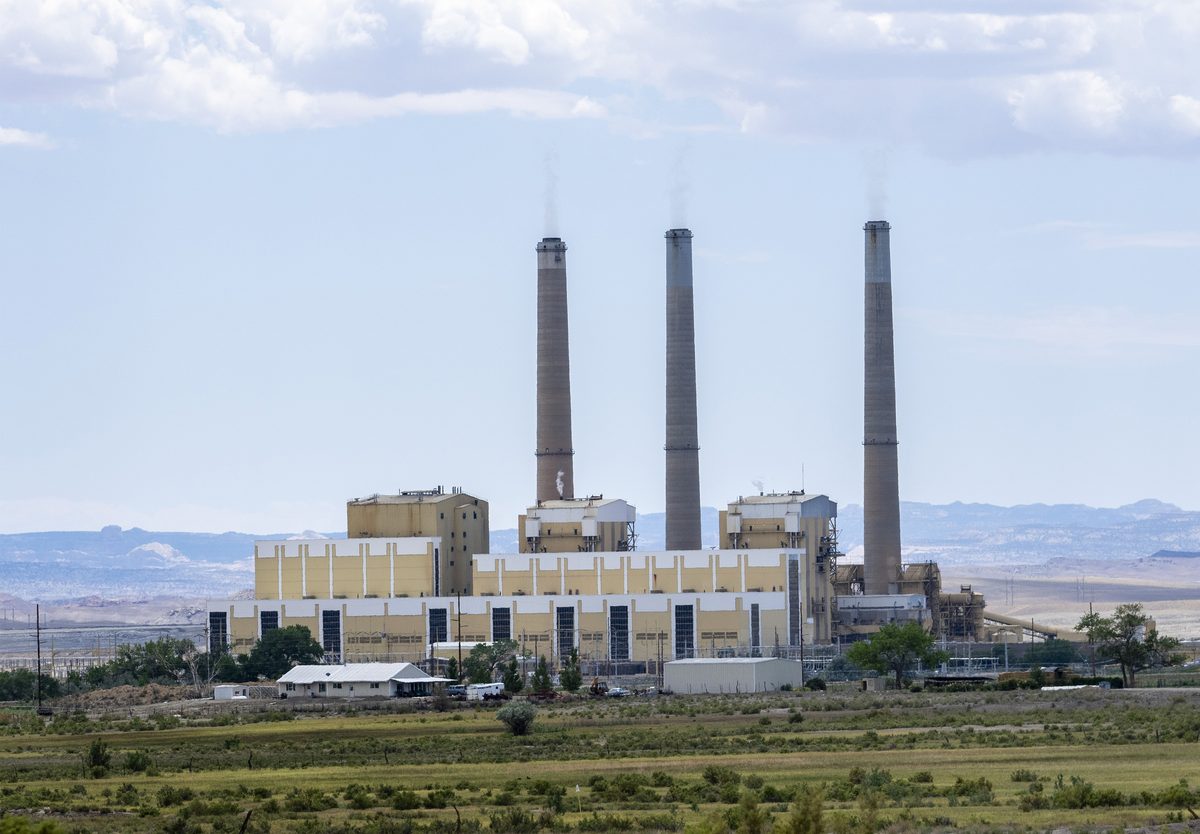
World's largest enhanced geothermal power plant set to open in Beaver County in two years
97 views
16:38
Fervo and Google Sign 396 MW Utah Geothermal PPA
Blockspace
3.9K views
11:27
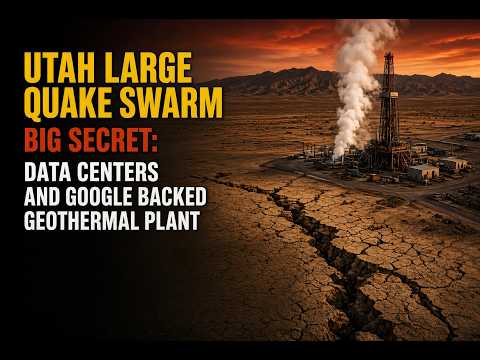
Data Centers and Google Backed Geothermal Plant
Mary Greeley News
5.2M views
1:19
Utah's hottest new power source is 15000 ft. below the ground
Bill Gates
Images from Openverse under Creative Commons licenses. Videos from YouTube.
Voices
Curated perspectives — historical figures and your fellow readers.
Play
Exploring all sides of a story is often best achieved with Play.
Most of these play right now — no account needed. Sign up to save scores, keep a streak, and unlock Debate and Predict.
Log in
Sign Up
WHO SAID WHAT?
Can you match the quotes to the right people?
Rounds
People
Per question
Scoring
- points for each correct match.
- time bonus when you answer in under seconds.
- streak bonus once you hit correct in a row.
Score:
Round /
streak
— Who said this?
Tip: press 1– to answer.
Score:
Round /
streak
+
Base +
⚡ Speed +
🔥 Streak +
Streak reset · the answer was
No answer in time · it was
Next Up
Round
of
Score
points
Correct
Best Streak
Time Bonus
Avg. Time
points — sign up to put that on the leaderboard.
Now try on this story
Higher or Lower
A number from this story, against one from elsewhere in the news — guess which is bigger, then keep the chain going. 5 rounds, 3 strikes; a miss costs a strike and resets your streak.
Example
Anchor
EU tariff revenue
$52B
Big for this kind of number
Mystery
Pentagon AI contract
?
Round 1
Streak: 0
Mystery
?
Keyboard: ↓/L lower · ↑/H higher
0 pts
Best streak: 0 · Rounds: 0
0 points — sign up to put that on the leaderboard.
Now try on this story
Connections
Sixteen names from the news. Find the four hidden groups of four. Four mistakes max.
Loading today's puzzle…
0/4 groups
Mistakes
Sign up to keep a daily streak — a new puzzle lands every day.
Now try on this story
Exit debate?
Your progress in this debate will be lost.
How it works
- 1 Two AI personas square off on this story.
- 2 You predict who'll win each round — correct picks earn XP.
- 3 One crossfire question is yours to fire. Pick it carefully.
Couldn't generate a topic
Select Your Champions
Choose one persona for each side of the debate
DEBATE TOPIC
Choose personas with different perspectives for a more dynamic debate.
SIDE A (PRO)
Select debater for this side:
No debate personas available right now.
SIDE B (CON)
Select debater for this side:
No debate personas available right now.
VS
Get ready to make your prediction...
Round of
Claim
Evidence
Stakes
Crossfire Answer
Closing Statement
Claim
Evidence
Stakes
Crossfire Answer
Closing Statement
Your Crossfire Question
Generating arguments...
Who's Got This Round?
Make your prediction before the referee scores
The referee scores both sides on
Correct predictions earn +20 XP
· Press 1 or 2 to pick
Evidence
40%
Logic
30%
Detail
20%
Style
10%
Round Results
Your Pick
Not this time
(%)
Overall Score
/10
Your Pick
Not this time
(%)
Overall Score
/10
Set the Crossfire
Pick the question both personas must answer in the final round
Crafting crossfire questions...
Choosing a question earns +10 XP crossfire bonus
🏆
Total XP Earned
Cred Change
Predictions
Debate Oracle! You called every round!
Sharp Instincts! You know your debaters!
The Coin Flip Strategist! Perfectly balanced!
The Contrarian! Bold predictions!
Inverse Genius! Try betting the opposite next time!
XP Breakdown
Base completion
+20 XP
Rounds played ( rounds x 5 XP)
+ XP
Correct predictions ( correct x 20 XP)
+ XP
Crossfire bonus
+10 XP
Accuracy
%
Prediction History
Round
You picked:
✓
✗
Now try on this story
Keep debating to level up your credibility and unlock achievements
People Involved
Organizations Involved
Fervo Energy
Geothermal energy developer
Building Cape Station, world's largest enhanced geothermal project
Houston-based startup applying oil-and-gas drilling techniques to enhanced geothermal.
Google
Technology company
Largest corporate buyer of renewable energy since 2010
Google is contracting enhanced geothermal power to meet surging data-center electricity demand from AI.
Timeline
January 2021 September 2026
5 events
Latest: 2 days ago
Tap a bar to jump to that date
-
Google signs 396 MW Fervo geothermal PPA, expandable to 1 GW
Latest ContractGoogle committed to purchase 396 MW from Cape Station, with an option to expand by ~600 MW by June 2030, powering a potential Utah data center.
-
Fervo goes public via stock listing
FinanceThe Houston-based developer completed its public market debut in May 2026.
-
Fervo, Google, and NV Energy sign 115 MW geothermal PPA
ContractThe deal pioneered a Clean Transition Tariff to bring more geothermal onto Nevada's grid while insulating ratepayers.
-
Fervo's 3.5 MW Project Red pilot comes online in Nevada
MilestoneThe first-of-its-kind enhanced geothermal pilot began delivering power to the Nevada grid, including Google data centers.
-
Fervo and Google agree to develop next-gen geothermal
PartnershipThe two companies signed an agreement to develop a next-generation geothermal project.
Historical Context
3 moments from history that rhyme with this story — and how they unfolded.
1960-1989
The Geysers, California (1960s-1980s)
The Geysers, in California's Mayacamas Mountains, became the world's largest geothermal electricity development after drilling accelerated through the 1970s energy crisis. At its peak in the late 1980s, it generated over 2,000 MW from natural steam reservoirs.
Then
Supplied cheap, low-carbon power to northern California utilities for decades.
Now
Demonstrated geothermal's potential but also its hard geological limit: the world's largest field still taps a rare natural steam pocket.
Why this matters now
Enhanced geothermal exists to break that limit, using engineered wells to create steam reservoirs anywhere hot rock sits deep underground.
1974-1995
Fenton Hill hot dry rock project, New Mexico (1974-1995)
Los Alamos National Laboratory drilled two wells into hot, dry granite at Fenton Hill, New Mexico, and created an artificial geothermal reservoir by pumping water between them. The experiment proved the core concept of engineered geothermal systems.
Then
Produced usable heat, but at low power output and high cost.
Now
The project was scaled back and eventually abandoned; hot dry rock geothermal became known as a technology always 10 years away.
Why this matters now
Fervo and other startups argue that cheaper, faster drilling from the fracking era has finally solved Fenton Hill's cost problem. This deal is the first test of that claim at commercial scale.
2005-2015
Shale gas revolution (2000s-2010s)
Horizontal drilling and hydraulic fracturing, perfected in Texas's Barnett Shale and spread nationwide, unlocked natural gas trapped in dense rock. U.S. gas production rose roughly 40% between 2005 and 2015, crashing prices and redrawing the energy map.
Then
Natural gas replaced coal as the leading U.S. power source, and consumers gained cheap energy.
Now
The boom lowered emissions while triggering environmental battles over water use and earthquakes.
Why this matters now
Fervo uses the same directional drilling and fracking techniques from the shale era to access Earth's heat. The open question is whether geothermal can ride a similar cost curve without the same environmental blowback.