Anchor

Nonprofit job-training café moves closer to opening its permanent restaurant
August 20th, 2026: Liquor license issued to MAKE CafeNew here? Follow stories to track developments over time. Create a free account to get updates when stories you care about change.
Overview
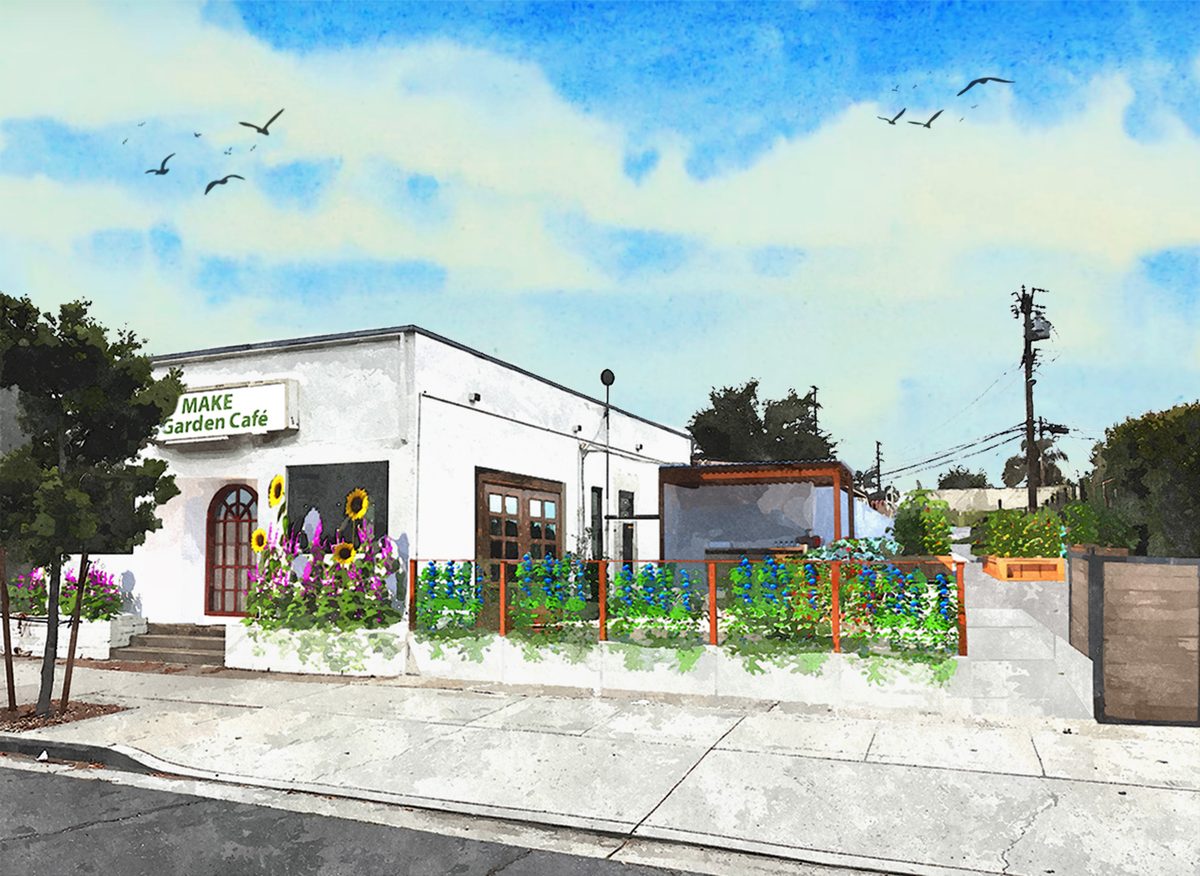
Updated 54 minutes agoCalifornia issued a liquor license to MAKE Cafe at its future home on Felton Street in San Diego's Normal Heights neighborhood. The permit, type 41, covers beer and wine sales at an eating place.
The license is a key step for the nonprofit MAKE Projects, which trains refugee and immigrant women in hospitality. The café is set to be a permanent replacement for the organization's pop-up locations.
Why it matters
This license moves a job-training café closer to opening, giving refugee and immigrant women a permanent place to build careers.
Questions about this story
Free account needed to ask — your question is kept and asked for you right after sign-up. Answers are public.
No questions yet — be the first to ask.
Key Indicators
48
Dining room seats
The new café features a 48-seat dining room.
Related Media
MAKE Cafe
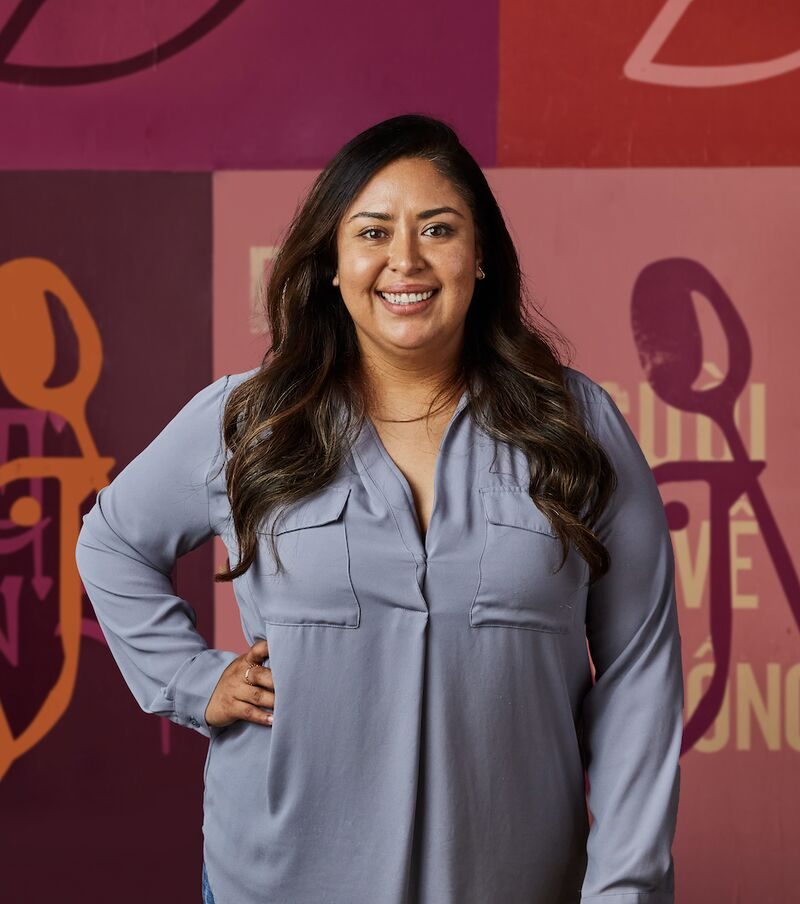
Anchi Mei - Founder & Executive Director, MAKE Projects | LinkedIn
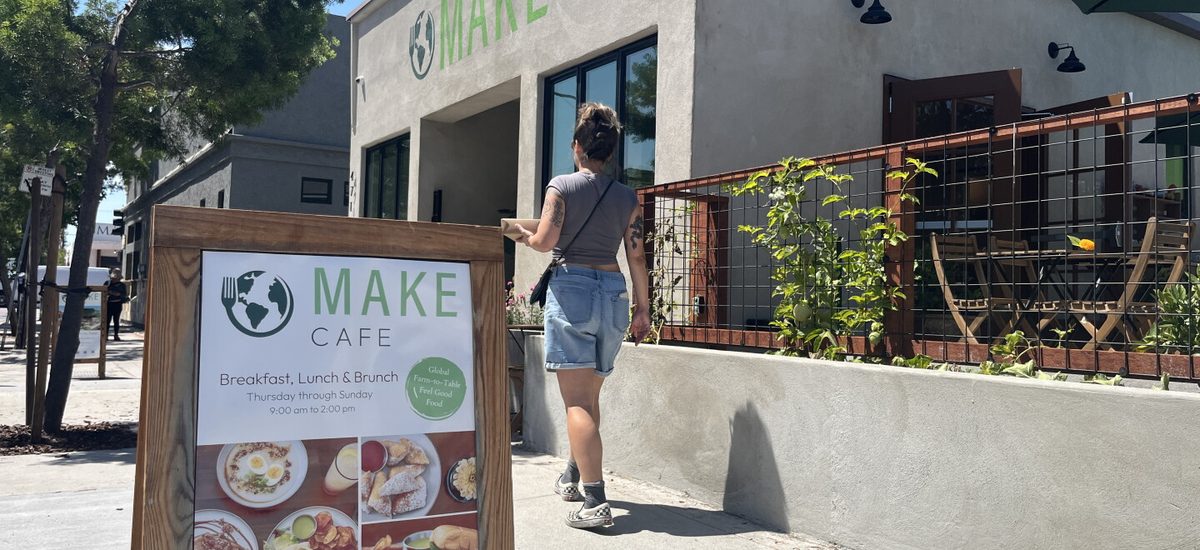
Cafe empowering immigrant women through paid job training opens in Normal Heights | KPBS Public Media

57 views
2:06
Updated NYS liquor laws expand eligibility for bars and ...
WTEN
218 views
3:13
Nonprofit restaurant helps mentor young people
11Alive
497 views
2:18
How one restaurant is creating jobs for adults with learning ...
NBC DFW
Images from Openverse under Creative Commons licenses. Videos from YouTube.
Voices
Curated perspectives — historical figures and your fellow readers.
Play
Exploring all sides of a story is often best achieved with Play.
Most of these play right now — no account needed. Sign up to save scores, keep a streak, and unlock Debate and Predict.
Log in
Sign Up
Higher or Lower
A number from this story, against one from elsewhere in the news — guess which is bigger, then keep the chain going. 5 rounds, 3 strikes; a miss costs a strike and resets your streak.
Example
Anchor
EU tariff revenue
$52B
Big for this kind of number
Mystery
Pentagon AI contract
?
Round 1
Streak: 0
Mystery
?
Keyboard: ↓/L lower · ↑/H higher
0 pts
Best streak: 0 · Rounds: 0
0 points — sign up to put that on the leaderboard.
Now try on this story
Connections
Sixteen names from the news. Find the four hidden groups of four. Four mistakes max.
Loading today's puzzle…
0/4 groups
Mistakes
Sign up to keep a daily streak — a new puzzle lands every day.
Now try on this story
Exit debate?
Your progress in this debate will be lost.
How it works
- 1 Two AI personas square off on this story.
- 2 You predict who'll win each round — correct picks earn XP.
- 3 One crossfire question is yours to fire. Pick it carefully.
Couldn't generate a topic
Select Your Champions
Choose one persona for each side of the debate
DEBATE TOPIC
Choose personas with different perspectives for a more dynamic debate.
SIDE A (PRO)
Select debater for this side:
No debate personas available right now.
SIDE B (CON)
Select debater for this side:
No debate personas available right now.
VS
Get ready to make your prediction...
Round of
Claim
Evidence
Stakes
Crossfire Answer
Closing Statement
Claim
Evidence
Stakes
Crossfire Answer
Closing Statement
Your Crossfire Question
Generating arguments...
Who's Got This Round?
Make your prediction before the referee scores
The referee scores both sides on
Correct predictions earn +20 XP
· Press 1 or 2 to pick
Evidence
40%
Logic
30%
Detail
20%
Style
10%
Round Results
Your Pick
Not this time
(%)
Overall Score
/10
Your Pick
Not this time
(%)
Overall Score
/10
Set the Crossfire
Pick the question both personas must answer in the final round
Crafting crossfire questions...
Choosing a question earns +10 XP crossfire bonus
🏆
Total XP Earned
Cred Change
Predictions
Debate Oracle! You called every round!
Sharp Instincts! You know your debaters!
The Coin Flip Strategist! Perfectly balanced!
The Contrarian! Bold predictions!
Inverse Genius! Try betting the opposite next time!
XP Breakdown
Base completion
+20 XP
Rounds played ( rounds x 5 XP)
+ XP
Correct predictions ( correct x 20 XP)
+ XP
Crossfire bonus
+10 XP
Accuracy
%
Prediction History
Round
You picked:
✓
✗
Now try on this story
Keep debating to level up your credibility and unlock achievements
People Involved
Organizations Involved
Timeline
1 event
Latest: August 20th, 2026 · 3 weeks ago
-
Liquor license issued to MAKE Cafe
Latest Regulatory approvalCalifornia's Department of Alcoholic Beverage Control activated a type 41 license for beer and wine sales at 4712 Felton Street.
Scenarios
1
MAKE Cafe opens to the public by end of 2026
Likely
Resolves by End of 2026
Discussed by: Local restaurant trade media and MAKE Projects' capital campaign updates
Construction finishes on schedule, final inspections pass, and the café begins regular Thursday-through-Sunday service. The license is one of the last hurdles; opening depends on completing the 900-square-foot kitchen and 48-seat dining room.
2
Opening delayed into early 2027
Possible
Resolves by Q1 2027
Discussed by: WhatNow San Diego (construction coverage)
Construction overruns, supply-chain issues, or local inspections push the opening past year-end. The license remains valid, but the café's debut slips into the first quarter of 2027.
3
Permanent café project cancelled
Unlikely
Resolves by End of 2027
Discussed by: No credible spokespeople; considered remote
Unexpected financing failure or organizational crisis causes MAKE Projects to abandon the Felton Street location. The liquor license would lapse and the nonprofit would revert to pop-up events.
Historical Context
2 moments from history that rhyme with this story — and how they unfolded.
1988-1992
Homeboy Bakery (1988)
Homeboy Industries, a Los Angeles nonprofit founded by Father Greg Boyle, started a bakery and café to employ former gang members. The operation eventually grew into a chain of social enterprise businesses.
Then
Provided immediate jobs and skills training for at-risk youth.
Now
Demonstrated that mission-driven restaurants can sustain themselves while serving marginalized populations.
Why this matters now
Like Homeboy, MAKE Projects uses a commercial kitchen to train workers with employment barriers. The license is a milestone in scaling this model from pop-up to permanent.
2019
La Cocina's Marketplace (San Francisco, 2019)
La Cocina, a nonprofit incubator for low-income immigrant food entrepreneurs, opened a permanent marketplace in San Francisco's Mission District, giving program graduates brick-and-mortar stalls.
Then
Ten food businesses gained stable retail spaces.
Now
Created a replicable model for moving micro-entrepreneurs out of unregulated pop-ups into permitted commercial sites.
Why this matters now
MAKE Cafe follows the same arc: using a license to legitimize a training kitchen and provide permanent employment for refugee and immigrant women.