Anchor

Santa Clara reviews second-story addition amid neighbor privacy objections
Rule Changes Santa Clara, CA localCity staff backed a 1,517-square-foot expansion. Adjacent owners want enforceable screening, not just landscaping.
August 19th, 2026: Development Review Hearing considers Rita Court additionNew here? Follow stories to track developments over time. Create a free account to get updates when stories you care about change.
Overview
Updated 1 hour agoDavid and Dora Flores own the house behind 2261 Rita Court, a single-story tract home in Santa Clara. A proposal before the city's Development Review Hearing would raise that house to two stories, with a second floor looking down into the Floreses' backyard and living room.
City staff recommended approving the 1,517-square-foot addition. Their only privacy measure was a condition requiring rear-yard landscaping. In California, additions that meet height, setback, and floor-area rules are effectively approved by right, so neighbors rarely can stop one — they can only push for stronger conditions.
Why it matters
If the city can't block a code-conforming addition, neighbor privacy rests on soft conditions like landscaping that inspectors rarely enforce.
Questions about this story
Free account needed to ask — your question is kept and asked for you right after sign-up. Answers are public.
No questions yet — be the first to ask.
Key Indicators
1,517 sq ft
Total proposed addition
A 517-square-foot first floor plus a 1,000-square-foot second floor on an existing single-story home.
1,000 sq ft
Second-story footprint
The new upper floor is the source of the overlook that neighbors objected to.
2
Adjacent owners opposing
David and Dora Flores filed the only formal opposition in the record.
Related Media
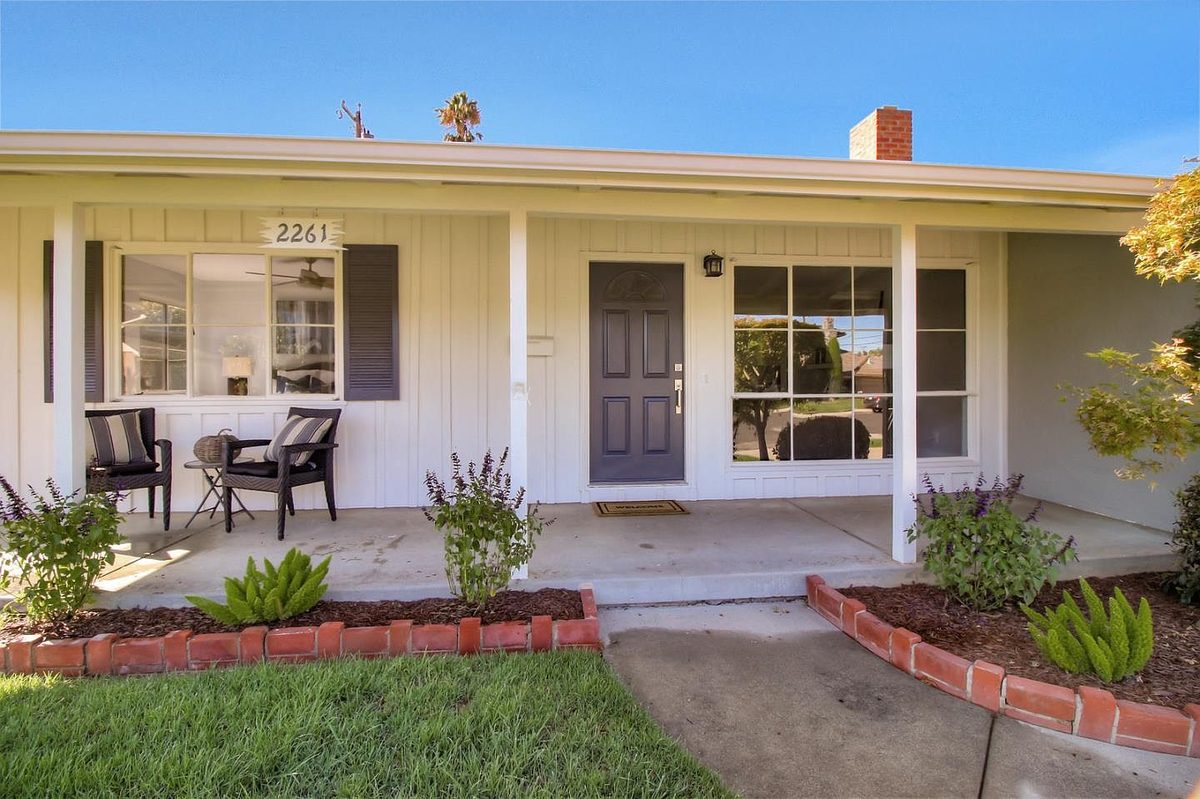
2261 Rita Ct, Santa Clara, CA 95050 | Zillow
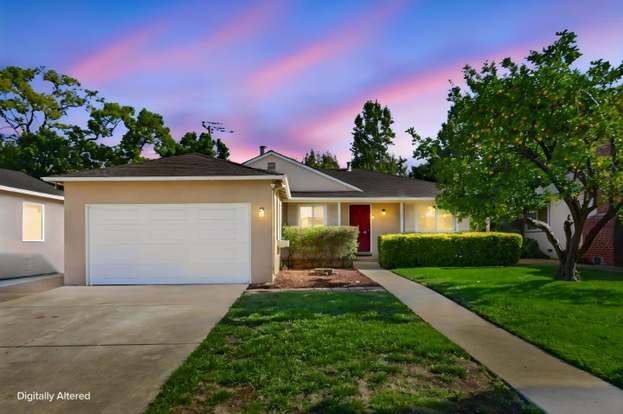
2261 Rita Ct, Santa Clara, CA 95050 | Redfin
2.3K views
12:15
Homeowner Legally Builds Massive Addition, But One ...
Flux City

4.2K views
3:36
Latest of South Natomas encroachments one year after later
CBS News Sacramento

3.9M views
2:09:10
The CITY FINED them $16000 for TALL GRASS and NEVER ...
The Boring Channel
Images from Openverse under Creative Commons licenses. Videos from YouTube.
Voices
Curated perspectives — historical figures and your fellow readers.
Play
Exploring all sides of a story is often best achieved with Play.
Most of these play right now — no account needed. Sign up to save scores, keep a streak, and unlock Debate and Predict.
Log in
Sign Up
Higher or Lower
A number from this story, against one from elsewhere in the news — guess which is bigger, then keep the chain going. 5 rounds, 3 strikes; a miss costs a strike and resets your streak.
Example
Anchor
EU tariff revenue
$52B
Big for this kind of number
Mystery
Pentagon AI contract
?
Round 1
Streak: 0
Mystery
?
Keyboard: ↓/L lower · ↑/H higher
0 pts
Best streak: 0 · Rounds: 0
0 points — sign up to put that on the leaderboard.
Now try on this story
Connections
Sixteen names from the news. Find the four hidden groups of four. Four mistakes max.
Loading today's puzzle…
0/4 groups
Mistakes
Sign up to keep a daily streak — a new puzzle lands every day.
Now try on this story
Exit debate?
Your progress in this debate will be lost.
How it works
- 1 Two AI personas square off on this story.
- 2 You predict who'll win each round — correct picks earn XP.
- 3 One crossfire question is yours to fire. Pick it carefully.
Couldn't generate a topic
Select Your Champions
Choose one persona for each side of the debate
DEBATE TOPIC
Choose personas with different perspectives for a more dynamic debate.
SIDE A (PRO)
Select debater for this side:
No debate personas available right now.
SIDE B (CON)
Select debater for this side:
No debate personas available right now.
VS
Get ready to make your prediction...
Round of
Claim
Evidence
Stakes
Crossfire Answer
Closing Statement
Claim
Evidence
Stakes
Crossfire Answer
Closing Statement
Your Crossfire Question
Generating arguments...
Who's Got This Round?
Make your prediction before the referee scores
The referee scores both sides on
Correct predictions earn +20 XP
· Press 1 or 2 to pick
Evidence
40%
Logic
30%
Detail
20%
Style
10%
Round Results
Your Pick
Not this time
(%)
Overall Score
/10
Your Pick
Not this time
(%)
Overall Score
/10
Set the Crossfire
Pick the question both personas must answer in the final round
Crafting crossfire questions...
Choosing a question earns +10 XP crossfire bonus
🏆
Total XP Earned
Cred Change
Predictions
Debate Oracle! You called every round!
Sharp Instincts! You know your debaters!
The Coin Flip Strategist! Perfectly balanced!
The Contrarian! Bold predictions!
Inverse Genius! Try betting the opposite next time!
XP Breakdown
Base completion
+20 XP
Rounds played ( rounds x 5 XP)
+ XP
Correct predictions ( correct x 20 XP)
+ XP
Crossfire bonus
+10 XP
Accuracy
%
Prediction History
Round
You picked:
✓
✗
Now try on this story
Keep debating to level up your credibility and unlock achievements
People Involved
Organizations Involved
Santa Clara Planning Division
Municipal planning body
Hearing body deciding PLN26-00188; staff recommended approval
The city agency that runs the Development Review Hearing for architectural review of single-family additions and similar projects.
Santa Clara City Council
Municipal legislative body
Potential appeal body if neighbors challenge the hearing decision
The elected council that hears appeals of planning decisions under the city's municipal code.
Timeline
1 event
Latest: August 19th, 2026 · 3 weeks ago
-
Development Review Hearing considers Rita Court addition
Latest HearingCity staff recommended approving a 1,517-square-foot addition to 2261 Rita Court, citing design-guideline consistency and a state environmental exemption. Adjacent owners David and Dora Flores opposed the second story, saying it would look into their backyard and living areas.
Historical Context
3 moments from history that rhyme with this story — and how they unfolded.
1877
Baltimore v. Roper (1877)
Under an English rule called 'ancient lights,' a homeowner could block a neighbor from building anything that cut off light to their windows. American courts rejected the doctrine, ruling that a landowner has no property right to an open view or to light across a neighbor's land. View and privacy losses became hard to claim as legal injuries.
Then
Property owners lost a legal tool to stop adjacent construction.
Now
Privacy and view harm generally became a matter of zoning rules, not private lawsuits.
Why this matters now
The Floreses' privacy loss, however real, is not a legal injury in California courts — their only forum is the city's discretionary conditions.
September 1982
California Housing Accountability Act (1982)
California legislators passed the Housing Accountability Act to stop cities from rejecting housing projects that comply with local zoning. The law lets courts award attorney's fees and penalties against cities that deny conforming projects. It turned 'not in my neighborhood' into a losing legal argument for most denials.
Then
Cities became far more cautious about rejecting projects that met zoning rules.
Now
The act became the legal foundation for later pro-housing state laws.
Why this matters now
It explains why Santa Clara has little room to refuse a code-compliant addition, even when neighbors object.
September 2021
SB 9 (2021)
SB 9 let California homeowners split lots and build duplexes on single-family parcels, stripping away much local control over single-family zones. It was designed to add infill housing in established neighborhoods. The law pushed homeowners to build up and out on lots zoned for one house.
Then
Cities that resisted saw their discretion over single-family parcels sharply reduced.
Now
Upward and infill construction became normal in neighborhoods built as single-story tracts.
Why this matters now
The same legal logic that opened single-family zones to duplexes also lets existing homes expand upward, forcing privacy conflicts like this one.