Anchor

University of Utah replaces longtime food truck operators with rotating program
Rule Changes Salt Lake City, UT localSeven vendors lose permanent campus spots as the U. turns food truck operations over to a management network
2 days ago: Salt Lake Tribune reports vendor displacementNew here? Follow stories to track developments over time. Create a free account to get updates when stories you care about change.
Overview
Updated 1 hour agoKafé Mamai and half a dozen other trucks have parked on the University of Utah's Marriott Library Plaza for years, serving students between classes. A rotating food truck program launches Sept. 8, and the university is not renewing the individual leases those vendors relied on.
The new model, run with a company called Food Truck League, trades permanent vendor spots for a coordinated rotation meant to offer more variety and reliability. The seven departing operators can still book slots two days a week and cater events, but the guaranteed campus presence their businesses were built around is gone.
Why it matters
Seven local food businesses lose the guaranteed campus locations their customer base depended on, replaced by a rotating roster under a management network.
Questions about this story
Free account needed to ask — your question is kept and asked for you right after sign-up. Answers are public.
No questions yet — be the first to ask.
Key Indicators
7
Longtime operators losing permanent spots
Food trucks whose annual pad leases were not renewed.
5
Trucks at launch location
Trucks returning first to Library West Commons on Sept. 8.
2 days/week
Priority booking for legacy operators
Legacy operators can book Mondays and Thursdays through Food Truck League.
Related Media
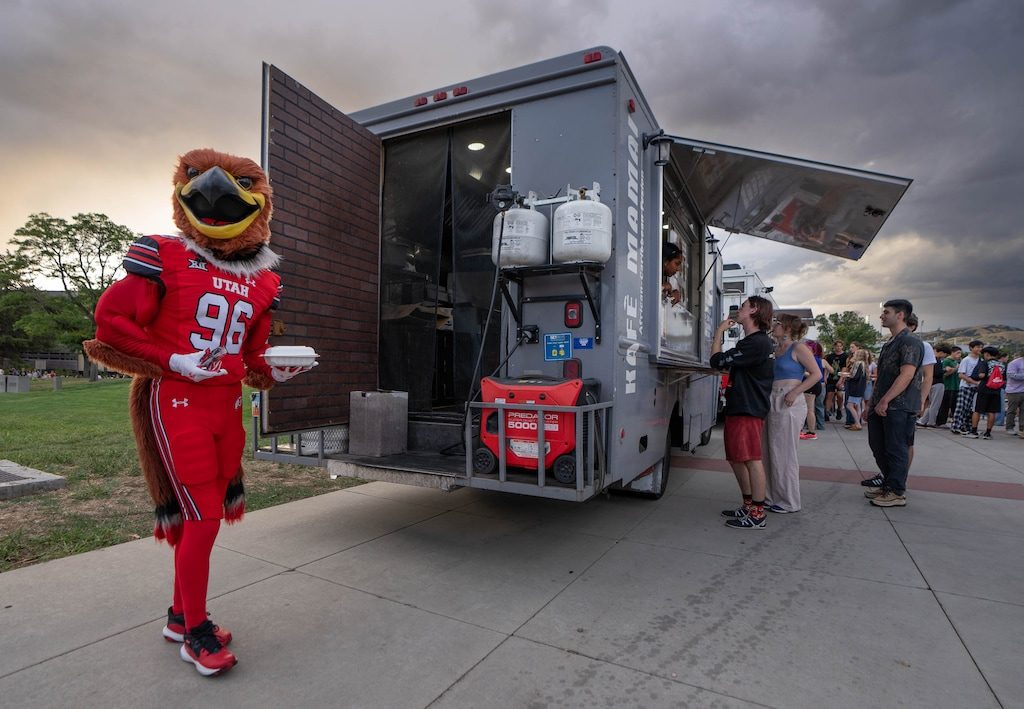
University of Utah food trucks: Longtime operators say school 'pushed us out'
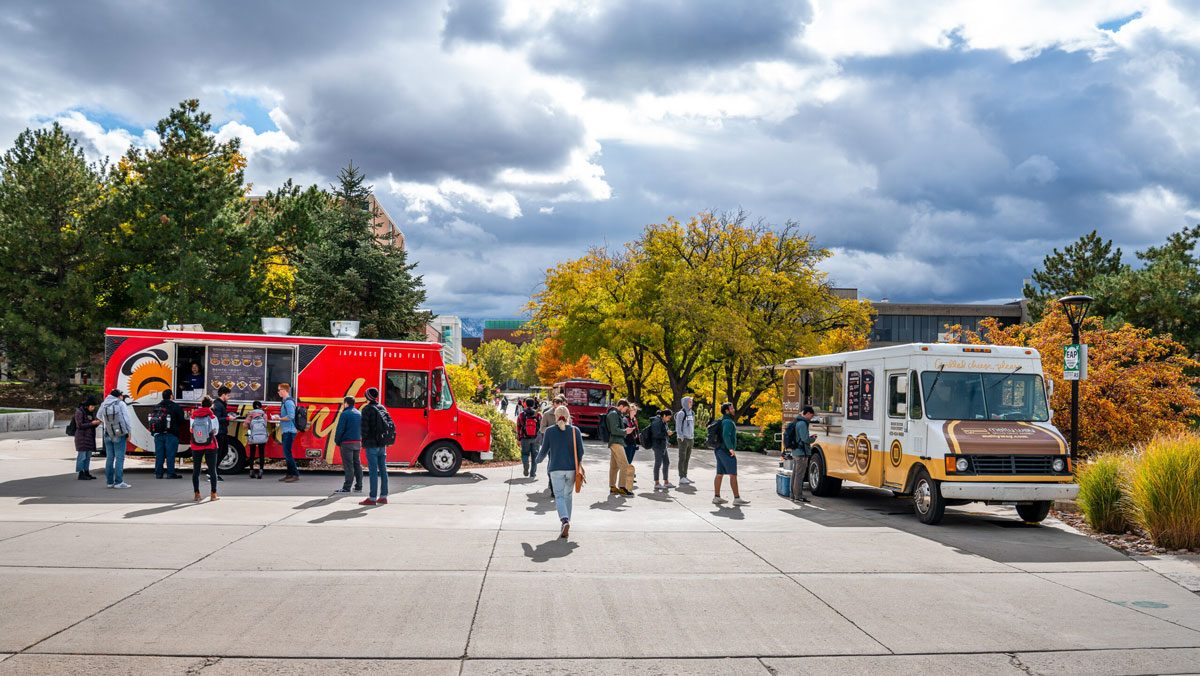
Food truck program changes enhance dining choices on campus – @theU
6.9K views
2:14
Over a dozen unpermitted food vendors shut down during ...
KING 5 Seattle
1.6K views
2:18
Owner of popular food truck site pushes back against closure
News4JAX The Local Station

1.1K views
2:52
Construction threatens local businesses in Leschi neighborhood
KIRO 7 News
Images from Openverse under Creative Commons licenses. Videos from YouTube.
Voices
Curated perspectives — historical figures and your fellow readers.
Play
Exploring all sides of a story is often best achieved with Play.
Most of these play right now — no account needed. Sign up to save scores, keep a streak, and unlock Debate and Predict.
Log in
Sign Up
Higher or Lower
A number from this story, against one from elsewhere in the news — guess which is bigger, then keep the chain going. 5 rounds, 3 strikes; a miss costs a strike and resets your streak.
Example
Anchor
EU tariff revenue
$52B
Big for this kind of number
Mystery
Pentagon AI contract
?
Round 1
Streak: 0
Mystery
?
Keyboard: ↓/L lower · ↑/H higher
0 pts
Best streak: 0 · Rounds: 0
0 points — sign up to put that on the leaderboard.
Now try on this story
Connections
Sixteen names from the news. Find the four hidden groups of four. Four mistakes max.
Loading today's puzzle…
0/4 groups
Mistakes
Sign up to keep a daily streak — a new puzzle lands every day.
Now try on this story
Exit debate?
Your progress in this debate will be lost.
How it works
- 1 Two AI personas square off on this story.
- 2 You predict who'll win each round — correct picks earn XP.
- 3 One crossfire question is yours to fire. Pick it carefully.
Couldn't generate a topic
Select Your Champions
Choose one persona for each side of the debate
DEBATE TOPIC
Choose personas with different perspectives for a more dynamic debate.
SIDE A (PRO)
Select debater for this side:
No debate personas available right now.
SIDE B (CON)
Select debater for this side:
No debate personas available right now.
VS
Get ready to make your prediction...
Round of
Claim
Evidence
Stakes
Crossfire Answer
Closing Statement
Claim
Evidence
Stakes
Crossfire Answer
Closing Statement
Your Crossfire Question
Generating arguments...
Who's Got This Round?
Make your prediction before the referee scores
The referee scores both sides on
Correct predictions earn +20 XP
· Press 1 or 2 to pick
Evidence
40%
Logic
30%
Detail
20%
Style
10%
Round Results
Your Pick
Not this time
(%)
Overall Score
/10
Your Pick
Not this time
(%)
Overall Score
/10
Set the Crossfire
Pick the question both personas must answer in the final round
Crafting crossfire questions...
Choosing a question earns +10 XP crossfire bonus
🏆
Total XP Earned
Cred Change
Predictions
Debate Oracle! You called every round!
Sharp Instincts! You know your debaters!
The Coin Flip Strategist! Perfectly balanced!
The Contrarian! Bold predictions!
Inverse Genius! Try betting the opposite next time!
XP Breakdown
Base completion
+20 XP
Rounds played ( rounds x 5 XP)
+ XP
Correct predictions ( correct x 20 XP)
+ XP
Crossfire bonus
+10 XP
Accuracy
%
Prediction History
Round
You picked:
✓
✗
Now try on this story
Keep debating to level up your credibility and unlock achievements
People Involved
Sean Grube
Associate vice president for Housing and Dining Programs at the University of Utah
Leading the campus dining overhaul
Taylor Randall
President of the University of Utah
Champion of the 'College Town Magic' vision framing the dining changes
AD
Anna Dickherber
Executive director of Guest and Dining Programs at the University of Utah
Overseeing dining-plan flexibility initiatives
Organizations Involved
University of Utah Housing and Dining Programs
University department
Operates campus dining after taking over from Chartwells in 2025
The university department running campus dining, including the new centralized food truck program.
Food Truck League
Food truck management network
Partner operator for the U.'s new campus program
A company that coordinates a network of food trucks, handling scheduling and compliance with insurance, fire, and health requirements.
Chartwells Higher Education
Food service management company
Prior dining contractor, exited in 2025
The contracted food service company that ran University of Utah dining before the university brought operations in-house.
Legacy food truck operators (Kafé Mamai, Sergio's Pizza, Olive's Oasis)
Independent local food businesses
Seven operators losing permanent campus spots
Independent food trucks with long-running annual leases on campus, now offered priority booking in the new rotation rather than permanent spots.
Timeline
September 2025 September 2026
4 events
Latest: 2 days ago
Tap a bar to jump to that date
-
New food truck program launches
Upcoming LaunchThe centralized rotation launches at Library West Commons with five trucks run through Food Truck League.
-
Salt Lake Tribune reports vendor displacement
Latest ReportingLongtime operators say the university 'pushed us out'; the U. says the change means 'more consistent and better quality' food trucks.
-
Vendors told leases won't renew
NoticeLongtime food truck operators say they got little notice that their annual pad leases on Marriott Library Plaza would not be renewed.
-
University takes over dining operations
Institutional changeThe U. ends its Chartwells dining contract and brings dining under university oversight, beginning a review of food services.
Historical Context
3 moments from history that rhyme with this story — and how they unfolded.
1993
Yosemite concession change (1993)
The National Park Service awarded Yosemite's concession contract to Delaware North, ending the Curry Company's nearly century-long run as the park's main operator. The change followed the NPS shift to a competitive bidding model for park concessions.
Then
The Curry Company, which had shaped Yosemite's hospitality for generations, was displaced.
Now
The episode became a reference point for how management-model changes can push out deeply rooted operators.
Why this matters now
Like the U.'s food trucks, a long-established operator lost its place not because of poor service, but because the institution changed the operating model.
1990s–2000s
University dining outsourcing wave (1990s–2000s)
Universities across the U.S. contracted dining halls to companies like Chartwells and Sodexo, replacing self-operated cafeterias and local operations. The shift promised cost savings and consistent quality, but often reduced local food options and campus control.
Then
Menus and dining costs became more standardized as national contractors took over.
Now
Many campuses later reversed course, bringing dining in-house or adding local vendors in response to complaints about quality and sameness.
Why this matters now
The U. itself followed this arc, contracting with Chartwells before taking dining back under university oversight in 2025. That return to self-operation set the stage for centralizing food trucks.
1980s–2000s
Airport concession consolidation (1980s–2000s)
Airports turned to centralized concessionaires like HMSHost to run food and retail, replacing independent local shops with nationally branded restaurants. Cities argued the model managed space more efficiently and captured higher rent.
Then
Local vendors lost their leases and airport food became dominated by national chains.
Now
Passengers got predictable options, but the distinctive local character of many airport food courts faded.
Why this matters now
The tradeoff the U. is striking between variety and reliability on one side and local continuity on the other mirrors what airports made.
Sources
(3)Related Stories
Olives Oasis licensed for Salt Lake City medical campus address
Rule Changes
Updated Yesterday
La Estación Del Taco no longer listed on Salt Lake City active food licenses
Rule Changes
Updated Yesterday
Urban Nations Powwow cleared to operate at Smith's Ballpark in Salt Lake City
Rule Changes
Updated Yesterday
Brucie's Berries obtains health permit for Delta Center location
New Capabilities
Updated Yesterday
Runtastic Haunted Salt Lake City clears food permit for October race
Rule Changes
Updated Yesterday
Thomas Cuisine's BioFire dining licence drops off Salt Lake City's active list
Built World
Updated Yesterday