




Pull to refresh
Logo
Codex raises $30 million to scale stablecoin foreign exchange

Codex raises $30 million to scale stablecoin foreign exchange

Money Moves

Pantera leads a Series A at a $130 million valuation as the company reports $25 billion in annualized volume

Overview

Updated 47 minutes ago

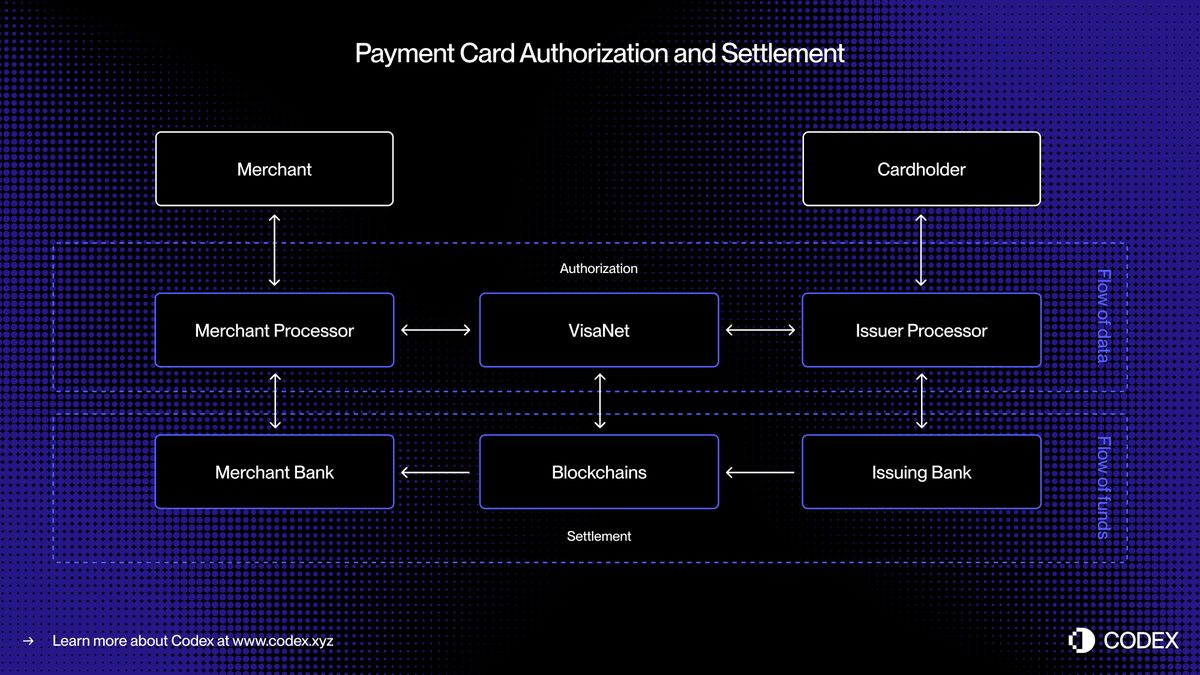
A payments company in Manila that owes a supplier in São Paulo has two expensive options. Keep cash parked in a Brazilian bank account, or wait out cut-off times and multi-day settlement. Codex sells a third. Swap local currency for a dollar stablecoin and back again at institutional rates, around the clock. Settlement usually lands inside 30 minutes, and no money has to be posted in advance.

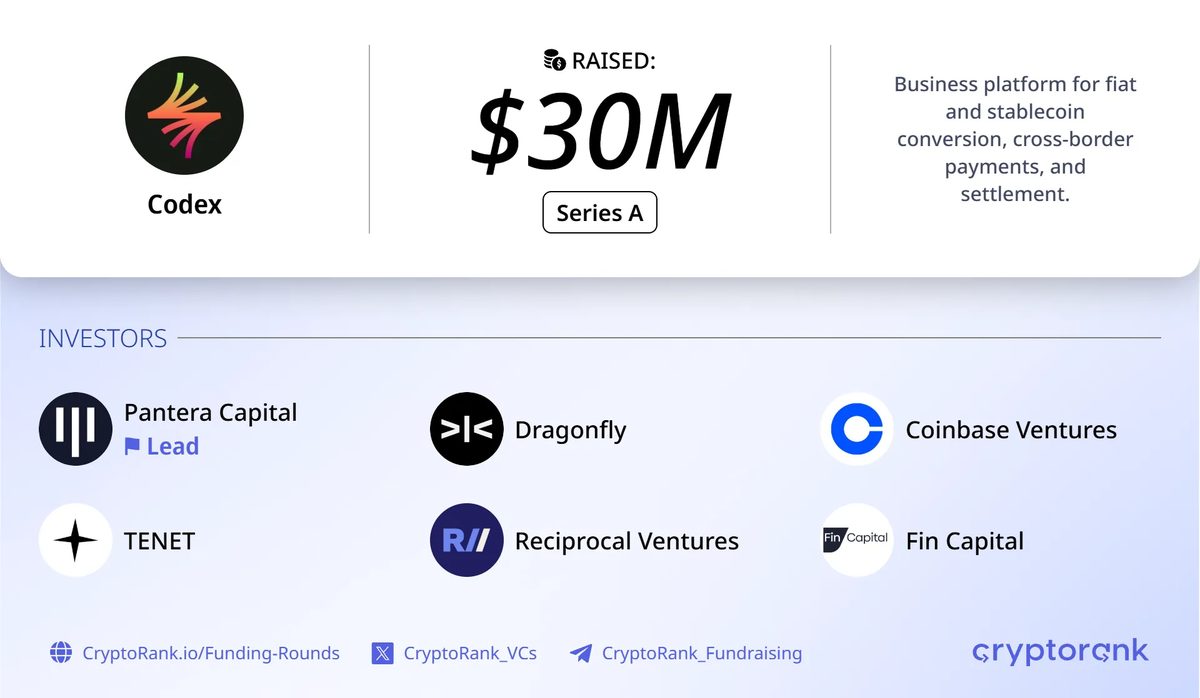
On November 17 the company said it raised $30 million in a Series A round led by Pantera Capital, at a $130 million valuation after the money. It also put a number on its growth: annualized transaction volume of roughly $25 billion, a tenfold increase this year. That figure is extrapolated from a shorter measurement period, not a completed financial year, and Codex has not disclosed the fee revenue behind it.

Why it matters

Cross-border fees and settlement delays are a tax on every business that trades abroad, and stablecoin rails are a new way to cut it.

Questions about this story

Free account needed to ask — your question is kept and asked for you right after sign-up. Answers are public.

No questions yet — be the first to ask.

Key Indicators

$30M
Series A round size
Led by Pantera Capital with Dragonfly, Coinbase Ventures, Tenet, Reciprocal, Fin Capital and LeadBlock.
$130M
Post-money valuation
The company's value after the new capital is counted.
$25B
Annualized transaction volume, 2026
A company estimate extrapolated from a shorter measurement window, not a full financial year.
10×
Volume growth in 2026
Codex says annualized volume rose tenfold this year, during a broader crypto downturn.
$401B
Stablecoin payments, January to August 2026
Alvarez & Marsal estimate, up 42% year over year, with businesses receiving most of it.

Voices

Curated perspectives — historical figures and your fellow readers.

Sign up to generate historical perspectives on this story.

People Involved

Organizations Involved

Timeline

2024 November 2026

4 events Latest: 4 days ago
Tap a bar to jump to that date
  1. Codex raises $30 million Series A

    Latest Funding

    Pantera leads at a $130 million post-money valuation. Codex reports roughly $25 billion in annualized volume, ten times its level a year earlier.

  2. Stablecoin payments reach $401 billion in eight months

    Data

    Alvarez & Marsal estimates volume rose 42% year over year, with businesses receiving 58% to 64% of it.

  3. Codex builds its own settlement chain

    Technology

    The Block reports Codex running an Ethereum Layer 2 built on Optimism's OP Stack, tuned for stablecoin transfers.

  4. Codex is founded

    Company

    Haonan Li, Momo Ong and Victor Yaw start the company, later raising a Dragonfly-led seed round.

Scenarios

1

Codex adds licensed corridors across Asia and Latin America

Likely Resolves by Nov 30, 2027

Discussed by: Codex management, which named licensing as a use of the round, and lead investor Pantera

The stated plan for the money is compliance, licensing and hiring, with named interest in Brazil, Mexico, Argentina and the Philippines. Each new authorization lets the same automated rails carry more volume. If regulators move slowly, the growth rate slows with them, because Codex cannot legally serve a market it is not registered in.

2

A payments incumbent buys Codex

Possible Resolves by End of 2027

Discussed by: Trade coverage of stablecoin infrastructure consolidation, including Startuply and Builders in FinTech

The $130 million valuation puts Codex within reach of a large processor or card network that wants stablecoin payout capability without building it. Stripe's purchase of Bridge in 2024 set the template. An acquisition would end the standalone story and fold the corridors into a bigger network.

3

A target regulator closes a corridor

Possible Resolves by Nov 30, 2027

Discussed by: Startuply, which flagged the patchwork of national authorities Codex must clear

Stablecoin rules differ by country, and a central bank can deny or revoke the authorization a payments company needs. Because Codex's pitch depends on being able to pay out in a specific local currency, losing one market removes that corridor's volume outright rather than shifting it elsewhere.

Historical Context

3 moments from history that rhyme with this story — and how they unfolded.

2011–2021

Wise takes on correspondent banking (2011–2021)

Kristo Käärmann and Taavet Hinrikus started TransferWise in London in 2011 to move money between currencies without routing it through correspondent banks. The company held accounts in each country and netted flows locally, letting it quote rates close to the mid-market rate instead of a bank's spread.

Then

It grew by publishing the mid-market rate and charging one visible fee, which made bank markups easy to compare.

Now

It listed in London in 2021 and became one of the largest non-bank cross-border payment companies.

Why this matters now

Codex is running the same play with stablecoins standing in for Wise's local float: own the conversion step and undercut the banks' spread.

October 2024

Stripe buys Bridge (October 2024)

Stripe paid about $1.1 billion for Bridge, a startup that let businesses issue and move stablecoins. The deal put stablecoin settlement inside a mainstream payments processor.

Then

It established a price for the conversion and payout layer rather than the token issuance layer.

Now

It made acquisition the obvious exit for startups building stablecoin rails, and pushed competitors to build or buy similar capability.

Why this matters now

Codex now has a $130 million floor to negotiate from if an incumbent comes calling.

December 2020–2025

Ripple and the Securities and Exchange Commission (2020–2025)

The Securities and Exchange Commission sued Ripple in December 2020, arguing that sales of its XRP token were unregistered securities offerings. The case turned on whether a token used for cross-border settlement counts as a security under U.S. law.

Then

U.S. exchanges delisted XRP, and banks kept their distance from crypto-based settlement.

Now

The litigation ran nearly five years and made licensing and registration the first thing crypto payments companies fund.

Why this matters now

Codex's early spending on FinCEN, FINTRAC and Bank of Canada registrations is a direct response to that risk.

Sources

(5)