





Pull to refresh
Logo
Daily Brief
Following
Why
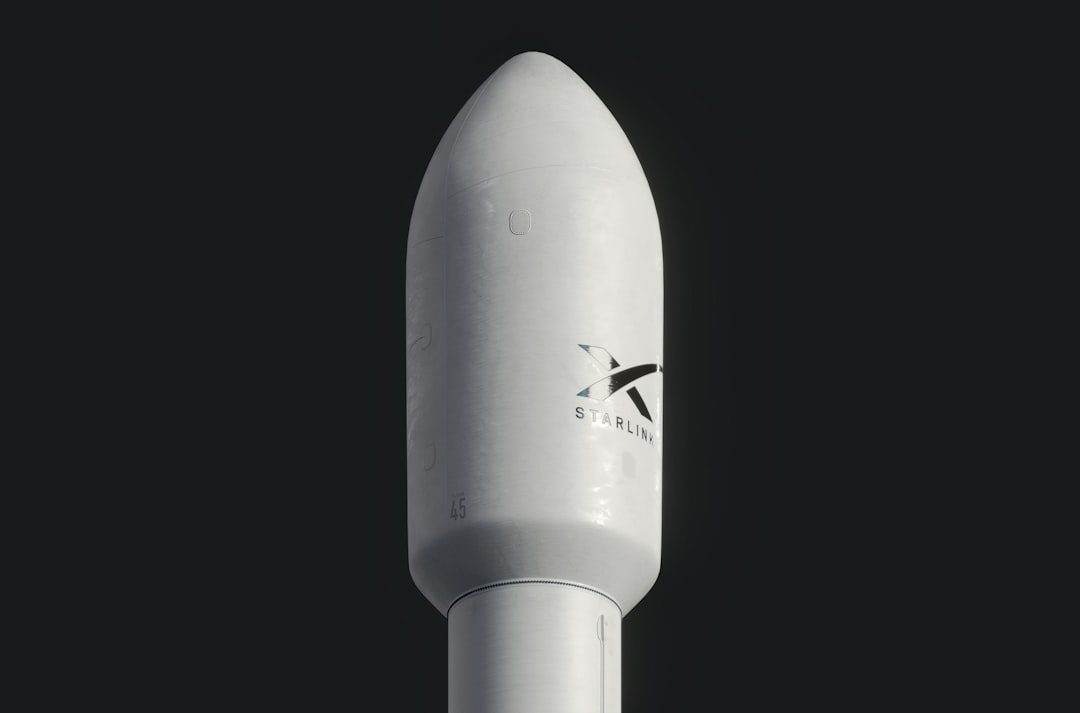
SpaceX Starlink Becomes a Weapon in Ukraine War

SpaceX Starlink Becomes a Weapon in Ukraine War

Force in Play
By Newzino Staff |

A private satellite network transforms modern warfare—and both sides want control

Yesterday: Whitelist Activated, Russian Terminals Disabled

Overview

Ukraine's military has depended on Starlink satellite internet since the first week of Russia's 2022 invasion. On February 5, 2026, SpaceX flipped a switch that cut off Russian forces from that same network—collapsing command systems along the entire front line and halving the number of daily assault operations within hours.

The shutdown represents an extraordinary moment: a private American company, at the request of a foreign government, disabled communications infrastructure that an enemy military had come to rely on. Russia obtained thousands of Starlink terminals through smuggling networks and mounted them on attack drones, extending their range and precision. Now those drones cannot be controlled, and Russian troops are crowdfunding for radio equipment.

Voices from History

Fictional content for perspective - not real quotes.
Benjamin Franklin

Benjamin Franklin

(1706-1790) · Enlightenment · wit

Fictional AI pastiche — not real quote.

"A man who builds his army upon borrowed tools must not be surprised when the lender recalls them. 'Tis a peculiar Age when a printer of rockets holds more sway over the fate of nations than their kings—though I confess, having been a printer myself, I find the irony most delicious."

Ever wondered what historical figures would say about today's headlines?

Sign up to generate historical perspectives on this story.

Sign Up

Key Indicators

56
Russian assaults on Feb 5
Down from 100+ daily average before Starlink shutdown
75 km/h
Speed limit imposed
SpaceX disabled terminals moving faster than this to ground strike drones
Hundreds
Documented Russian drone attacks
Ukrainian officials documented attacks using Starlink-equipped drones
~47,000
Starlink terminals in Ukraine
As of late 2023, supporting both military and civilian infrastructure

People Involved

Elon Musk
Elon Musk
Chief Executive Officer, SpaceX and Tesla (Central figure in Starlink policy decisions)
Mykhailo Fedorov
Mykhailo Fedorov
Minister of Defence, Ukraine (formerly Minister of Digital Transformation) (Architect of Ukraine-SpaceX cooperation on terminal blocking)
Serhii Beskrestnov
Serhii Beskrestnov
Adviser to Ukrainian Defence Minister on technological issues (Primary spokesman on Starlink-drone connection)
Gwynne Shotwell
Gwynne Shotwell
President and Chief Operating Officer, SpaceX (Key decision-maker in Starlink military policy)

Organizations Involved

SpaceX
SpaceX
Private Aerospace Company
Status: Controller of world's largest satellite internet constellation

Operates Starlink, a constellation of over 6,000 low-Earth orbit satellites providing broadband internet globally.

Roscosmos
Roscosmos
Russian State Space Corporation
Status: Developing Starlink alternative

Russia's space agency, responsible for developing the Rassvet satellite constellation as a Starlink competitor.

Timeline

  1. Whitelist Activated, Russian Terminals Disabled

    Technology

    SpaceX activates whitelist system disconnecting all unregistered terminals. Russian frontline command collapses; daily assaults drop by half.

  2. SpaceX Implements Speed Limit

    Technology

    SpaceX limits service for terminals moving above 75 km/h, disrupting Russian strike drone operations.

  3. Fedorov Thanks SpaceX for Response

    Statement

    Fedorov publicly thanks Shotwell and Musk for beginning work to resolve Russian exploitation of Starlink.

  4. Beskrestnov Publicly Details Problem

    Statement

    Adviser Serhii Beskrestnov publicly documents Starlink-drone connection and calls for countermeasures.

  5. Starlink Drone Strikes Passenger Train

    Attack

    A Starlink-guided drone strikes a passenger train in Kharkiv region, killing six people among 291 passengers.

  6. Ukraine Contacts SpaceX About Drones

    Diplomatic

    Defence Minister Fedorov contacts SpaceX about Russian use of Starlink on strike drones targeting Ukrainian cities.

  7. Starlink-Guided Molniya Drones Appear

    Military

    Russian Molniya strike drones with Starlink systems begin appearing, extending precision strike capabilities.

  8. Musk Pledges Starlink Support

    Statement

    Musk describes Starlink as 'the backbone of the Ukrainian army' and pledges to never turn off service regardless of policy disagreements.

  9. First Starlink-Equipped Russian Drones Detected

    Military

    Reports emerge of Russian Shahed long-range strike drones equipped with Starlink terminals.

  10. Pentagon Takes Over Funding

    Financial

    United States Department of Defense begins covering Starlink expenses in Ukraine through contract with SpaceX.

  11. SpaceX Restricts Offensive Use

    Policy

    SpaceX announces restrictions on Ukraine's use of Starlink for offensive military purposes.

  12. SpaceX Requests Pentagon Funding

    Financial

    SpaceX tells Pentagon it can no longer fund Starlink service for Ukraine, requesting government takeover of costs exceeding $120 million annually.

  13. Musk Refuses Crimea Coverage

    Policy

    Musk declines Ukrainian request to enable Starlink near Crimea for naval attack on Russian fleet, citing nuclear escalation fears.

  14. Starlink Activated for Ukraine

    Technology

    After a Twitter appeal from Digital Minister Fedorov, Musk activates Starlink service in Ukraine and begins shipping terminals.

  15. Russia Invades Ukraine

    Military

    Russia launches full-scale invasion of Ukraine, degrading telecommunications infrastructure across the country.

Scenarios

1

Russia Develops Workarounds, Communications Restored

Discussed by: Pro-Kremlin military bloggers including Boris Rozhin

Russian forces find technical bypasses to the whitelist or establish alternative communication networks using HF radio, cellular boosters, or other means. The immediate disruption proves temporary, and within weeks Russian assault tempo returns to previous levels. Pro-Kremlin bloggers have claimed Russian forces are 'working to bypass the block,' though they acknowledge no alternatives currently exist.

2

Rassvet Constellation Provides Alternative by 2027

Discussed by: Roscosmos, Russian state media

Russia's $5 billion Rassvet satellite constellation reaches operational capability with 300+ satellites by 2027, providing indigenous secure communications for military forces. This eliminates Russian dependence on commercial Western infrastructure for battlefield communications but takes 12-18 months to deploy.

3

Ukraine Gains Sustained Operational Advantage

Discussed by: Ukrainian military officials, Western defense analysts

The Starlink cutoff proves durable and Russia cannot restore comparable communications capability. Ukrainian forces exploit the disruption to command and control, inflicting disproportionate casualties and recapturing territory. The model of private company-government cooperation to deny adversary communications becomes a template for future conflicts.

4

Starlink Becomes Contested Infrastructure

Discussed by: Atlantic Council, defense policy researchers

Russia escalates by attempting to jam, hack, or physically attack Starlink ground stations and satellites. The constellation's role in conflict expands from communications to active targeting, raising questions about the legal status of commercial space infrastructure in warfare and the vulnerability of satellite-dependent military operations.

Historical Context

Iridium Satellite Phones in Afghanistan (2001-2021)

October 2001 - August 2021

What Happened

After 9/11, Iridium satellite phones became the primary communication method for both US special forces and Taliban/Al-Qaeda operatives in remote Afghan terrain where no other connectivity existed. The US military paid premium rates for Iridium service while intelligence agencies tracked adversary satellite phone signals to locate high-value targets.

Outcome

Short Term

Satellite phones enabled operations in otherwise unreachable areas for both sides.

Long Term

Established precedent that commercial satellite communications would be used—and contested—in modern warfare.

Why It's Relevant Today

Like Iridium in Afghanistan, Starlink became essential infrastructure that both sides of a conflict came to depend on, creating strategic vulnerabilities when access could be controlled or denied.

East India Company Military Operations (1757-1857)

June 1757 - November 1858

What Happened

The British East India Company maintained its own private army of 260,000 soldiers—twice the size of the British Army—and exercised sovereign military power across the Indian subcontinent. The company's military decisions shaped British foreign policy and determined the fates of entire nations without direct government control.

Outcome

Short Term

Company forces conquered Bengal, expanded British territorial control, and generated enormous profits.

Long Term

The 1857 rebellion led to dissolution of company rule and direct Crown governance, establishing that strategic military power should not rest with private entities.

Why It's Relevant Today

SpaceX's ability to enable or disable military communications at will echoes the concentrated private power that once allowed corporations to conduct foreign policy. The question of whether critical military infrastructure should depend on a single company's decisions remains unresolved.

GPS Selective Availability Controversy (1983-2000)

September 1983 - May 2000

What Happened

The US military deliberately degraded GPS signals available to civilian users, maintaining a more accurate signal for military purposes only. The policy began after Korean Air Lines Flight 007 was shot down over Soviet airspace, partly due to navigation errors. For 17 years, the US government controlled who got precision positioning and who got fuzzy approximations.

Outcome

Short Term

US military maintained exclusive access to precise positioning technology.

Long Term

President Clinton ordered Selective Availability turned off in 2000, democratizing GPS access and enabling the smartphone revolution.

Why It's Relevant Today

The Starlink whitelist represents a return to selective availability thinking—where one entity decides who gets reliable service. Unlike GPS, Starlink is controlled by a private company rather than a government, with implications for how future dual-use infrastructure will be governed.

10 Sources: