
Pull to refresh
Logo
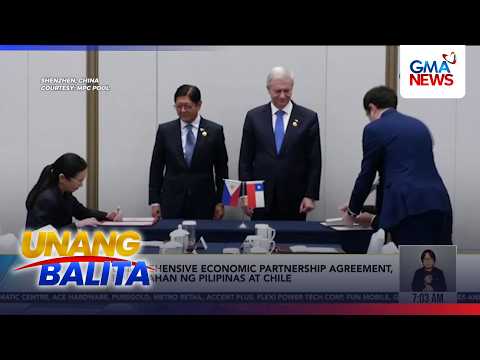
Philippines signs its first Latin American trade deal with Chile

Philippines signs its first Latin American trade deal with Chile

Rule Changes

The Comprehensive Economic Partnership Agreement covers 8,632 Philippine product lines and about 90% of Chilean export value, but it is not in force until both governments ratify it.

Overview

Updated 15 hours ago

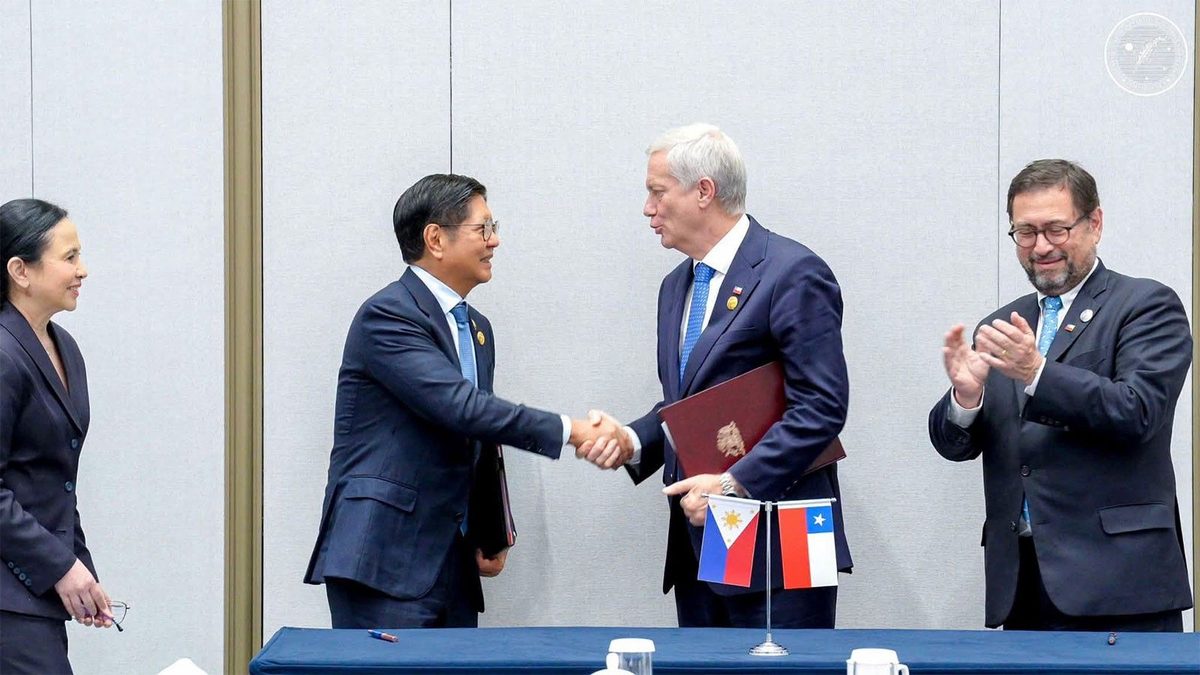
The Philippines and Chile signed a free trade agreement in Shenzhen on November 19, on the sidelines of the Asia-Pacific Economic Cooperation leaders' meeting. It is the Philippines' first bilateral trade deal with a Latin American country, and the first one any Latin American country has signed with Manila.

The agreement is not in force yet; both governments must finish ratification first. Once it takes effect, 8,632 Philippine product lines get preferential entry into Chile, covering 99% of the value Chile now imports from the Philippines. In return, about 90% of Chilean export value gets preferential treatment, including copper, lithium and salmon.

Why it matters

Chile's copper and lithium feed Philippine electronics and battery plants. Cutting tariffs lowers input costs for manufacturers that had no Latin American trade partner before.

Questions about this story

Free account needed to ask — your question is kept and asked for you right after sign-up. Answers are public.

No questions yet — be the first to ask.

Key Indicators

8,632
Philippine product lines with preferential access in Chile
Tariff concessions cover 99% of the value of Chile's existing imports from the Philippines, according to Chile's trade agency SUBREI.
99%
Share of Chile's import value from the Philippines covered by tariff cuts
Almost all Philippine goods already sold in Chile will enter duty-free or at reduced rates once the deal takes effect.
~90%
Share of Chilean export value getting preferential treatment in the Philippines
Chile's foreign ministry says more than 10,467 product categories qualify, spanning farm goods, wine, dairy, fish, forestry, chemicals, copper, lithium, molybdenum and iodine.
37
Chile's total trade agreements, including this one
Chile already has deals with Thailand, Singapore, Vietnam, Brunei, Malaysia and Indonesia.

Voices

Curated perspectives — historical figures and your fellow readers.

Sign up to generate historical perspectives on this story.

People Involved

Organizations Involved

Timeline

July 2026 November 2026

2 events Latest: Yesterday
  1. Philippines and Chile sign the CEPA in Shenzhen

    Latest Agreement

    Roque and Pérez Mackenna sign; Marcos and Kast witness. The text covers goods, services, investment, digital trade, intellectual property, labor and the environment.

  2. Negotiators close technical talks in Manila

    Negotiation

    Roque and Pérez Mackenna announce the conclusion of technical negotiations after three rounds split between Manila and Santiago.

Scenarios

1

Both governments ratify and the CEPA takes effect

Likely Resolves by End of 2027

Discussed by: Philippine and Chilean trade officials, who describe ratification as the next step

The text is signed but inert until Manila and Santiago finish their domestic procedures. In the Philippines that means Senate concurrence; in Chile it means congressional approval. Once both publish the instruments, tariffs start falling on the schedules written into the annexes.

2

Manila opens formal free trade talks with Peru

Possible Resolves by Q2 2028

Discussed by: Philippine trade officials cited by ABS-CBN, who say a Peru deal would bring the country's total to 25 agreements

The Philippines has said it is exploring a second Latin American deal with Peru. Exploratory talks become negotiations only if both sides agree on scope. A Chile precedent makes the paperwork easier but does not guarantee political appetite in Lima.

3

Chilean exports to the Philippines top $400 million in a calendar year

Uncertain Resolves by End of 2029

Discussed by: Trade analysts who note that tariff access alone does not guarantee orders

Chilean exports to the Philippines nearly tripled from $103.4 million in 2023 to $290.8 million in 2024, led by copper. Preferential treatment could push that higher, but the outcome depends on implementation timing, Chilean standards compliance and Philippine demand for copper, lithium and food products.

Historical Context

3 moments from history that rhyme with this story — and how they unfolded.

1946–2026

Eighty years of Philippine–Chile ties, with little trade (1946–2026)

The two countries have held formal diplomatic relations for roughly 80 years, as Marcos described them at the signing. Economic exchange never matched the relationship. Chilean exports to the Philippines were $103.4 million in 2023, a rounding error for both economies.

Then

Diplomatic ties produced consular and cultural links but almost no commercial traffic.

Now

The gap became the argument for the CEPA: both governments described untapped potential as the reason to sign.

Why this matters now

The deal is an attempt to convert a long, quiet relationship into commercial volume.

Through 2026

Chile's trade agreements across Southeast Asia

Chile already holds trade agreements with Thailand, Singapore, Vietnam, Brunei, Malaysia and Indonesia. The Philippines deal is its 37th overall, and Santiago says the agreements together give Chilean exporters access to 67 economies.

Then

Each deal cut tariffs on a narrow set of goods, mainly copper, fruit, wine, fish and forestry products.

Now

Southeast Asia became a standing market for Chilean primary exports, and Chile became the Latin American country with the deepest network of Asian trade deals.

Why this matters now

The Philippines agreement follows a template Chile has run repeatedly, and it makes Chile the first Latin American country with a trade deal in Manila.

2020–2026

Post-pandemic supply diversification (2020–2026)

COVID-era disruptions pushed the Philippines to look for suppliers beyond its traditional partners. Marcos said Latin America became a priority as technology and remote work reduced the cost of distance.

Then

Manila began scouting non-traditional markets for inputs it had bought almost exclusively from East Asia.

Now

Chile, already a copper supplier to Philippine electronics and battery manufacturing, became the natural first partner in the region.

Why this matters now

The CEPA is the first concrete result of that diversification push in the Western Hemisphere.

Sources

(10)