
Pull to refresh
Logo
uBlock Origin patches element picker flaw that allowed cross-site scripting

uBlock Origin patches element picker flaw that allowed cross-site scripting

Rule Changes

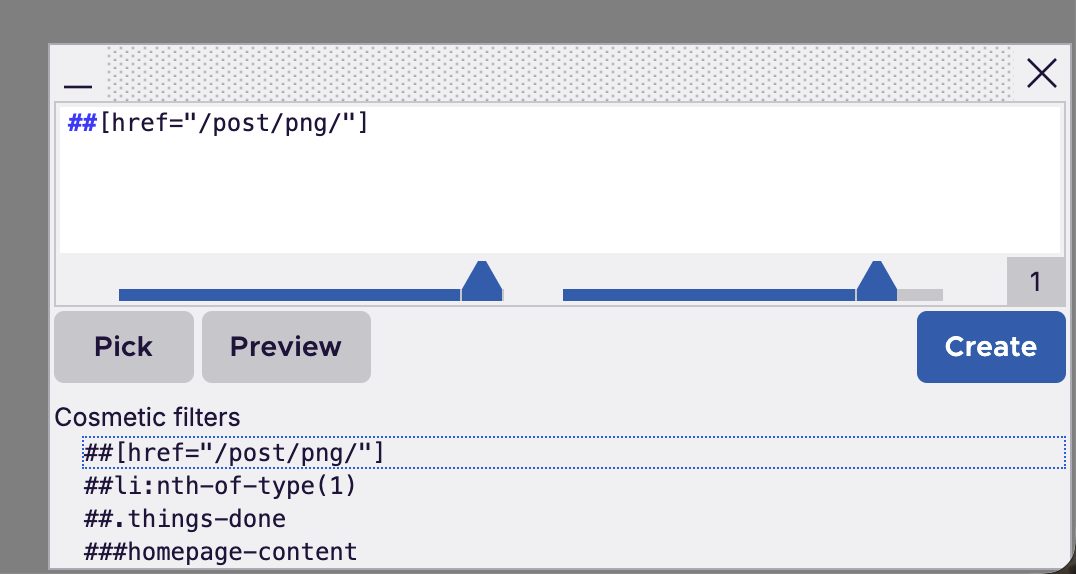
A malicious page could drive the element picker in a hidden iframe and add a trusted filter that runs JavaScript on other sites.

Overview

Updated 1 hour ago

A malicious website could make the Firefox version of uBlock Origin inject its own JavaScript into any other site a user visited. The entry point was the ad blocker's element picker, a tool meant to let users click a page element and block it. Raymond Hill, who maintains uBlock Origin, shipped fixes in versions 1.75.4 and 1.76.0 and published a security advisory on November 15.

The flaw mattered because uBlock Origin treats filters created by the picker as trusted, and trusted filters can carry scriptlets that run inside the page. A site that could add one for another domain could run code there with that site's cookies and login state. The fix adds a secret token the picker must present, and version 1.76.0 validates the filters it creates.

Why it matters

A content blocker with permission to rewrite pages turns one bug into a flaw on every site a user visits.

Questions about this story

Free account needed to ask — your question is kept and asked for you right after sign-up. Answers are public.

No questions yet — be the first to ask.

Key Indicators

1.75.2
Last vulnerable version
The advisory lists 1.75.2 and lower as affected.
1.75.4
First patched release
Added a secret token the element picker must present.
1.76.0
Release with full filter validation
Validated picker-created filters and temporarily blocked war: filters.
7 days
Report to full fix
The researcher reported on November 1; version 1.76.0 shipped November 8.
0
CVE identifiers assigned
The advisory and the researcher's write-up cite no CVE.

Voices

Curated perspectives — historical figures and your fellow readers.

Sign up to generate historical perspectives on this story.

People Involved

Organizations Involved

Timeline

6 events Latest: Yesterday
Tap a bar to jump to that date
  1. Public advisory and write-up published

    Latest Disclosure

    GitHub advisory GHSA-cmqw-9r2w-6wv2 and the iter.ca analysis go public.

  2. 1.76.0 validates filters and blocks war: filters

    Patch

    Picker-created filters are checked; filters that swap network responses for local files are temporarily blocked.

  3. 1.75.4 adds a secret token

    Patch

    The element picker must present a token obtained from the content script.

  4. Partial mitigation ships in 1.75.2

    Patch

    uBlock Origin stops using potentially tainted XHR methods inside scriptlets.

  5. Researcher shows the mitigation can be bypassed

    Research

    A responseText getter on XMLHttpRequest still exposes the extension's random internal identifier.

  6. Researcher reports element picker UXSS

    Disclosure

    Smitty van Bodegom emails Raymond Hill with a universal XSS that lets a page drive the element picker.

Scenarios

1

uBlock Origin's element picker fix holds

Likely Resolves by May 15, 2027

Discussed by: Security researchers and the GitHub advisory record

No further bypass of the token check or filter validation appears. Users who update to 1.76.0 or later are not exposed through the picker, and the advisory remains the final public record of the flaw.

2

A second bypass forces another emergency patch

Possible Resolves by May 15, 2027

Discussed by: The November 2 email exchange, where the researcher bypassed the first fix with a responseText getter

The first mitigation, 1.75.2, fell to a simpler XHR hook within a day. If the token check or filter validation has a similar hole, another advisory and patch cycle follows.

3

CVE assigned retroactively

Possible Resolves by Feb 15, 2027

Discussed by: Security press noted the absence of a CVE in the advisory and write-up

The advisory lists no CVE. A national CERT or MITRE could assign one later, especially if the flaw is added to a vulnerability database or cited in a future report.

Historical Context

2 moments from history that rhyme with this story — and how they unfolded.

February 2021

The Great Suspender removed from Chrome Web Store (2021)

The Great Suspender, a widely installed tab-suspension extension, was removed from the Chrome Web Store after a change of ownership and reports that later versions contained code capable of executing remote commands.

Then

Google removed the extension and users were told to disable it; some lost saved tab sessions.

Now

It became a standard example of how broad extension permissions can outlive the trust users place in a brand.

Why this matters now

The uBlock Origin flaw is a different mechanism but the same structural risk: an extension that can modify every page is a high-value target.

2024-2025

Google's Manifest V3 transition (2024-2025)

Google replaced Chrome's extension platform with Manifest V3, which narrowed the network-request blocking that content blockers relied on. Chrome began disabling Manifest V2 extensions, and the full version of uBlock Origin stopped working in Chrome.

Then

Users moved to uBO Lite or switched browsers; uBlock Origin continued on Firefox.

Now

The transition showed that a browser vendor can revoke an extension's capabilities without touching its code.

Why this matters now

The element picker flaw sits on the same fault line: the features that make a blocker effective are also what make its bugs damaging.

Sources

(6)