Anchor

California wildfire liability deal collapses as Assembly kills vote
Rule Changes San Francisco, CA localPG&E and SoCal Edison balk at the compromise, leaving victims, insurers, and utilities in a standoff
3 days ago: Assembly kills SB 492 without a voteNew here? Follow stories to track developments over time. Create a free account to get updates when stories you care about change.
Overview
Updated 1 hour agoA hard-won compromise to reshape California's wildfire liability system collapsed on the final day of the legislative session. The state Assembly never brought Senate Bill 492 to a vote, after PG&E and Southern California Edison warned the deal could push them into bankruptcy.
The failure leaves unresolved the central question: who pays when utility equipment ignites a catastrophic fire? California's inverse condemnation rule makes utilities liable for damage from their equipment regardless of negligence, a system that has already driven one utility into bankruptcy, shaken home insurance markets, and added roughly 20% to the average electricity bill.
Why it matters
If a major utility causes another catastrophic fire without a new liability framework, it could face bankruptcy, spiking rates and leaving thousands of victims unpaid.
Questions about this story
Free account needed to ask — your question is kept and asked for you right after sign-up. Answers are public.
No questions yet — be the first to ask.
Key Indicators
20%
Share of average electricity bill tied to wildfire costs
Roughly 5% for liability settlements and 15% for mitigation, per the California Public Utilities Commission.
$20B
Lost market value for PG&E and SoCal Edison
Combined stock drop cited by utility CEOs in a letter to legislative leaders before the vote.
7%
PG&E stock jump after bill killed
Shares rose within minutes of the Assembly decision to drop the bill.
Related Media
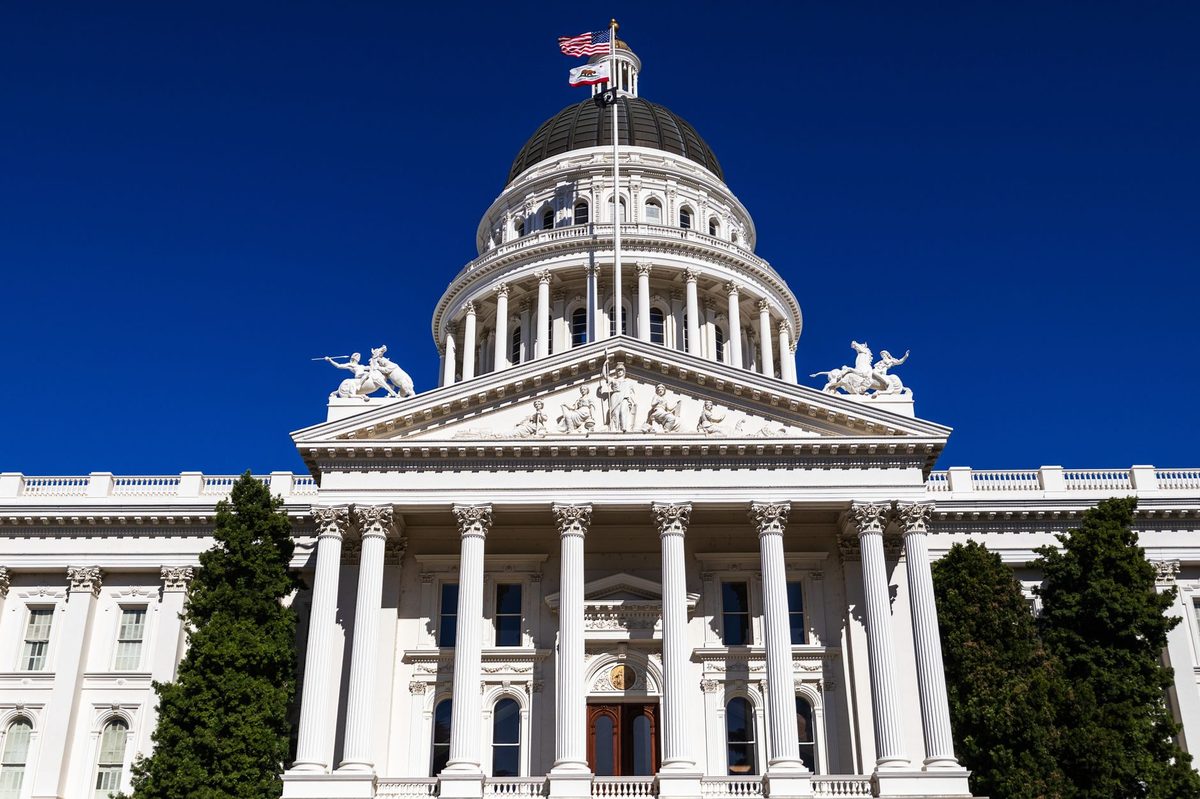
Sunlit view of the California State Capitol with clear blue skies.

The second official Southern California Edison Company logo — Calisphere

P G & E (Pacific Gas & Electric) - Nevada City California
10.8K views
5:38
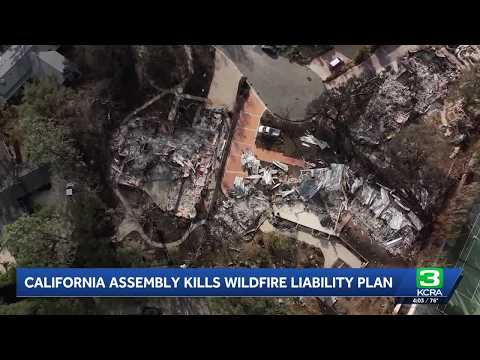
California Assembly kills wildfire liability plan
KCRA 3
3.2K views
4:12
Wildfire liability bill fails as lawmakers clash over insurance costs
ABC10
11.4K views
0:39
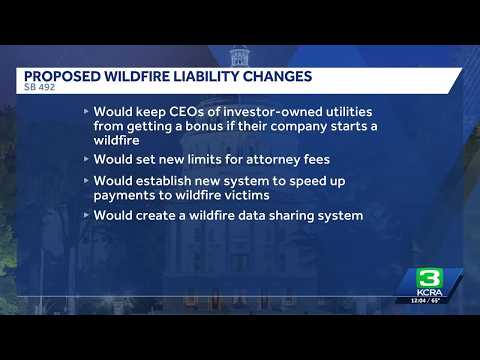
PG&E, Edison stocks fall again after latest deal on wildfire liability
KCRA 3
Images from Openverse under Creative Commons licenses. Videos from YouTube.
Voices
Curated perspectives — historical figures and your fellow readers.
Play
Exploring all sides of a story is often best achieved with Play.
Most of these play right now — no account needed. Sign up to save scores, keep a streak, and unlock Debate and Predict.
Log in
Sign Up
WHO SAID WHAT?
Can you match the quotes to the right people?
Rounds
People
Per question
Scoring
- points for each correct match.
- time bonus when you answer in under seconds.
- streak bonus once you hit correct in a row.
Score:
Round /
streak
— Who said this?
Tip: press 1– to answer.
Score:
Round /
streak
+
Base +
⚡ Speed +
🔥 Streak +
Streak reset · the answer was
No answer in time · it was
Next Up
Round
of
Score
points
Correct
Best Streak
Time Bonus
Avg. Time
points — sign up to put that on the leaderboard.
Now try on this story
Higher or Lower
A number from this story, against one from elsewhere in the news — guess which is bigger, then keep the chain going. 5 rounds, 3 strikes; a miss costs a strike and resets your streak.
Example
Anchor
EU tariff revenue
$52B
Big for this kind of number
Mystery
Pentagon AI contract
?
Round 1
Streak: 0
Mystery
?
Keyboard: ↓/L lower · ↑/H higher
0 pts
Best streak: 0 · Rounds: 0
0 points — sign up to put that on the leaderboard.
Now try on this story
Connections
Sixteen names from the news. Find the four hidden groups of four. Four mistakes max.
Loading today's puzzle…
0/4 groups
Mistakes
Sign up to keep a daily streak — a new puzzle lands every day.
Now try on this story
Exit debate?
Your progress in this debate will be lost.
How it works
- 1 Two AI personas square off on this story.
- 2 You predict who'll win each round — correct picks earn XP.
- 3 One crossfire question is yours to fire. Pick it carefully.
Couldn't generate a topic
Select Your Champions
Choose one persona for each side of the debate
DEBATE TOPIC
Choose personas with different perspectives for a more dynamic debate.
SIDE A (PRO)
Select debater for this side:
No debate personas available right now.
SIDE B (CON)
Select debater for this side:
No debate personas available right now.
VS
Get ready to make your prediction...
Round of
Claim
Evidence
Stakes
Crossfire Answer
Closing Statement
Claim
Evidence
Stakes
Crossfire Answer
Closing Statement
Your Crossfire Question
Generating arguments...
Who's Got This Round?
Make your prediction before the referee scores
The referee scores both sides on
Correct predictions earn +20 XP
· Press 1 or 2 to pick
Evidence
40%
Logic
30%
Detail
20%
Style
10%
Round Results
Your Pick
Not this time
(%)
Overall Score
/10
Your Pick
Not this time
(%)
Overall Score
/10
Set the Crossfire
Pick the question both personas must answer in the final round
Crafting crossfire questions...
Choosing a question earns +10 XP crossfire bonus
🏆
Total XP Earned
Cred Change
Predictions
Debate Oracle! You called every round!
Sharp Instincts! You know your debaters!
The Coin Flip Strategist! Perfectly balanced!
The Contrarian! Bold predictions!
Inverse Genius! Try betting the opposite next time!
XP Breakdown
Base completion
+20 XP
Rounds played ( rounds x 5 XP)
+ XP
Correct predictions ( correct x 20 XP)
+ XP
Crossfire bonus
+10 XP
Accuracy
%
Prediction History
Round
You picked:
✓
✗
Now try on this story
Keep debating to level up your credibility and unlock achievements
People Involved
Gavin Newsom
Governor of California
Pushed for broader liability reform; criticized the deal he helped craft
Robert Rivas
Assembly Speaker
Decided not to bring SB 492 to a vote
Josh Becker
State Senator, SB 492 author
Disappointed bill failed; says he will keep working
JC
Joy Chen
Leader, Every Fire Survivor's Network
Warned against a utility bailout; group took neutral stance on SB 492
Organizations Involved
Pacific Gas and Electric Company (PG&E)
Investor-owned utility
Warned the deal could push it into bankruptcy
California's largest utility, which declared bankruptcy in 2019 after the Camp Fire.
Southern California Edison (SCE)
Investor-owned utility
Opposed the deal as insufficient
Subsidiary of Edison International, responsible for the Eaton Fire in January 2025.
Every Fire Survivor's Network
Advocacy group
Neutral on SB 492, wary of utility bailouts
Grassroots group representing wildfire victims.
Timeline
November 2018 September 2026
8 events
Latest: 3 days ago
Tap a bar to jump to that date
-
Assembly kills SB 492 without a vote
Latest LegislativeSpeaker Rivas announces no vote on the bill; Newsom criticizes the deal he helped craft. PG&E stock jumps 7%.
-
Utility CEOs warn of bankruptcy
StatementPG&E and SCE CEOs send letter to leaders saying the deal could force bankruptcy and higher bills.
-
Utility stocks tumble after deal announcement
MarketPG&E and Edison International shares drop as investors see the deal as insufficient to limit liability.
-
Newsom announces compromise deal on SB 492
LegislativeGovernor and legislative leaders agree on a bill to speed victim payments and limit executive bonuses.
-
Senate refuses to limit insurance subrogation
LegislativeState Senate leaves subrogation out of SB 492, frustrating utilities and the governor.
-
Eaton Fire devastates Altadena
DisasterSCE equipment is suspected of igniting the fire, which destroys thousands of structures.
-
PG&E declares bankruptcy
FinancialFacing tens of billions in Camp Fire liabilities, PG&E files for Chapter 11 protection.
-
Camp Fire ignites, destroying Paradise
DisasterPG&E equipment sparks the deadliest and most destructive fire in California history, killing 85.
Historical Context
3 moments from history that rhyme with this story — and how they unfolded.
2000-2001
California Energy Crisis (2000-2001)
Deregulation and market manipulation by Enron and other traders caused rolling blackouts and a financial crisis for California utilities, including PG&E's predecessor.
Then
PG&E's utility declared bankruptcy; the state spent billions on power purchases.
Now
Created lasting public distrust of utility companies and market-based energy solutions, complicating any policy that seems to favor utility interests.
Why this matters now
Shows the precedent of state intervention and public suspicion when utilities face financial ruin, informing the current 'bailout' framing.
2018-2026
Paradise Rebuilt? (2018-2026)
The town of Paradise, destroyed by the Camp Fire, saw a slow and painful rebuilding effort, complicated by insurance disputes, utility costs, and bureaucratic hurdles.
Then
Residents struggled with insurance payouts and mental health tolls.
Now
Became a symbol of the human cost of utility-caused fires and a constant reminder for legislators of what's at stake in liability negotiations.
Why this matters now
Grounds the abstract policy debate in the real experience of victims, which is central to the arguments made by groups like Every Fire Survivor's Network.
January 2019
PG&E Bankruptcy after Camp Fire (2019)
Facing over $30 billion in liabilities from the Camp Fire, PG&E filed for Chapter 11 bankruptcy. The fire, sparked by its equipment, destroyed Paradise and killed 85 people.
Then
PG&E emerged from bankruptcy in 2020 with a state-backed safety plan, but rates rose to fund settlements and mitigation.
Now
Set a precedent that a major utility can be pushed to the brink by wildfire liability, shaping all subsequent policy debates.
Why this matters now
The current standoff is a direct result of this precedent. Utilities fear a repeat of PG&E's near-death, while victims and insurers argue the company's recklessness caused it.
Sources
(3)Related Stories
California's tighter carbon cap takes effect
Rule Changes
Updated 2 days ago
California's wildfire-flood cycle
Force in Play
Updated May 16
Los Angeles burns: the Palisades and Eaton fire disaster
Force in Play
Updated May 19
California strikes deal to buy Golden Gate Fields horse track for public park
Built World
Updated 5 hours ago
California's 2026 wildfire season
Built World
Updated May 25
Pacific Northwest utility consolidation
Money Moves
Updated May 29