



Pull to refresh
Logo
Nigerian cyber defence startup Aeon doubles pre-seed round to $2 million

Nigerian cyber defence startup Aeon doubles pre-seed round to $2 million

Money Moves

Launch Africa Ventures and Octerra Capital join Terra Industries and Flutterwave's GB Agboola in backing a company with pilots, two products and no named customer yet

Overview

Updated 35 minutes ago

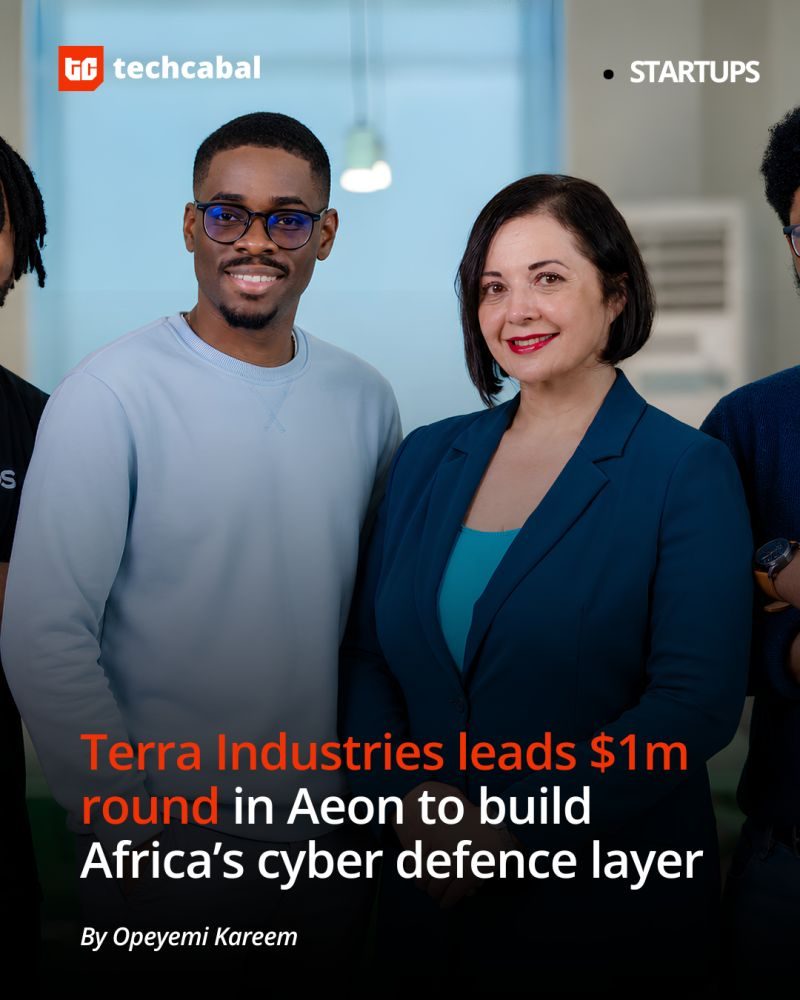
Aeon raised $1 million in September 2026. By November 25 it had doubled that, adding Launch Africa Ventures and Octerra Capital for a $2 million pre-seed. The Nigerian company sells two products: Aeon Console, software that finds and fixes vulnerabilities in cloud systems, and Aeon Edge, a device that watches what connects to a company network.

The cash pays for engineers, a specialist security team, and the work of turning pilots into paid deployments. Aeon has not named a single customer; its argument is that banks, telcos and government agencies run on shared plumbing, so one breach reaches many. Whether that argument becomes contracts is the open question.

Why it matters

Nigerian banks share the same systems, so one breach can hit all of them. Aeon is betting they buy security built locally.

Questions about this story

Free account needed to ask — your question is kept and asked for you right after sign-up. Answers are public.

No questions yet — be the first to ask.

Key Indicators

$2M
Total pre-seed raised
Up from the $1 million announced in September 2026.
$1M
September 2026 first close
Led by Nigerian defence-tech company Terra Industries.
2
Products in market
Aeon Console for cloud and application vulnerabilities; Aeon Edge for network visibility.
3
Co-founders
Samuel Ogbonyomi, Ben Eluan and Alex Idowu.

Voices

Curated perspectives — historical figures and your fellow readers.

Sign up to generate historical perspectives on this story.

People Involved

Organizations Involved

Timeline

February 2026 November 2026

3 events Latest: Today
  1. Round doubles to $2 million

    Today Funding

    Launch Africa Ventures and Octerra Capital join. Aeon says the money expands engineering and cybersecurity teams and speeds product development.

  2. $1 million pre-seed closes

    Funding

    Terra Industries leads, with Resilience17, Kaleo, DFS Labs, Ajim Capital and Seedstars. The investment comes with a joint venture to pursue government and military contracts.

  3. Three founders start building Aeon

    Founding

    Samuel Ogbonyomi, Ben Eluan and Alex Idowu begin work on the company through PipeOps, a cloud infrastructure management platform.

Scenarios

1

Aeon names its first paying bank customer

Possible Resolves by Q2 2027

Discussed by: StartupActu, which noted that no named bank client is public and framed the next named contract as the test of the company's pitch

Aeon says it serves banks, energy firms, telecoms operators and public agencies but gives no names. A disclosed paid contract with a named Nigerian bank would show that fraud losses at lenders are turning into security spending rather than headlines. A pilot announcement would not count.

2

The Terra joint venture wins a government or military contract

Uncertain Resolves by Q3 2027

Discussed by: Terra Industries and Aeon, which described a joint venture to co-execute government and military contracts

Terra brings public-sector relationships; Aeon brings the security products. A named award from a Nigerian ministry, agency or military branch would give Aeon revenue that does not depend on winning private banks one at a time. Without one, the partnership stays a plan.

3

Aeon raises a seed round on the back of commercial deployments

Possible Resolves by End of 2027

Discussed by: Dealroom and startup funding trackers that logged the pre-seed as an active company profile

Aeon describes the $2 million as pre-seed, which implies a priced seed round later. Investors typically want evidence of recurring revenue before writing that cheque. A seed round announced within a year would signal pilots converted; silence past the deadline would suggest they did not.

Historical Context

3 moments from history that rhyme with this story — and how they unfolded.

October 2020

Stripe acquires Paystack (October 2020)

Paystack, a Nigerian payments company built around local card and bank-transfer rails rather than the card-first assumptions of American processors, was bought by Stripe. It was one of the largest exits for a Nigerian software company at the time.

Then

The deal gave Nigerian founders a visible exit and international buyers a reason to look at Lagos.

Now

A generation of operators, including Flutterwave's founders, became investors in the next cohort of local startups.

Why this matters now

Aeon is making the same argument Paystack made in payments: knowledge of local infrastructure is a product advantage. Its cap table, which includes Flutterwave's chief executive, comes from that earlier wave.

March 2007

M-Pesa launches in Kenya (2007)

Safaricom launched a mobile money service designed around agents and cash, in an economy where most people had phones but few had bank accounts. Global banking software assumed branches and cards.

Then

Adoption spread quickly through a network of small agents rather than bank branches.

Now

Mobile money became the template for payments across Sub-Saharan Africa, and M-Pesa remains the reference case for products built to local conditions.

Why this matters now

Aeon is competing with Palo Alto Networks, Fortinet and Check Point on the claim that local infrastructure and operating conditions need locally designed tools, not imported ones.

December 2013

Target's payment card breach (December 2013)

Target disclosed that attackers had taken payment card data for tens of millions of shoppers during the holiday season. The chief information officer resigned in March 2014 and the chief executive followed in May.

Then

Congress held hearings; the company absorbed the cost of credit monitoring and falling sales.

Now

The breach added urgency to the slow American move to chip cards, whose liability shift arrived in October 2015, nearly two years later.

Why this matters now

Fraud losses and breach headlines create urgency. Procurement moves at its own pace. Aeon's reported pipeline of Nigerian bank fraud losses does not by itself mean banks are buying.

Sources

(5)