
AlphaFold solves protein folding (2020)
Google DeepMind's AlphaFold 2 demonstrated it could predict protein 3D structures with near-experimental accuracy at the Critical Assessment of protein Structure Prediction (CASP14) competition. The protein-folding problem — predicting a protein's shape from its amino acid sequence — had been an open grand challenge in biology for 50 years. By 2022, DeepMind had published predicted structures for nearly every known protein, roughly 200 million structures.
Structural biologists gained instant access to protein structures that would have taken years to determine experimentally. Drug designers could model molecular interactions without waiting for lab results.
AlphaFold established AI as a legitimate tool for fundamental scientific discovery, not just data analysis. Hassabis and Jumper received the 2024 Nobel Prize in Chemistry, and the success became the template for Google's broader AI-for-science ambitions.
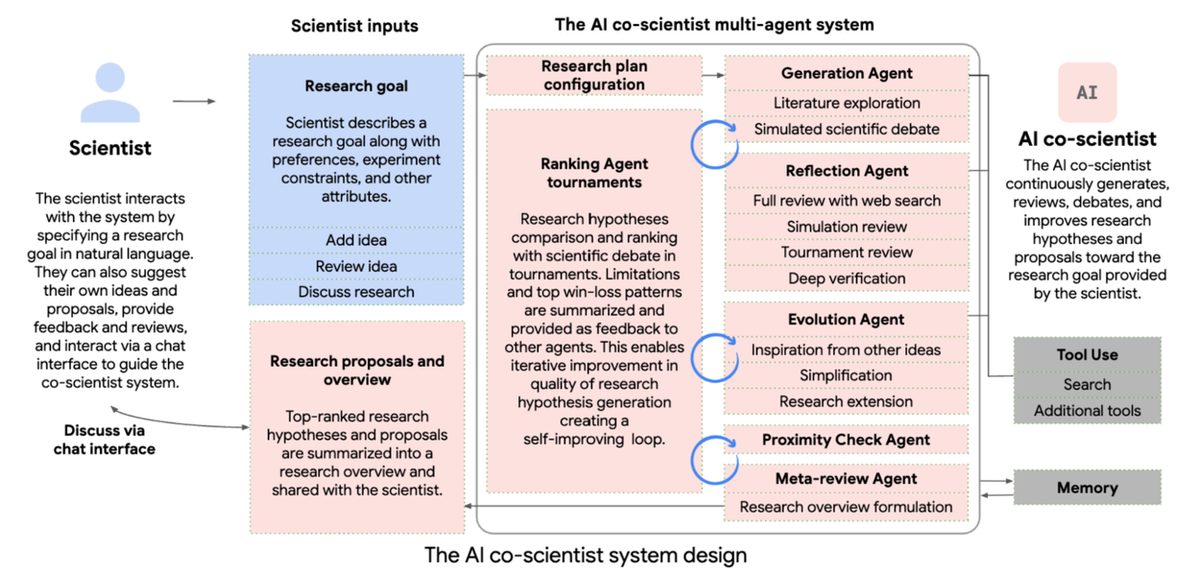
The AI Co-Scientist is a direct extension of the approach that worked with AlphaFold — applying AI to a well-defined scientific problem — but generalized from protein structure to hypothesis generation across all domains. AlphaFold's success gave Google both the credibility and the organizational confidence to attempt this much broader challenge.