Pull to refresh
Logo
Daily Brief
Following
Why Ranks Sign Up
AI-designed universal coronavirus vaccine clears first human safety trial

AI-designed universal coronavirus vaccine clears first human safety trial

New Capabilities

A Cambridge spin-out's computer-designed shot aims to stop the next coronavirus before it spreads

Yesterday: AI-designed vaccine passes first human safety trial

Overview

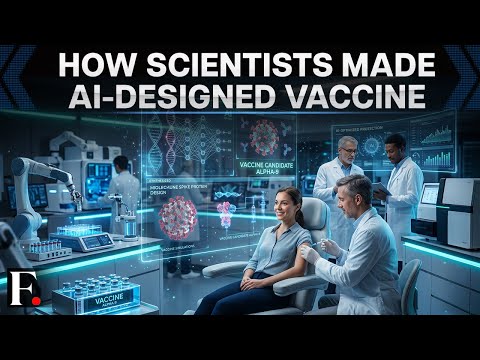
Vaccines have always chased the virus. You wait for a new strain, then design a shot to match it. A team at the University of Cambridge just tested a vaccine built the other way around: a machine-learning model designed its active ingredient to recognize a whole family of coronaviruses at once, including bat viruses that have never infected a person.

The first human trial, with 39 volunteers, found it safe and showed it triggered immune responses against SARS-CoV-2, the original SARS virus, and related bat coronaviruses. It is the first vaccine whose core component was designed entirely by computer to be tested in people. A larger trial will now measure how strong that protection is.

Why it matters

If this works, health agencies could stock a coronavirus vaccine before the next outbreak starts, instead of spending months racing to build one after.

Questions about this story

No questions yet — be the first to ask.

Key Indicators

39
Trial volunteers
Healthy adults aged 18 to 50 dosed in the Phase 1 safety trial.
3 virus types
Coronaviruses targeted
Immune responses hit SARS-CoV-2, SARS, and bat coronaviruses at once.
$42M
CEPI grant (2022)
Pandemic-preparedness funding that backed the broadly protective vaccine work.
First
Computer-designed vaccine in humans
Researchers say no fully AI-designed vaccine had been tested in people before.

Voices

Curated perspectives — historical figures and your fellow readers.

Ever wondered what historical figures would say about today's headlines?

Sign up to generate historical perspectives on this story.

Play

Exploring all sides of a story is often best achieved with Play.

Log in to play. Track your picks, climb the leaderboards. Log in Sign Up
Predict 3 ways this could play out. Contrarian picks score more — points lock when the scenario resolves. Log in to play
Higher or Lower Two numbers from this story. Guess which is bigger. 5 rounds to set a streak. Log in to play
Connections Sixteen names from the news. Find the four hidden groups of four. Log in to play

People Involved

Organizations Involved

Timeline

January 2017 June 2026

4 events Latest: Yesterday
Tap a bar to jump to that date
  1. AI-designed vaccine passes first human safety trial

    Latest Trial

    Cambridge and DIOSynVax report the computer-designed vaccine was safe in 39 volunteers and triggered responses against several coronaviruses, including bat viruses.

  2. CEPI commits $42 million

    Funding

    The pandemic-preparedness coalition funds DIOSynVax to develop a vaccine protecting against multiple coronavirus groups.

  3. Early needle-free vaccine testing begins

    Trial

    DIOSynVax starts UK safety testing of a coronavirus vaccine delivered by an air jet rather than a needle.

  4. DIOSynVax spins out of Cambridge

    Origin

    Jonathan Heeney founds the company to design vaccine antigens by computer rather than copying single virus strains.

Historical Context

3 moments from history that rhyme with this story — and how they unfolded.

January-December 2020

COVID-19 mRNA vaccine race (2020)

After SARS-CoV-2's genetic sequence was published in January 2020, Pfizer-BioNTech and Moderna designed mRNA vaccines against that specific strain. The first shots were authorized within about a year, a record pace for vaccine development.

Then

Mass vaccination began in December 2020 and is credited with preventing millions of deaths.

Now

Boosters had to be redesigned repeatedly as new variants emerged, showing the limits of matching one strain at a time.

Why this matters now

The 2020 race is the reactive model DIOSynVax is trying to replace. A universal shot would aim to skip the redesign cycle that variants forced.

1990s-present

The universal flu vaccine quest (since the 1990s)

Researchers have spent decades trying to build a flu vaccine that targets parts of the virus shared across strains, so it would not need yearly updates. The US National Institutes of Health has run multiple programs toward this goal.

Then

Several candidates reached human trials and showed broader responses than standard flu shots.

Now

No universal flu vaccine has been approved, showing how hard it is to make one antigen cover a changing virus family.

Why this matters now

It is a sober benchmark for the word 'universal.' Broad immune responses in early trials are a start, not proof a vaccine will hold up across a whole virus family.

November 2020-July 2021

AlphaFold protein-structure breakthrough (2020-2021)

DeepMind's AlphaFold system predicted the 3D shapes of proteins from their genetic code, solving a problem biologists had worked on for 50 years. The team released structures for nearly every known human protein.

Then

Researchers worldwide began using the predictions to speed up drug and vaccine design.

Now

It established machine learning as a standard tool in molecular biology, not a novelty.

Why this matters now

It shows AI moving from analyzing biology to designing it. The Cambridge vaccine is a test of whether computer-designed molecules hold up in the human body.

Sources

(6)