

Pull to refresh
Logo
Alternergy completes Philippines' first sea-crossing power line for wind project

Alternergy completes Philippines' first sea-crossing power line for wind project

Built World

Transmission link connects 64-MW Alabat wind farm on Quezon island to the Luzon grid

Overview

Updated 2 hours ago

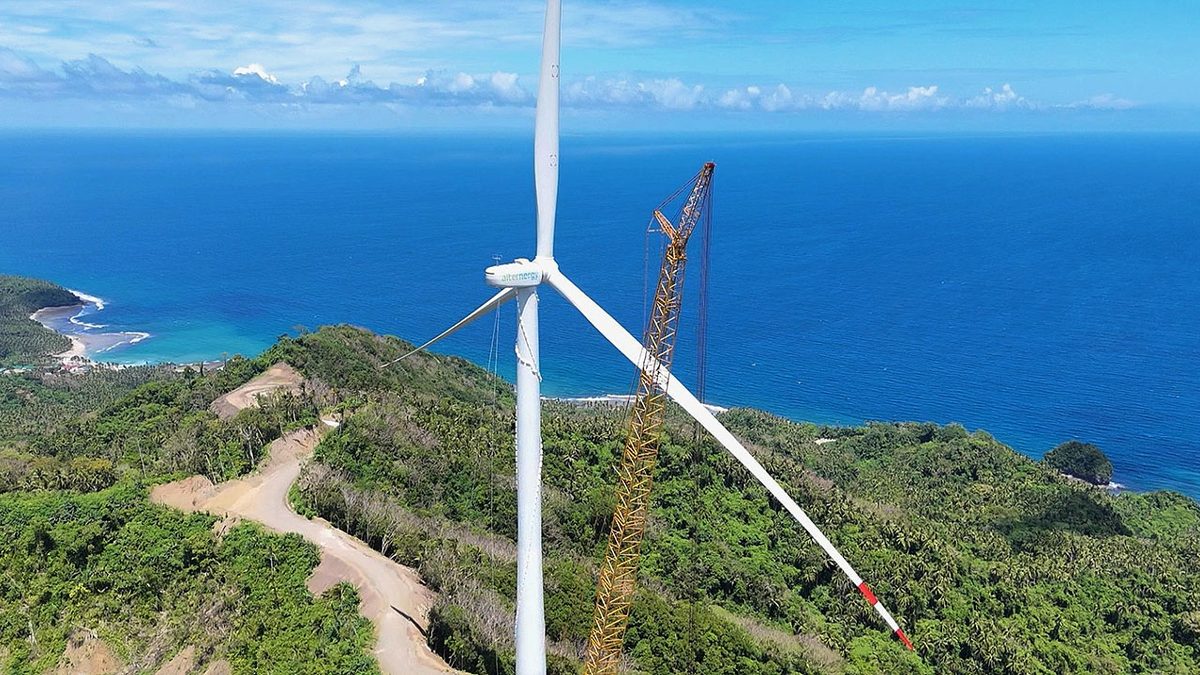
Eight wind turbines on a Quezon island were useless until the power they generate could reach the mainland. Alternergy just removed that obstacle, completing the Philippines' first overhead sea-crossing transmission line for a wind project.

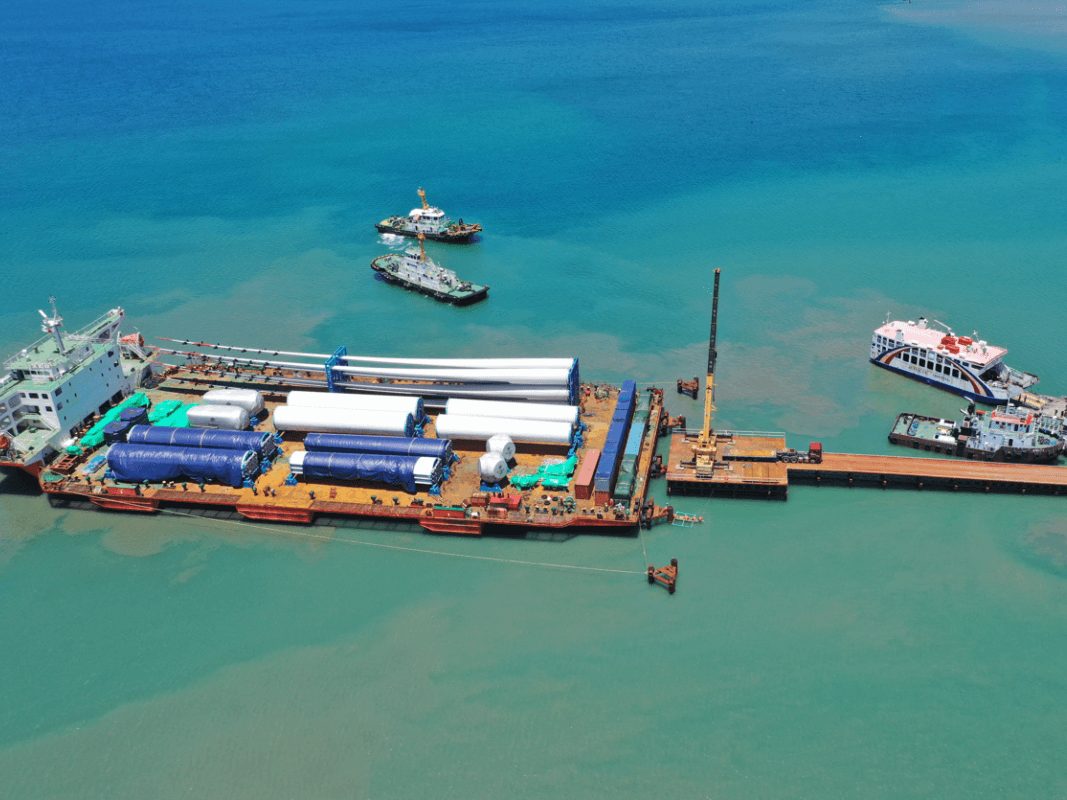
The 1.4-kilometer crossing, carried by two 100-meter and two 45-meter lattice towers, is part of a 37-kilometer, 69-kilovolt line linking the 64-MW Alabat Wind Project to the Luzon grid. It clears the last major transmission hurdle before the farm's eight 8-MW turbines, among the largest commercial units deployed outside China, can start feeding power.

Why it matters

The sea crossing unlocks the 64-MW Alabat wind farm and proves island renewables can reach mainland grids across the Philippines' 7,000-plus islands.

Questions about this story

Free account needed to ask — your question is kept and asked for you right after sign-up. Answers are public.

No questions yet — be the first to ask.

Key Indicators

1.4 km
Sea-crossing span
First overhead sea crossing for a Philippine wind project; carried by two 100-meter and two 45-meter lattice towers.
64 MW
Alabat wind project capacity
Eight 8-MW turbines supplied by Envision Energy, designed to withstand typhoons.
37 km
Transmission line length
69-kV dedicated line from Alabat Island to the NGCP grid at Lopez, Quezon, using 483 poles.
311 MW
Expected operating capacity by end of 2026
Up from 119 MW now; includes the 128-MW Tanay wind project in Rizal.

Voices

Curated perspectives — historical figures and your fellow readers.

Sign up to generate historical perspectives on this story.

People Involved

Organizations Involved

Timeline

2019 October 2026

4 events Latest: Today
Tap a bar to jump to that date
  1. Sea-crossing transmission link completed

    Today Infrastructure

    Alternergy completes the 1.4-km overhead sea crossing, the Philippines' first for a wind project.

  2. ERC clears grid connection

    Regulatory

    ERC approves AWPC's dedicated 37-km transmission line to the NGCP grid.

  3. Transmission build agreements approved

    Corporate

    AWPC board approves transmission agreements with Quezon 1 Electric Cooperative and owner's engineer K2 Management.

  4. Wind energy service contract secured

    Regulatory

    AWPC secures the Wind Energy Service Contract for the Alabat Island site.

Scenarios

1

Alabat wind farm reaches commercial operation on the Luzon grid

Likely Resolves by End of 2026

Discussed by: Alternergy management and company disclosures

The eight turbines complete commissioning and begin feeding power through the new sea crossing. Alternergy expects this by end of 2026, as it has stated the crossing was the key structural milestone before grid delivery.

2

Commissioning delays push Alabat wind farm to 2027

Possible Resolves by End of 2026

Discussed by: No public analyst — contingency scenario based on commissioning risk

Turbine commissioning or grid-integration testing slips past the end of 2026. The typhoon-rated 8-MW turbines and the new inter-island connection are unproven in commercial service, leaving room for technical snags during energization.

3

Sea-crossing model spreads to other Philippine island wind projects

Possible Resolves by Q2 2027

Discussed by: Philippine energy press and industry observers tracking GEAP 2 awardees

The Alabat crossing provides a template for island wind farms elsewhere in the archipelago. Other developers pursuing island sites, including Green Energy Auction Program awardees, may adopt similar overhead sea crossings to reach mainland grids.

Historical Context

2 moments from history that rhyme with this story — and how they unfolded.

1998

Leyte–Luzon HVDC link (1998)

The Philippines connected its Visayas and Luzon island grids with a high-voltage direct current submarine link, letting geothermal power from Leyte flow to Manila and surrounding demand centers. Before it, the two island grids operated separately and Luzon leaned heavily on imported oil.

Then

Geothermal power from the country's volcanic belt began supplying Luzon, trimming oil-fired generation in the capital region.

Now

The link became a backbone of the national grid; NGCP now runs it as part of the nationwide transmission network.

Why this matters now

Same underlying mechanism: power generated on one Philippine island is only useful once transmission crosses the sea to reach consumers.

2016

Block Island Wind Farm (2016)

America's first offshore wind farm, five turbines totaling 30 megawatts off Rhode Island, was completed in 2016. The project required a dedicated submarine cable to the mainland; without it, the generation would have had nowhere to go, and the island's diesel generators would have kept running.

Then

Block Island switched from diesel to wind power once the cable went live.

Now

The interconnection build became the model for subsequent US offshore wind projects.

Why this matters now

Shows the Alabat pattern — the transmission, not the turbines, is the harder engineering problem that decides whether an island wind farm actually delivers power.

Sources

(8)