Anchor

Alberta imposes $14 recycling fee on solar panels, bans landfill disposal
Rule ChangesFirst-in-Canada program starts October 1, adding up to $280 to home solar systems
Yesterday: Industry backlash intensifiesNew here? Follow stories to track developments over time. Create a free account to get updates when stories you care about change.
Overview
Updated 36 minutes agoStarting October 1, every new solar panel sold in Alberta carries a $14 recycling fee, and panels can no longer go to landfills. A typical 20-panel home system now costs $280 more.
The fee is nearly five times what recycling a television costs in Alberta, and roughly triple what independent research says the job will actually cost. Renewable energy groups call the charge punitive and warn it adds about $1 million to the average utility-scale project.
Why it matters
If the fee holds, Alberta households pay $280 more per solar system and utilities $1 million per project, with new renewable deals already down 99% since 2023.
Questions about this story
Free account needed to ask — your question is kept and asked for you right after sign-up. Answers are public.
No questions yet — be the first to ask.
Key Indicators
$14
Environmental fee per new panel
Applies to panels one square metre or larger sold in Alberta from October 1.
$280
Added cost for a typical 20-panel home system
Initially misstated as $240, then corrected by the minister's office.
99%
Drop in renewable project deals, 2023-2025
Collapsed after Alberta overhauled renewables rules in 2024.
73,000
Projected end-of-life panel waste by 2045 (tons)
Most panels now installed will reach end of life in the 2040s.
$1M
Added cost per average utility-scale project
Analysis by Business Renewables Centre-Canada.
5x
Fee compared to TV recycling cost
Recycling a large television in Alberta costs $2.75.
Related Media
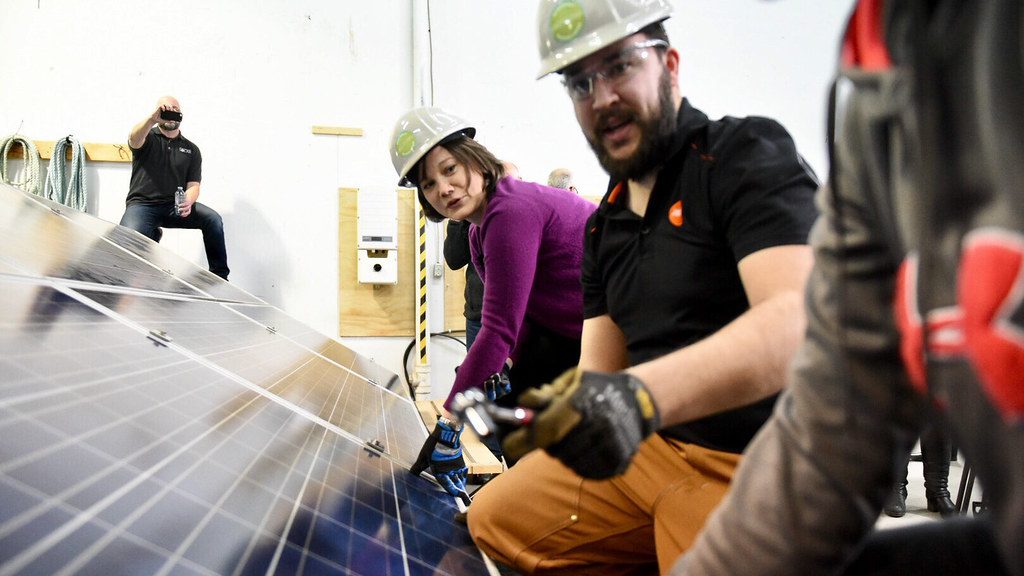
Solar installation rebate program
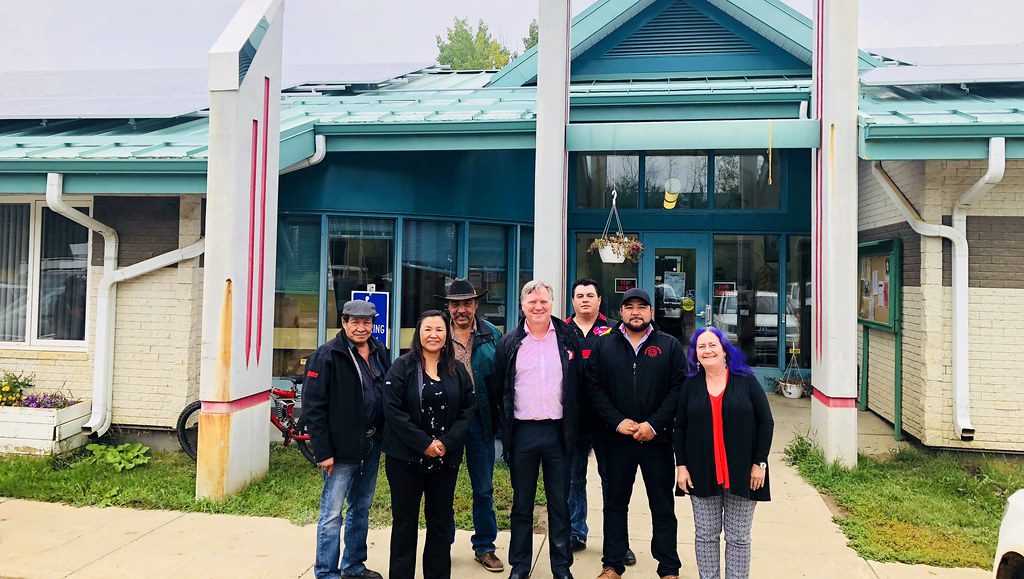
Beaver First Nation harnesses solar power
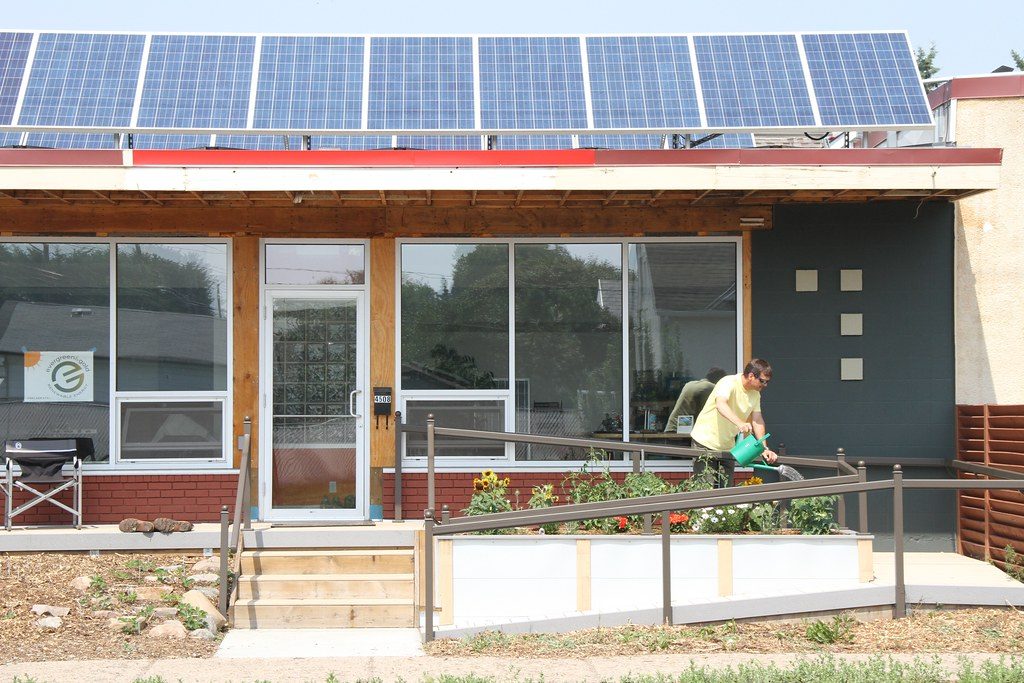
Warren Sarauer Evergreen and Gold Renewable Energy in Edmonton, Alberta produces distributed solar energy on-site in this renovated near net zero office building in Edmonton.
259 views
1:10
Alberta creating solar panel recycling program
CTV News

1.3K views
28:10
A new recycling system for solar panels - September 3, 2026
YourAlberta (Government of Alberta)
6.1K views
3:25
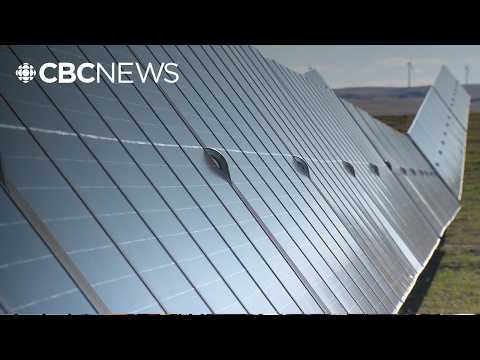
Solar panels get pricier in Alberta thanks to first-in-Canada fee
CBC News Alberta
Images from Openverse under Creative Commons licenses. Videos from YouTube.
Voices
Curated perspectives — historical figures and your fellow readers.
Play
Exploring all sides of a story is often best achieved with Play.
Most of these play right now — no account needed. Sign up to save scores, keep a streak, and unlock Debate and Predict.
Log in
Sign Up
WHO SAID WHAT?
Can you match the quotes to the right people?
Rounds
People
Per question
Scoring
- points for each correct match.
- time bonus when you answer in under seconds.
- streak bonus once you hit correct in a row.
Score:
Round /
streak
— Who said this?
Tip: press 1– to answer.
Score:
Round /
streak
+
Base +
⚡ Speed +
🔥 Streak +
Streak reset · the answer was
No answer in time · it was
Next Up
Round
of
Score
points
Correct
Best Streak
Time Bonus
Avg. Time
points — sign up to put that on the leaderboard.
Now try on this story
Higher or Lower
A number from this story, against one from elsewhere in the news — guess which is bigger, then keep the chain going. 5 rounds, 3 strikes; a miss costs a strike and resets your streak.
Example
Anchor
EU tariff revenue
$52B
Big for this kind of number
Mystery
Pentagon AI contract
?
Round 1
Streak: 0
Mystery
?
Keyboard: ↓/L lower · ↑/H higher
0 pts
Best streak: 0 · Rounds: 0
0 points — sign up to put that on the leaderboard.
Now try on this story
Connections
Sixteen names from the news. Find the four hidden groups of four. Four mistakes max.
Loading today's puzzle…
0/4 groups
Mistakes
Sign up to keep a daily streak — a new puzzle lands every day.
Now try on this story
Exit debate?
Your progress in this debate will be lost.
How it works
- 1 Two AI personas square off on this story.
- 2 You predict who'll win each round — correct picks earn XP.
- 3 One crossfire question is yours to fire. Pick it carefully.
Couldn't generate a topic
Select Your Champions
Choose one persona for each side of the debate
DEBATE TOPIC
Choose personas with different perspectives for a more dynamic debate.
SIDE A (PRO)
Select debater for this side:
No debate personas available right now.
SIDE B (CON)
Select debater for this side:
No debate personas available right now.
VS
Get ready to make your prediction...
Round of
Claim
Evidence
Stakes
Crossfire Answer
Closing Statement
Claim
Evidence
Stakes
Crossfire Answer
Closing Statement
Your Crossfire Question
Generating arguments...
Who's Got This Round?
Make your prediction before the referee scores
The referee scores both sides on
Correct predictions earn +20 XP
· Press 1 or 2 to pick
Evidence
40%
Logic
30%
Detail
20%
Style
10%
Round Results
Your Pick
Not this time
(%)
Overall Score
/10
Your Pick
Not this time
(%)
Overall Score
/10
Set the Crossfire
Pick the question both personas must answer in the final round
Crafting crossfire questions...
Choosing a question earns +10 XP crossfire bonus
🏆
Total XP Earned
Cred Change
Predictions
Debate Oracle! You called every round!
Sharp Instincts! You know your debaters!
The Coin Flip Strategist! Perfectly balanced!
The Contrarian! Bold predictions!
Inverse Genius! Try betting the opposite next time!
XP Breakdown
Base completion
+20 XP
Rounds played ( rounds x 5 XP)
+ XP
Correct predictions ( correct x 20 XP)
+ XP
Crossfire bonus
+10 XP
Accuracy
%
Prediction History
Round
You picked:
✓
✗
Now try on this story
Keep debating to level up your credibility and unlock achievements
People Involved
Organizations Involved
Government of Alberta
Provincial government
Sets policy and regulatory framework for the program
Alberta's provincial government enacted the solar panel recycling program through the Ministry of Environment.
Alberta Recycling Management Authority (ARMA)
Provincial recycling authority
Designs and operates the solar panel recycling program
Manages Alberta's regulated recycling programs, including electronics, paint, and now solar panels.
Canadian Renewable Energy Association (CanREA)
Industry association
Opposes the fee; commissioned independent cost research
Represents wind, solar, and storage companies across Canada.
Solar Alberta
Nonprofit advocacy group
Opposes the fee
Promotes solar energy development in Alberta.
Timeline
February 2024 October 2026
5 events
Latest: Yesterday
Tap a bar to jump to that date
-
Fee and landfill ban take effect
Upcoming ImplementationProgram launches; collection of end-of-life panels begins across Alberta.
-
Industry backlash intensifies
Latest ReactionIndustry groups call fee punitive; CanREA says it is triple the actual recycling cost.
-
Province announces $14 recycling fee and landfill ban
AnnouncementEnvironment minister Grant Hunter unveils the program in Brooks, effective October 1.
-
Solar panels reclassified as electronics
RegulatoryProvince brings panels under the mandatory recycling surcharge regime covering electronics.
-
Alberta pauses new renewable approvals
RegulatoryProvince imposes six-month moratorium, later adding new land-use rules and cleanup security funds.
Historical Context
3 moments from history that rhyme with this story — and how they unfolded.
2005 onward
California e-waste recycling fee program (2005)
California began charging point-of-sale recycling fees on computer monitors and televisions in 2005, under its Electronic Waste Recycling Act. The program funded collection and recycling of used electronics.
Then
Fees were adjusted over time as the recycling market matured and real costs became clear.
Now
The program became a model for other states, with several later shifting toward extended producer responsibility.
Why this matters now
Shows a point-of-sale recycling fee mechanism that was revised once actual cost data emerged, the adjustment path Alberta has left open.
2012 onward
EU adds solar panels to WEEE directive (2012)
The European Union added solar panels to its Waste Electrical and Electronic Equipment directive in 2012. The move extended the producer-responsibility recycling framework to photovoltaics. Member states set up collection and recycling systems funded by manufacturers and importers.
Then
Implementation rolled out over several years across EU countries, with systems and costs varying by member state.
Now
The EU now has an established solar recycling market, with costs that have fallen as collection volumes grew.
Why this matters now
Shows a mature solar recycling framework operating at lower per-panel cost than Alberta proposes. CanREA cites these programs in arguing that $5 per panel is achievable.
February 2024 onward
Alberta renewables moratorium (2024)
In February 2024, Alberta's government imposed a six-month pause on all new renewable energy project approvals. It then issued rules requiring 35-kilometre buffer zones around wind projects, restricting development on irrigated farmland, and mandating security funds for eventual cleanup.
Then
Project deals plummeted 99% between 2023 and 2025. Alberta's once-booming renewables sector stalled.
Now
The province now layers regulations and costs on renewables that other generation types do not bear.
Why this matters now
The recycling fee is the latest step in this sequence. Industry groups see it as part of a pattern that singles out renewable energy.
Sources
(7)Related Stories
Solar-powered electrolyzer makes hydrogen for under $2 a kilogram
New Capabilities
Updated Aug 21
Australian regulator rejects Transgrid bid to pass cost blowout to consumers
Rule Changes
Updated 5 days ago
California's tighter carbon cap takes effect
Rule Changes
Updated 5 days ago
The death of residential solar tax credits
Rule Changes
Updated May 19
Residential solar's great shakeout
Money Moves
Updated May 19
Denver sends Xcel franchise renewal to November ballot
Rule Changes
Updated Aug 26