


Pull to refresh
Logo
Alexandria approves ending 50-year permit rule for undersized building lots

Alexandria approves ending 50-year permit rule for undersized building lots

Rule Changes Alexandria, VA local

City Council closed its Oct. 17 hearing and approved the Planning Commission's 7-0 recommendation; formal minutes pending

Overview

Updated Oct 21

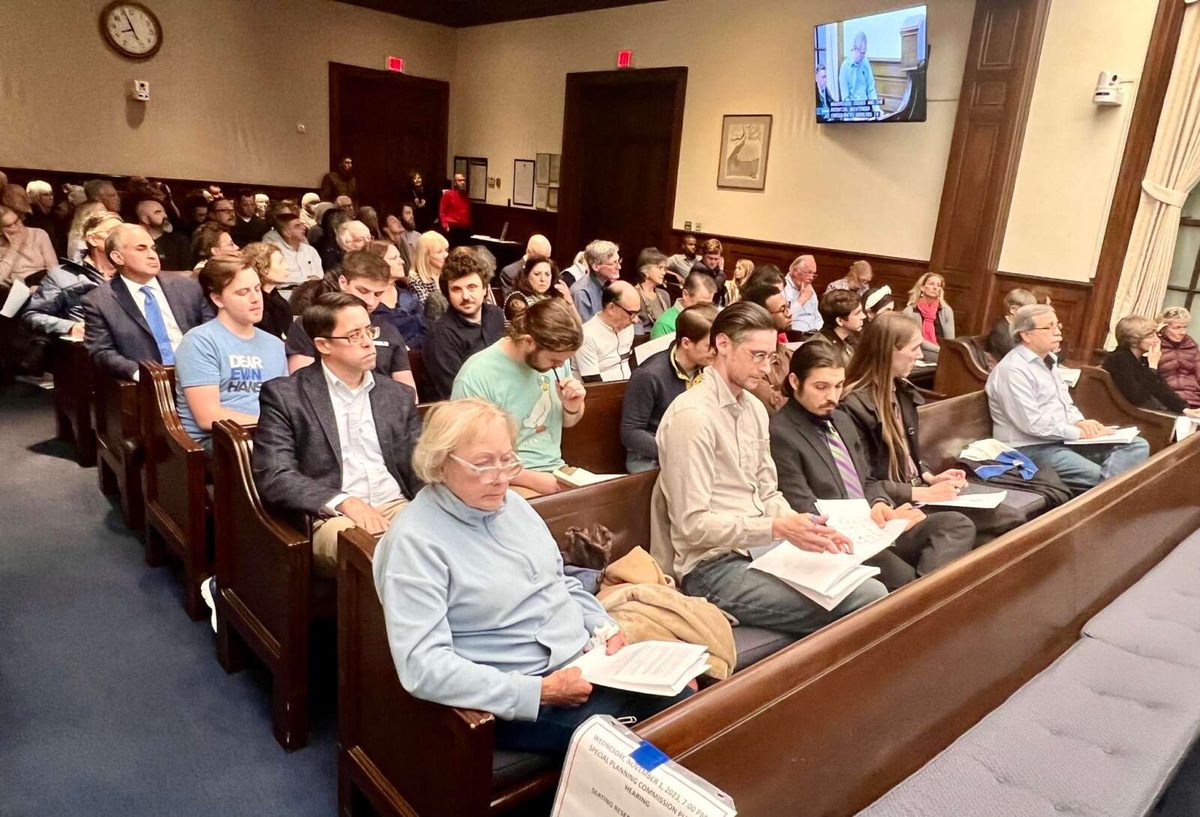
Alexandria's City Council closed its public hearing on Oct. 17 and approved the Planning Commission's recommendation to end the 50-year permit rule for undersized lots. The council's action docket records the approval; the formal minutes, once approved, are the official record.

City planning staff said the permit process, created in 1974, adds cost and uncertainty while producing few denials: 63 of 71 special use permit cases since 1973 were approved. The amendment also covers outlots, properties without direct street access. Most affected lots sit in older neighborhoods annexed from Fairfax County.

Why it matters

Most owners of undersized Alexandria lots can now build without a Council permit, cutting months of cost and delay.

Last Monday's email for Alexandria, VA

Sent Nov 2. It carried:

Get next Monday's: one short email a week. Free. Unsubscribe in one click.

Questions about this story

Free account needed to ask — your question is kept and asked for you right after sign-up. Answers are public.

No questions yet — be the first to ask.

Key Indicators

71
Special use permit cases for substandard lots since 1973
63 approved, 8 denied across vacant and developed lots
35
Developed-lot permit cases since 2008
All 35 approved; none denied
50+
Years the permit requirement has been in effect
Rule dates to 1974; extended to teardown-and-rebuild in 2008
Oct. 17
City Council approval date
Council closed the hearing and accepted the recommendation

Voices

Curated perspectives — historical figures and your fellow readers.

Sign up to generate historical perspectives on this story.

People Involved

Organizations Involved

Timeline

1931 October 2026

11 events Latest: October 17th, 2026 · 3 weeks ago Showing 8 of 11
Tap a bar to jump to that date
  1. City Council approves the change

    Latest Hearing

    Council closed the public hearing and approved the Planning Commission's recommendation. The action docket records the approval; formal minutes are pending.

  2. Planning Commission hearing scheduled

    Hearing

    Public hearing on ZTA #2026-00003 Substandard Lots and Outlots.

  3. Hearing agenda published

    Announcement

    Agenda lists Oct. 6 Planning Commission public hearing on ZTA #2026-00003.

  4. Draft proposal presented

    Meeting

    City holds virtual community meeting to present draft rules for substandard lots.

  5. Planning Commission discusses review

    Meeting

    Commission reviews the substandard lots work as an informational item; no vote taken.

  6. Staff signals plan to end permit rule

    Statement

    Staff presents draft recommendation allowing by-right development on most substandard lots.

  7. Rule extended to teardowns

    Policy

    City Council requires special use permits for teardown-and-rebuild projects on developed substandard lots.

  8. Eligibility loosened

    Policy

    Amendments in 1987 and 1989 expand which substandard lots can qualify for permits.

  9. Council imposes permit requirement

    Policy

    After two small houses drew complaints, City Council requires special use permits for vacant substandard lots.

  10. Zoning rewrite raises minimums

    Policy

    A comprehensive rewrite adds zones and increases minimum lot sizes, making older recorded lots substandard.

  11. City sets first minimum lot sizes

    Policy

    Alexandria requires 5,000 square feet and 50 feet of frontage for single-unit homes.

Scenarios

1

Alexandria ends 50-year permit rule for undersized lots

Likely Resolves by Nov 30, 2026

Discussed by: Alexandria planning staff, who recommended the change in their April 2026 draft policy presentation

City Council adopts the zoning text amendment as staff recommend, allowing by-right development on most substandard lots. The permit requirement that has stood since 1974 ends, with owners building under the city's 2008 compatibility rules instead of seeking case-by-case council approval.

Historical Context

2 moments from history that rhyme with this story — and how they unfolded.

1974

Alexandria's 1974 permit rule

Alexandria first set minimum lot sizes in 1931, requiring 5,000 square feet and 50 feet of frontage. A 1951 comprehensive zoning rewrite raised those minimums, and lots recorded earlier became 'substandard.' After two houses on such lots drew complaints for being too small and narrow, City Council in 1974 required a special use permit for any construction on a vacant substandard lot.

Then

The rule gave Council case-by-case control over infill development. Since 1973, 36 permit cases for vacant substandard lots came forward: Council approved 28 and denied eight, roughly one case every year and a half and about one in five denied.

Now

For 50 years, the permit requirement shaped how undersized lots could be developed in Alexandria, surviving amendments in 1987, 1989, and 2008.

Why this matters now

This is the rule the current amendment would end. Staff research shows the permitting process is rarely used and often results in approval anyway, making it a candidate for repeal.

January 2022

California SB 9 (2022)

California's Senate Bill 9 allowed homeowners to split lots and build duplexes on single-family zoned properties through ministerial, by-right approval rather than discretionary review. The law targeted a severe housing shortage and removed local discretion over a class of modest infill development.

Then

The law let property owners build without public hearings in most cases, eliminating one of the biggest barriers to infill construction.

Now

SB 9 became a model for the shift from discretionary to by-right review in housing policy, though its implementation varied widely across California cities.

Why this matters now

Alexandria's proposal follows the same mechanism: replacing case-by-case discretionary review with ministerial, by-right approval for modest infill homes, a pattern echoing housing reforms across the country.

Sources

(7)