




Pull to refresh
Logo
Apollo unveils three-part AI system to unify go-to-market stack

Apollo unveils three-part AI system to unify go-to-market stack

New Capabilities

Builder Studio, Intelligence Layer, and Messaging OS combine data, prioritization, and outreach in one engine

Yesterday: ApolloNEXT unveils three-part AI GTM system

Overview

Updated 2 hours ago

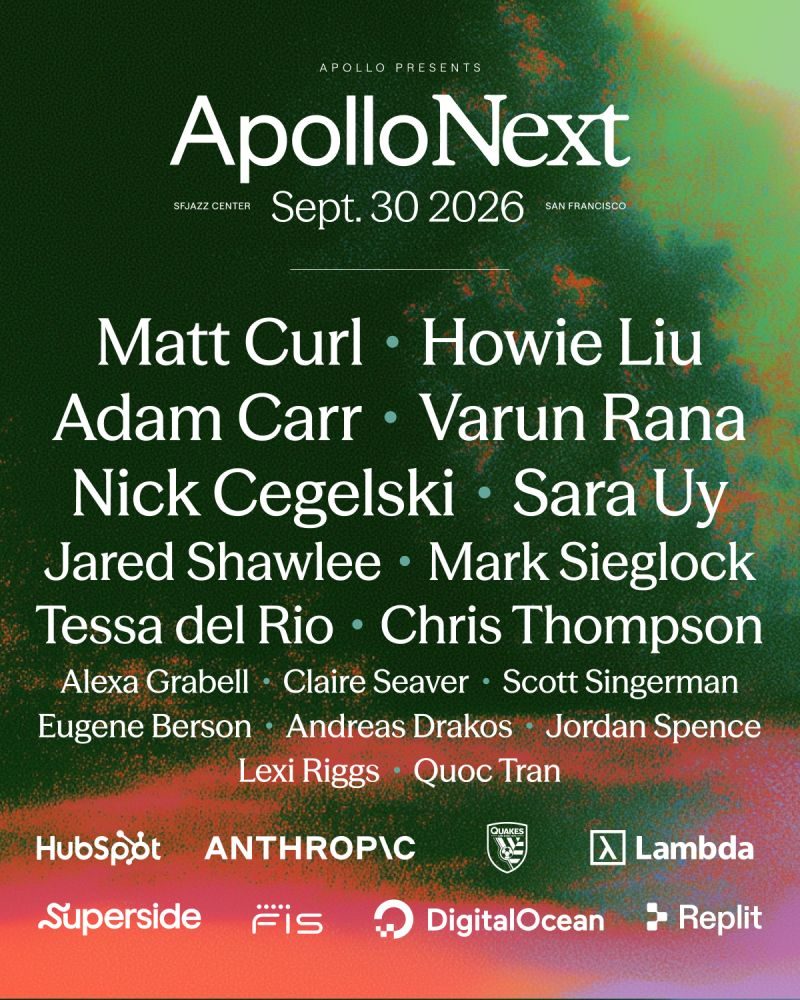
Apollo, the sales prospecting tool used by more than 5 million people, expanded into a full go-to-market system on September 30. At its ApolloNEXT conference in San Francisco, the company unveiled three products that combine data, prioritization, and outreach in one engine: Builder Studio, the Intelligence Layer, and Messaging OS.

For years, revenue teams stitched together separate tools for prospecting, data, engagement, and automation. Apollo's pitch is that AI lets a single connected system handle all of it, without an engineering backlog. The system learns from which messages work and which deals close, then improves its own targeting.

Why it matters

If Apollo's unified AI system gains traction, sales teams can drop their patchwork of point tools and the vendors that built them face consolidation.

Questions about this story

Free account needed to ask — your question is kept and asked for you right after sign-up. Answers are public.

No questions yet — be the first to ask.

Key Indicators

5M+
Active users
Apollo has doubled its user base year-over-year.
600K+
Companies using Apollo
From founders and small businesses to Fortune 500 enterprises.
240M
B2B contacts in database
One of the industry's largest contact databases, accessible to Salesforce's Hunter agent.
98%
Contact email accuracy
Apollo's database delivers verified work emails at a 98% accuracy rate.

Voices

Curated perspectives — historical figures and your fellow readers.

Ever wondered what historical figures would say about today's headlines?

Sign up to generate historical perspectives on this story.

People Involved

Organizations Involved

Timeline

March 2026 September 2026

4 events Latest: Yesterday
Tap a bar to jump to that date
  1. ApolloNEXT unveils three-part AI GTM system

    Latest Product Launch

    Apollo launches Builder Studio, the Intelligence Layer, and Messaging OS, combining data, prioritization, and outreach in one platform.

  2. Apollo becomes Salesforce Hunter data partner

    Partnership

    Salesforce names Apollo a flagship partner for Hunter, its outbound sales agent, giving Hunter access to Apollo's 240 million contacts.

  3. Apollo app arrives in ChatGPT

    Integration

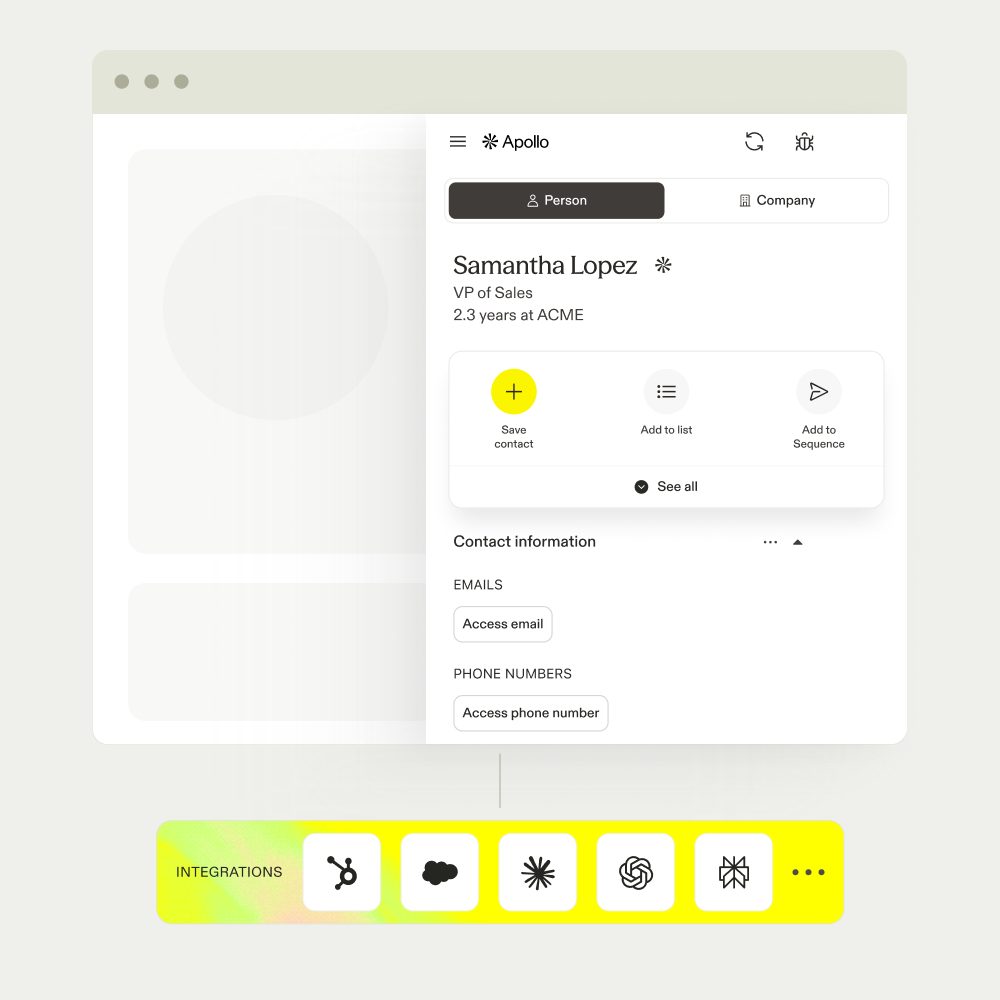
    Apollo launches a beta app inside ChatGPT, letting sales teams run outbound workflows through its MCP server.

  4. Apollo launches AI Assistant

    Product Launch

    Apollo embeds AI into every step of the sales workflow, calling its platform the first fully agentic GTM operating system.

Scenarios

1

Apollo's AI GTM System Becomes the Default, Consolidating Sales Tech

Likely Resolves by Q3 2027

Discussed by: Apollo's own growth metrics — 5 million users, doubled year-over-year adoption, 10x growth in daily MCP credit consumption — underpin expectations of continued momentum

Companies adopt the three new products together, and Apollo reports multi-product usage growth into 2027. Point tools for prospecting, data enrichment, and outreach lose share as teams consolidate on Apollo's system. Builder Studio and Messaging OS ship to general availability quickly after the conference.

2

Salesforce or HubSpot Launches a Competing Unified AI GTM Platform

Possible Resolves by Q2 2027

Discussed by: Salesforce's Hunter agent already taps Apollo's data, showing the line between partner and competitor is thin; HubSpot's all-in-one platform strategy parallels Apollo's

Salesforce expands Hunter beyond prospecting into outreach and follow-ups, or HubSpot unveils a unified AI go-to-market offering. Companies choosing between ecosystem platforms and Apollo's standalone system face a clearer competitive landscape.

3

Apollo Expands, But Enterprises Stick with Existing Stacks

Possible Resolves by Q3 2027

Discussed by: Apollo's own framing suggests the hurdle: the company emphasizes its system doesn't require 'millions of dollars and a complex technology stack'

Small and mid-market teams adopt Apollo's new products, but larger enterprises keep their existing point-tool ecosystems and use Apollo mainly for data. Full GTM system adoption stays concentrated in the lower market, slowing the consolidation story.

Historical Context

2 moments from history that rhyme with this story — and how they unfolded.

1999-2018

Salesforce expands from CRM to cloud platform (1999-2018)

Salesforce launched in 1999 as a web-based customer relationship management tool. Over two decades it expanded through acquisitions into email marketing, e-commerce, analytics, and messaging, absorbing functions that once required separate vendors.

Then

Customers consolidated their software spending on Salesforce, and vendors of standalone sales tools lost market share.

Now

Salesforce demonstrated that a platform with a dominant base function can move into adjacent markets and set the pace for enterprise software.

Why this matters now

Apollo is expanding from prospecting data into intelligence and execution, following the same platform consolidation playbook but building with AI rather than acquisitions.

2006-2020

HubSpot builds an all-in-one inbound platform (2006-2020)

HubSpot launched in 2006 with tools for inbound marketing — blogging, social media, and SEO. It expanded into email, CRM, and sales tools, creating an integrated suite for small and mid-sized businesses.

Then

SMBs adopted HubSpot's platform instead of assembling separate marketing tools, proving integrated packages could win in the lower market.

Now

HubSpot showed that a single connected system could compete with best-of-breed point tools by reducing complexity for smaller teams.

Why this matters now

Apollo targets the same buyer with the same promise — one connected system instead of a stitched-together stack — but for the AI era of go-to-market.

Sources

(6)