
Pull to refresh
Logo
JNIM overruns Mali's Dioura army base

JNIM overruns Mali's Dioura army base

Force in Play

At least 100 Malian soldiers reported dead after al-Qaida-linked fighters seized the strategic central garrison

2 days ago: JNIM releases captive video

Overview

Updated 1 hour ago

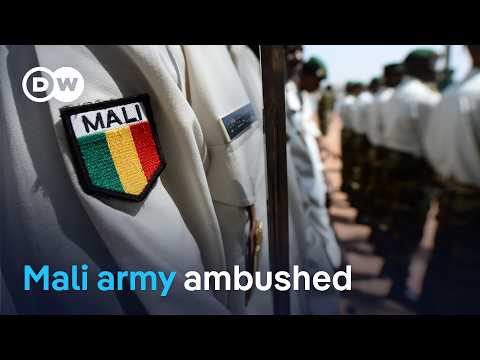
At dawn on September 10, fighters from JNIM, the al-Qaida-linked coalition leading the Sahel insurgency, stormed Mali's Dioura military camp on motorcycles. Within hours the garrison fell. Military, security, and local sources later told AFP that at least 100 Malian soldiers died in the assault.

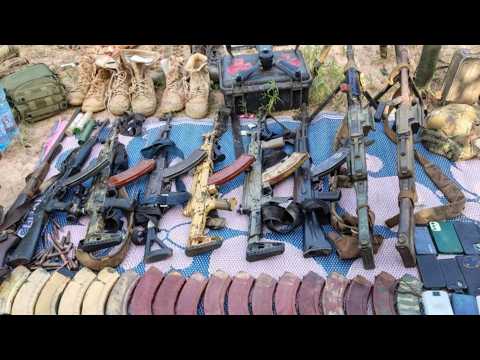
The fall of Dioura, a strategic anchor in Mali's central Mopti Region, is among the army's heaviest single losses since the conflict began 15 years ago. The camp sits roughly 130 kilometers from Sevare, the air hub that supports isolated garrisons. African Security Analysis says the captured arsenal will strengthen JNIM assault groups and increase the threat to neighboring bases.

Why it matters

The captured weapons stockpile puts JNIM in position to strike deeper into Mali and the Sahel, endangering neighboring garrisons and civilians.

Questions about this story

Free account needed to ask — your question is kept and asked for you right after sign-up. Answers are public.

No questions yet — be the first to ask.

Key Indicators

100+
Malian soldiers killed in the attack
AFP cites military, security, and local sources; the army has not published an official toll. JNIM claims 150 killed.
80+
Soldiers captured, per military police report
JNIM claims 93 prisoners; sources differ on the exact number taken.
5
Russian Africa Corps personnel killed
Reported by AFP sources; the Russia-backed force supports Mali's army.
130 km
Distance from Dioura to the Sevare air hub
Remote garrisons depend on Sevare for air support; the attack exposed that reliance.

Voices

Curated perspectives — historical figures and your fellow readers.

Ever wondered what historical figures would say about today's headlines?

Sign up to generate historical perspectives on this story.

People Involved

Organizations Involved

Timeline

5 events Latest: 2 days ago
Tap a bar to jump to that date
  1. JNIM releases captive video

    Latest Propaganda release

    Group posts footage of captured soldiers, claims 150 killed and 93 prisoners.

  2. Death toll passes 100 per sources

    Casualty report

    AFP sources confirm over 100 dead; camp remains abandoned eight days on.

  3. Initial death reports surface

    Casualty report

    Sources report at least 50 soldiers and five Africa Corps personnel killed.

  4. Army announces air-ground operations

    Military operation

    FAMa reports strikes on JNIM positions but releases no casualty figures.

  5. JNIM dawn assault overruns Dioura

    Attack

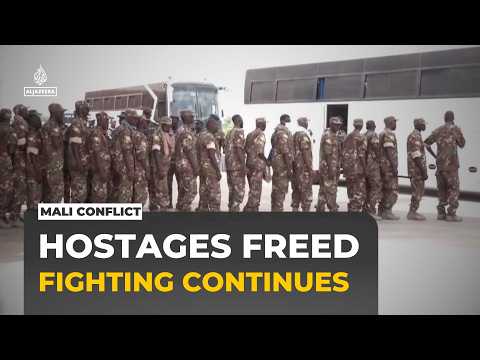
    Fighters on motorcycles storm the strategic base in central Mali; garrison falls within hours.

Scenarios

1

Mali army reoccupies Dioura camp

Uncertain Resolves by Dec 10, 2026

Discussed by: African Security Analysis frames this as 'nominal recovery'; FAMa statements signal intent to retake the garrison.

JNIM withdraws with prisoners and captured weapons, and FAMa re-enters Dioura with a formal garrison. The camp is restored politically, but it remains isolated and dependent on air support, leaving the same vulnerability in place.

2

Dioura stays a no-man's land, JNIM expands

Possible Resolves by Dec 10, 2026

Discussed by: African Security Analysis calls this a 'persistent contested vacuum'; local officials report the camp was emptied of all weaponry.

No durable government return follows. JNIM uses the area to connect activity across western Mopti and Ségou. Captured weapons appear in nearby sectors, and JNIM establishes checkpoints or taxation on local roads.

3

Pressure shifts to the Sevare air hub

Unlikely Resolves by Nov 30, 2026

Discussed by: African Security Analysis outlines a 'reinforcing cycle' in which attacks on air assets make remote garrisons more vulnerable.

JNIM targets Base Aérienne 200 at Sevare or the supply routes that feed it. If air support degrades, other isolated garrisons become more exposed, and the army's ability to respond weakens across the region.

Historical Context

2 moments from history that rhyme with this story — and how they unfolded.

January 2013

Fall of Konna (January 2013)

Islamist fighters captured the town of Konna in central Mali after government troops abandoned their positions, breaking through the army's front line and threatening the south.

Then

France launched Operation Serval within days, using airstrikes and ground troops to drive the fighters back. Konna triggered a decade-plus foreign military presence across the Sahel.

Now

The episode reshaped international involvement in the region but did not end the insurgency; attacks on army bases continued and grew more sophisticated.

Why this matters now

Konna shows how a single lost position can upend the strategic picture. Dioura may be a similar turning point for Mali's current posture.

November 2019

Indelimane attack (November 2019)

Militants from the Islamic State in the Greater Sahara overran the Malian army outpost at Indelimane, near the Niger border, killing 53 soldiers in a coordinated assault on an isolated position.

Then

The outpost was abandoned after the attack; Mali's army provided few details, and the episode fueled public anger at the military's inability to protect its troops.

Now

The attack became a reference point for the vulnerability of remote garrisons in Mali's vast, ungoverned spaces, a pattern that persisted as the conflict dragged on.

Why this matters now

Indelimane and Dioura follow the same pattern: an isolated post, too far for rapid reinforcement, overrun within hours by a mobile force.

Sources

(10)