
Pull to refresh
Logo
Austin mayor forms board to assess professional sports opportunities

Austin mayor forms board to assess professional sports opportunities

Money Moves Austin, TX local

A new panel will study whether the city can attract a major professional team, with no league, owner, or funding plan named.

Overview

Updated 1 hour ago

Austin's mayor has formed a board to assess professional sports opportunities in the city. The KXAN Austin report does not name the board's members, the leagues it will study, or a timeline for its work.

The move puts a question on the city's agenda: whether Austin wants to compete for a major professional team, and who would pay for a stadium. No owner, league, or funding proposal has been named.

Why it matters

A major professional team would reshape Austin's land use, tax base, and civic identity—and no league, owner, or funding plan has been identified.

Last Monday's email for Austin, TX

Sent Nov 16. It carried:

Get next Monday's: one short email a week. Free. Unsubscribe in one click.

Questions about this story

Free account needed to ask — your question is kept and asked for you right after sign-up. Answers are public.

No questions yet — be the first to ask.

Key Indicators

1
Assessment board formed
The board's size, budget, and deadline were not disclosed in the initial report.

Voices

Curated perspectives — historical figures and your fellow readers.

Sign up to generate historical perspectives on this story.

People Involved

Organizations Involved

Timeline

1 event Latest: Today
  1. Austin mayor forms professional sports assessment board

    Today Announcement

    The mayor's office created a board to evaluate whether Austin can attract a major professional sports team. Membership, scope, and timeline were not disclosed.

Scenarios

1

Austin board recommends a bid for a major league team

Possible Resolves by End of 2027

Discussed by: No named forecaster; inferred from the board's stated purpose

The board concludes Austin should pursue a specific league or team and recommends that the city open talks with a league or owner. That would move the story from assessment to negotiation, where stadium financing and league approval become the deciding factors.

2

Austin board finds no viable path and the effort stalls

Possible Resolves by End of 2027

Discussed by: No named forecaster; a standard outcome for municipal sports studies

The board studies the options and concludes that without a team owner, a league commitment, or a stadium funding plan, Austin has no viable route to a major team. The effort ends without a bid.

3

A league or owner names Austin as a relocation or expansion candidate

Unlikely Resolves by Q2 2028

Discussed by: No named forecaster; depends on league decisions outside the city's control

A league or team owner publicly identifies Austin as a possible relocation or expansion market. That would give the board a concrete proposal to evaluate and shift attention to stadium terms and public money.

Historical Context

2 moments from history that rhyme with this story — and how they unfolded.

October 2017 - June 2021

Columbus Crew relocation fight and Austin FC (2017-2021)

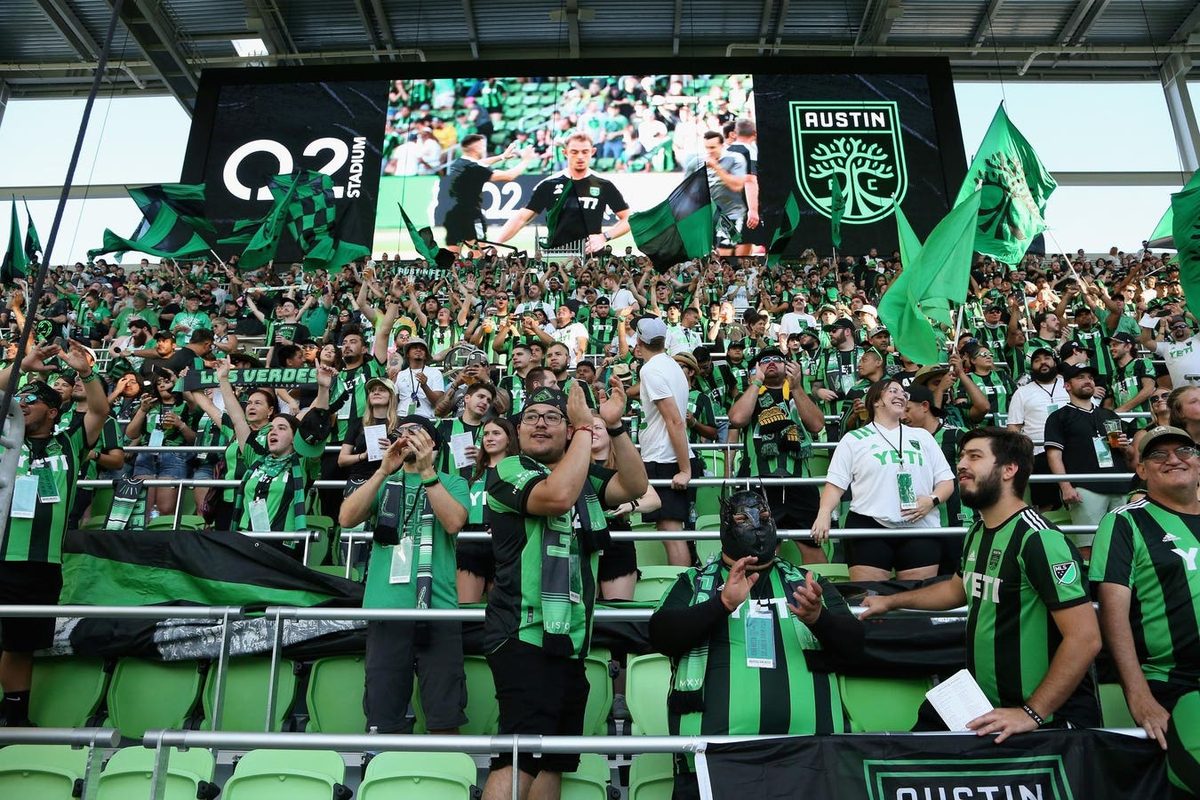
Columbus Crew owner Anthony Precourt announced in 2017 that he might move the Major League Soccer club to Austin. Fans and Ohio officials fought the move, and new owners bought the team to keep it in Columbus. Precourt instead received an Austin expansion team, Austin FC, which began play in 2021.

Then

The Crew stayed in Columbus, and Austin got an MLS club owned by the same person who had tried to move the Crew.

Now

The episode showed Austin could land a team through a contested relocation process, and that a stadium deal was central to the outcome.

Why this matters now

Austin's major-league club arrived through an unusual relocation fight, not a standard expansion bid. That history is the backdrop for the city's new formal assessment.

1995-2016

Los Angeles NFL absence (1995-2016)

The Rams and Raiders left Los Angeles after the 1994 season, leaving the second-largest U.S. market without an NFL team. The city went 21 seasons without one while competing stadium proposals failed.

Then

The Rams returned in 2016 and the Chargers joined in 2017; SoFi Stadium opened in 2020.

Now

The two-decade gap showed that even a huge market needs a stadium financing plan and league approval before a team arrives.

Why this matters now

Austin's assessment starts the same clock: a city can signal interest, but a team only comes when a league, an owner, and a stadium deal align.

Sources

(1)