
Pull to refresh
Logo
AWS launches open-source Physical AI Toolchain for robotics development

AWS launches open-source Physical AI Toolchain for robotics development

New Capabilities

New platform pairs AWS cloud services with NVIDIA's Isaac robotics stack to cover robot training, simulation, and deployment in one workflow

Today: AWS launches Physical AI Toolchain

Overview

Updated 1 hour ago

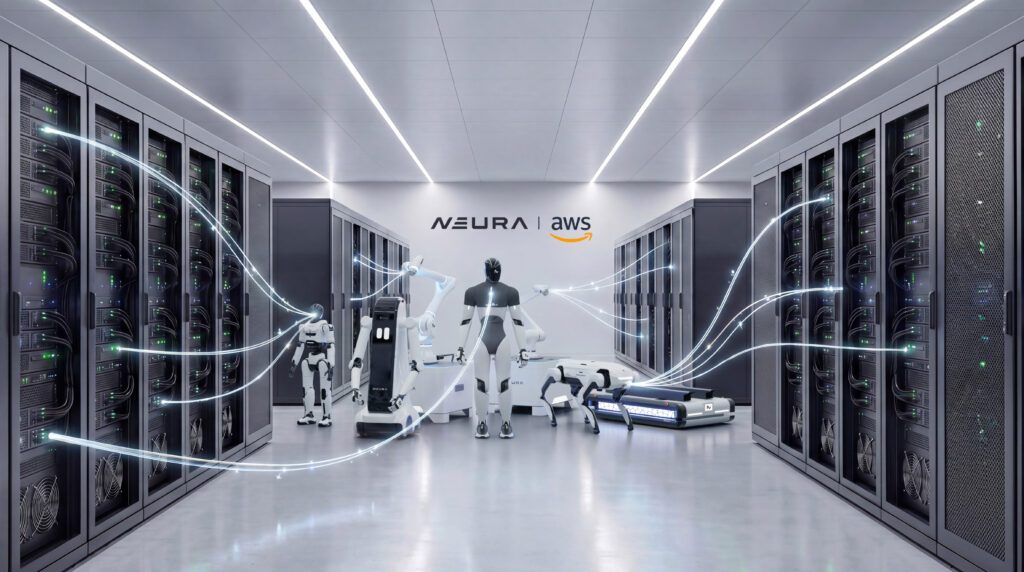
Amazon runs more than a million robots inside its own fulfillment network. This week it packaged the engineering lessons from that operation into an open-source platform, the AWS Physical AI Toolchain, aimed at companies building machines that perceive, decide, and act in the physical world.

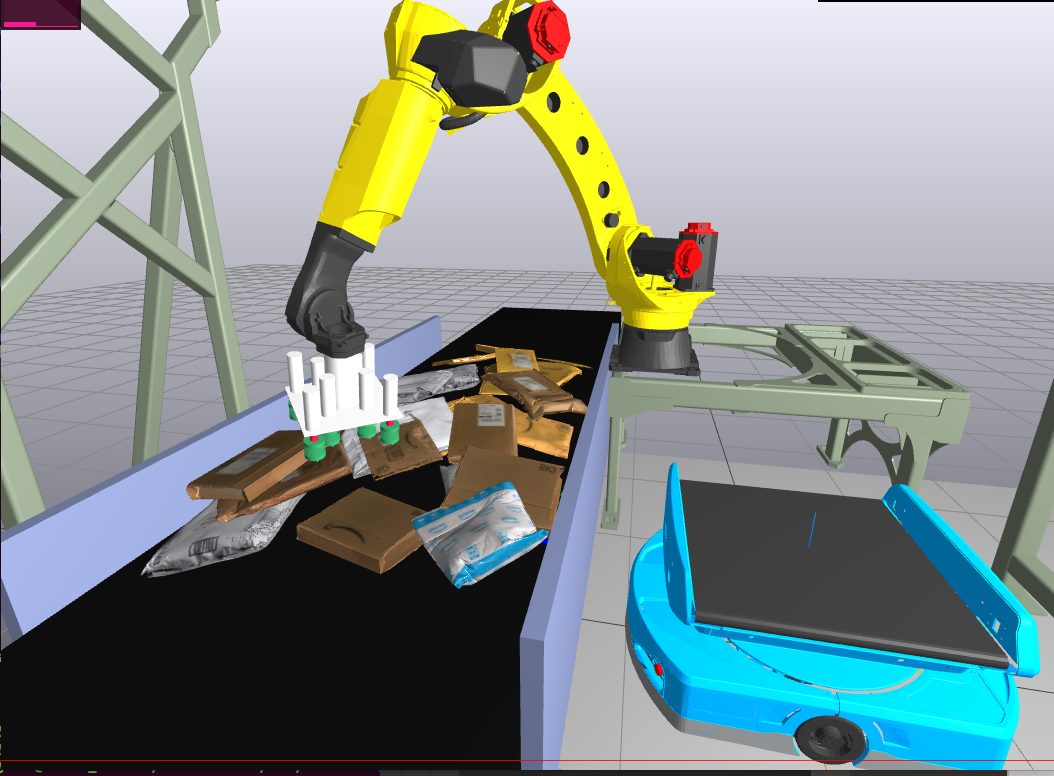
The toolchain pairs AWS managed services with NVIDIA's Isaac robotics software stack. It covers the full development cycle: generating synthetic training data, training models, simulating and validating behavior, deploying models to edge hardware, and feeding field data back to improve performance. Amazon says the platform lets companies launch physical AI capabilities in weeks instead of the years it previously took to assemble similar pipelines.

The platform is hardware-neutral, spanning industrial robotic arms, autonomous mobile machines, and humanoid robots. Companies can adopt the full end-to-end stack or pick individual components like simulation or deployment. The code ships as open-source samples with Terraform modules on GitHub.

Why it matters

Robotics teams can now build a training-to-deployment pipeline in weeks instead of years—the step that previously required custom integration work.

Questions about this story

Free account needed to ask — your question is kept and asked for you right after sign-up. Answers are public.

No questions yet — be the first to ask.

Key Indicators

1M+
Robots in Amazon's operations network
Amazon says the toolchain draws on experience from more than 1 million robots deployed across its fulfillment network, handling millions of packages daily.
5M
Industrial robots operating worldwide
A record 5 million industrial robots operate in factories globally, up 9% in 2025, per the IFR World Robotics 2026 report.
5
Pillars in the toolchain
Synthetic data generation, model training, simulation and validation, edge deployment, and continuous improvement.
200K+
Hours of robot action data captured by Config
Toolchain partner Config captures robot action data and uses generative AI to expand it into diverse training scenarios.

Voices

Curated perspectives — historical figures and your fellow readers.

Ever wondered what historical figures would say about today's headlines?

Sign up to generate historical perspectives on this story.

Organizations Involved

Timeline

2025 October 2026

4 events Latest: Today
Tap a bar to jump to that date
  1. AWS launches Physical AI Toolchain

    Today Product Launch

    AWS unveils the open-source Physical AI Toolchain, pairing its cloud services with NVIDIA's Isaac robotics stack to cover the full robot development lifecycle.

  2. IFR counts 5 million industrial robots

    Industry Report

    The International Federation of Robotics' World Robotics 2026 report records a record 5 million industrial robots operating in factories, up 9% during 2025.

  3. Amazon Robotics unveils Proteus

    Product Unveiling

    Amazon Robotics reveals its next-generation autonomous Proteus robot, capable of moving items anywhere across warehouse sites, earlier that summer.

  4. AWS retires RoboMaker

    Service Shutdown

    AWS shuts down RoboMaker, its cloud-based robotics simulation platform, making way for a broader open-source approach.

Scenarios

1

Physical AI toolchain becomes the default robotics development stack

Possible Resolves by Oct 1, 2027

Discussed by: AWS and NVIDIA position the toolchain as the standard path for physical AI development; the open-source release invites community adoption.

If the open-source release attracts robotics startups and manufacturers, the toolchain could displace bespoke pipelines the way SageMaker standardized cloud machine learning. The modular design lets teams adopt only the pieces they need—simulation, training, or deployment—lowering the entry barrier. A major manufacturer adopting the stack in production would validate the approach.

2

Toolchain remains a reference architecture; production adoption stays niche

Likely Resolves by Oct 1, 2027

Discussed by: Observers note the platform is a development kit, not a ready-made robot, and that simulation-trained models may not transfer reliably to real factories.

Robotics remains hardware-heavy, and companies with existing pipelines may keep them, using the toolchain only as a reference for new projects. Without prominent production deployments in the first year, the toolchain's influence stays limited to documentation and early pilots. This is the most common fate of open-source reference architectures in industrial software.

3

A rival cloud robotics stack emerges

Possible Resolves by Jun 1, 2027

Discussed by: The market for physical AI infrastructure is drawing competition from other cloud providers and robotics platforms.

The combination of cloud AI infrastructure and robotics is valuable enough that competitors may launch their own stacks. Google DeepMind, Microsoft, or a major robotics vendor could offer an end-to-end platform, fragmenting the market before AWS's toolchain solidifies. NVIDIA's partnership with AWS does not lock out other cloud providers from using the Isaac stack.

Historical Context

2 moments from history that rhyme with this story — and how they unfolded.

November 2018 – 2025

AWS RoboMaker (2018–2025)

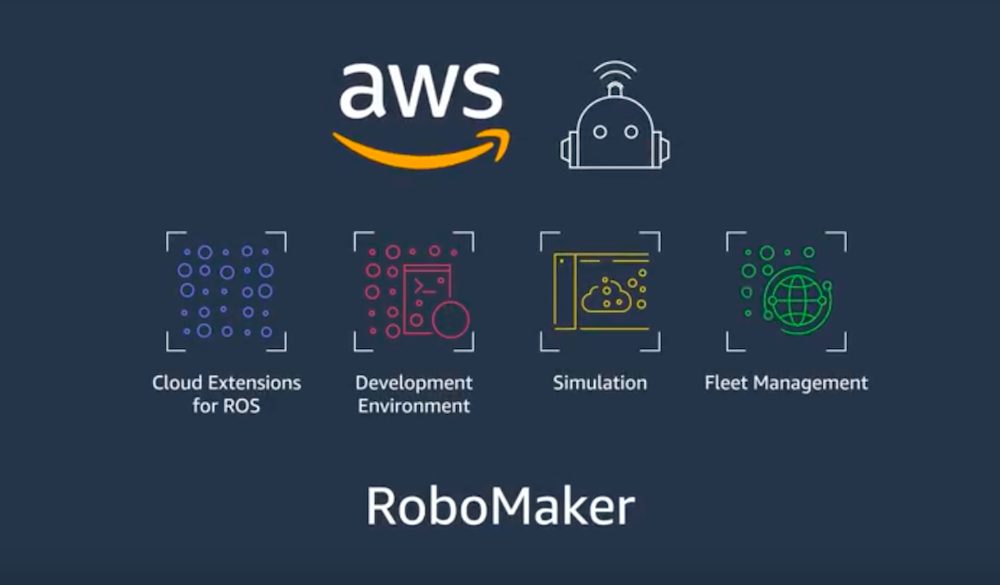
AWS launched RoboMaker in late 2018 as a cloud service for building, simulating, and testing robot applications built on ROS (Robot Operating System). It promised cloud-scale development for robotics. AWS retired the service in 2025.

Then

RoboMaker attracted a developer following but never became a major AWS product line.

Now

Its retirement cleared space for a different approach: an open-source reference architecture rather than a managed product, integrated with NVIDIA instead of standing alone.

Why this matters now

The Physical AI Toolchain is AWS's second attempt at cloud robotics. The design choices—open source, NVIDIA partnership, hardware-neutral—show what AWS concluded from RoboMaker's mixed run.

November 2017

AWS SageMaker (2017)

Before SageMaker, machine learning teams assembled training pipelines from raw EC2 instances, homegrown orchestration, and fragmented frameworks. SageMaker packaged the ML lifecycle—data labeling, training, tuning, and deployment—into managed cloud services at AWS re:Invent in November 2017.

Then

SageMaker became AWS's flagship machine learning service and the default way many teams build ML in the cloud.

Now

It established the pattern AWS is now applying to physical AI: turn a bespoke engineering lifecycle into standardized, managed infrastructure.

Why this matters now

The Physical AI Toolchain follows the same playbook—package the robot development lifecycle as managed services and reference code so teams skip custom integration.

Sources

(9)