
The race to detect cancer from a blood draw
New CapabilitiesFreenome's lung test wins FDA breakthrough status as blood-based screening moves toward the clinic
Yesterday: FDA grants breakthrough status to Freenome's lung testNew here? Follow stories to track developments over time. Create a free account to get updates when stories you care about change.
Overview
Today, catching lung cancer early usually means a CT scan of your chest. Fewer than one in five people who qualify actually get one. On August 12, 2026, the FDA gave Freenome's blood test for lung cancer a status meant to speed its review, betting that a simple blood draw could reach the millions who skip the scan.
The designation is a procedural step, not an approval. Freenome has not published how often the test catches real cancers or how often it raises false alarms. That data comes later, from a study still running. What changed is regulatory momentum for a much larger idea: finding cancer in a tube of blood before symptoms start.
Why it matters
Lung cancer kills more Americans than any other cancer, and most cases are caught too late to cure. A blood test could reach people who never get scanned.
Questions about this story
No questions yet — be the first to ask.
Key Indicators
Voices
Curated perspectives — historical figures and your fellow readers.
Play
Exploring all sides of a story is often best achieved with Play.
Higher or Lower
A number from this story, against one from elsewhere in the news — guess which is bigger, then keep the chain going. 5 rounds, 3 strikes; a miss costs a strike and resets your streak.
Keyboard: ↓/L lower · ↑/H higher
0 points — sign up to put that on the leaderboard.
Timeline
Order five events from this story, oldest at top. Each in the right slot scores 1 — neighbours within one slot count too. Your previous result — green ✓ for exact slots, yellow ~ for off by one. Cards now in true chronological order.
Sign up to save your score and track a streak across stories.
Connections
Sixteen names from the news. Find the four hidden groups of four. Four mistakes max.
Sign up to keep a daily streak — a new puzzle lands every day.
Exit debate?
Your progress in this debate will be lost.
- 1 Two AI personas square off on this story.
- 2 You predict who'll win each round — correct picks earn XP.
- 3 One crossfire question is yours to fire. Pick it carefully.
Couldn't generate a topic
Select Your Champions
Choose one persona for each side of the debate
DEBATE TOPIC
Choose personas with different perspectives for a more dynamic debate.
Select debater for this side:
No debate personas available right now.
Select debater for this side:
No debate personas available right now.
Who's Got This Round?
Make your prediction before the referee scores
The referee scores both sides on
Round Results
Set the Crossfire
Pick the question both personas must answer in the final round
Debate Oracle! You called every round!
Sharp Instincts! You know your debaters!
The Coin Flip Strategist! Perfectly balanced!
The Contrarian! Bold predictions!
Inverse Genius! Try betting the opposite next time!
XP Breakdown
Prediction History
Organizations Involved
A South San Francisco company building blood tests that read DNA and protein signals to detect cancer early.
The federal agency that reviews and clears medical devices and diagnostic tests before they can be marketed.
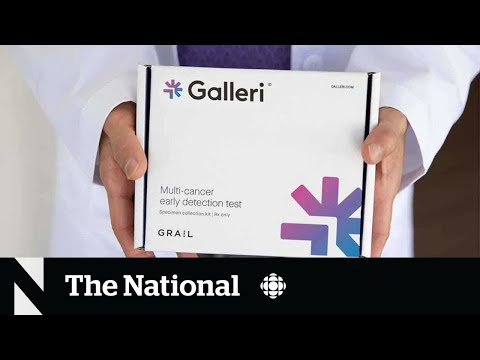
The company behind Galleri, a blood test designed to screen for signals from many types of cancer at once.
Timeline
January 2018 August 2026
-
FDA grants breakthrough status to Freenome's lung test
Latest RegulatoryThe FDA gives Breakthrough Device Designation to SimpleScreen Lung, for adults 50 to 80 with a 20 pack-year smoking history who are not being screened. No efficacy data was released.
-
Freenome reports early lung test data
ResearchAt the AACR annual meeting, Freenome presents early case-control data for SimpleScreen Lung. The release omits sensitivity, specificity, and cohort details.
-
GRAIL files for full FDA approval of Galleri
RegulatoryGRAIL submits a premarket approval application, backed by the PATHFINDER 2 study and the NHS-Galleri trial, the only randomized trial of a multi-cancer test.
-
Freenome signs big colorectal deals
CommercialFreenome licenses its blood-based colorectal cancer test to Exact Sciences, with $75 million upfront, and strikes a separate commercialization deal with Abbott.
-
Galleri goes on sale as a lab test
CommercialGRAIL begins selling Galleri as a lab-developed test, letting doctors order it before full FDA approval. Uptake spreads through concierge and employer health programs.
-
FDA gives GRAIL's Galleri breakthrough status
RegulatoryThe FDA grants Breakthrough Device Designation to GRAIL's multi-cancer test, an early signal that regulators saw promise in blood-based screening.
Historical Context
3 moments from history that rhyme with this story — and how they unfolded.
Cologuard wins FDA approval (2014)
Exact Sciences won FDA approval for Cologuard, a stool DNA test for colorectal cancer. On the same day, Medicare agreed to cover it. The test let people screen at home instead of getting a colonoscopy.
Cologuard reached the market fast with insurance behind it and grew into a widely ordered screening option.
It proved a molecular screening test could win approval, coverage, and mass adoption, becoming the model rivals now chase.
Freenome's colorectal and lung tests aim for the same path: approval, then coverage, then scale. Cologuard shows it can work.
Epi proColon approval (2016)
The FDA approved Epi proColon, the first blood-based test for colorectal cancer screening. It read a single methylation marker called Septin9. Doctors could offer it to patients who refused other screening.
The test was approved but saw weak demand, hampered by limited insurance coverage and accuracy below stool and scope options.
It showed that FDA approval alone does not guarantee adoption. Weak coverage and modest accuracy can strand a test.
A blood test can clear the FDA and still fail in the market. Freenome's lung test faces the same coverage and accuracy hurdles.
Galleri's long road from breakthrough to review (2018–2026)
GRAIL won Breakthrough Device status for Galleri in 2018 and began selling it as a lab test in 2021. Full FDA approval only reached a formal advisory review in 2026, eight years after the breakthrough tag.
Galleri built a commercial base as a lab-developed test while the full approval process dragged on for years.
The gap shows breakthrough status is a starting gun, not a finish line. Proof and approval take years of trials.
Freenome just earned the same breakthrough status Galleri got in 2018. Galleri's timeline is a realistic clock for what comes next.
