
Pull to refresh
Logo
South Boston's 1948 bank building to become new courthouse

South Boston's 1948 bank building to become new courthouse

Built World Boston, MA local

Zoning board approves conversion after developer drops 20 apartments

Today: Zoning board approves conversion

Overview

Updated 1 hour ago

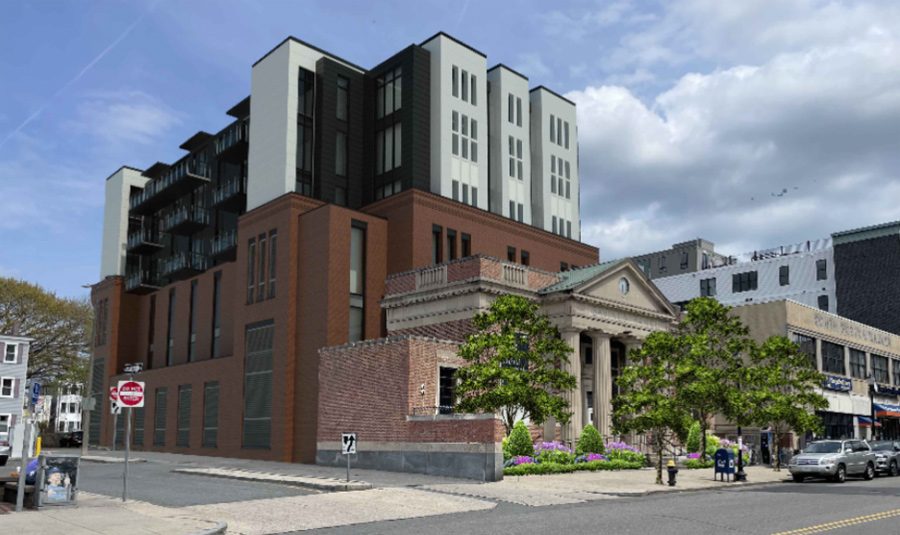
Boston's Zoning Board of Appeals unanimously approved plans to convert the 1948 South Boston Savings Bank into the new South Boston district courthouse. The September 8 vote lets Cedarwood Development add two floors in the rear and relocate the courthouse from East Broadway.

The project shifts the courthouse out of a building that would cost $60 million to renovate. But the approval came after Cedarwood dropped 20 planned apartments following neighbor opposition to residential units above a courthouse.

Why it matters

Boston avoids a $60M courthouse renovation by moving into a converted 1948 bank, but the deal required dropping 20 planned apartments.

Questions about this story

Free account needed to ask — your question is kept and asked for you right after sign-up. Answers are public.

No questions yet — be the first to ask.

Key Indicators

$23M
Project cost
Original cost estimate for the bank-to-courthouse conversion
$60M
Avoided renovation cost
Estimated cost to renovate the existing East Broadway courthouse
20
Apartments removed
Residential units dropped from the plan after neighbor opposition
2
New courtrooms
Courtrooms planned for the converted bank building

Voices

Curated perspectives — historical figures and your fellow readers.

Ever wondered what historical figures would say about today's headlines?

Sign up to generate historical perspectives on this story.

Play

Exploring all sides of a story is often best achieved with Play.

Most of these play right now — no account needed. Sign up to save scores, keep a streak, and unlock Debate and Predict. Log in Sign Up
Predict 3 ways this could play out. Back the one you believe — contrarian picks score more when a scenario has a resolution date. Log in to play

People Involved

Organizations Involved

Timeline

January 1948 September 2026

4 events Latest: Today
Tap a bar to jump to that date
  1. Zoning board approves conversion

    Today Approval

    Zoning Board of Appeals unanimously approves variances for the courthouse conversion.

  2. Planning Department approves revised project

    Approval

    Boston Planning Department approves smaller project without apartments.

  3. Cedarwood files $23M proposal

    Proposal

    Developer proposes converting bank into courthouse with 20 apartments above.

  4. South Boston Savings Bank built

    Construction

    The bank building at 460 West Broadway is constructed.

Historical Context

3 moments from history that rhyme with this story — and how they unfolded.

1976

Faneuil Hall Marketplace (1976)

Boston's historic Faneuil Hall and Quincy Market buildings were converted from a declining market into a festival marketplace by the Rouse Company.

Then

The marketplace became a major tourist attraction and commercial success.

Now

Sparked the adaptive reuse movement in Boston and nationwide.

Why this matters now

Shows Boston's tradition of adaptive reuse of historic buildings.

1983

Old Post Office Pavilion (1983)

The 1899 Romanesque Old Post Office in Washington DC was saved from demolition and converted into retail and office space. It later became a Trump International Hotel.

Then

The building was preserved and found new commercial use.

Now

Demonstrated that historic civic buildings can be economically viable with private investment.

Why this matters now

Shows how civic buildings get new life through adaptive reuse, similar to the bank-to-courthouse conversion.

1990s

Bowery Savings Bank conversion (1990s)

The 1923 Bowery Savings Bank at 110 East 42nd Street in Manhattan, a landmark with a 100-foot-tall banking hall, was converted into a gym and retail space after the bank consolidated operations.

Then

The building found new use as a fitness center and retail space.

Now

Became a model for adaptive reuse of grand bank buildings.

Why this matters now

Shows how historic bank buildings get repurposed when banking operations consolidate.

Sources

(3)