
Pull to refresh
Logo
All 50 Chicago aldermen opt into pay raise for first time

All 50 Chicago aldermen opt into pay raise for first time

Money Moves Chicago, IL local

Mayor Johnson skips his own raise for a third straight year; the council's two usual holdouts now take the bump

Overview

Updated 56 minutes ago

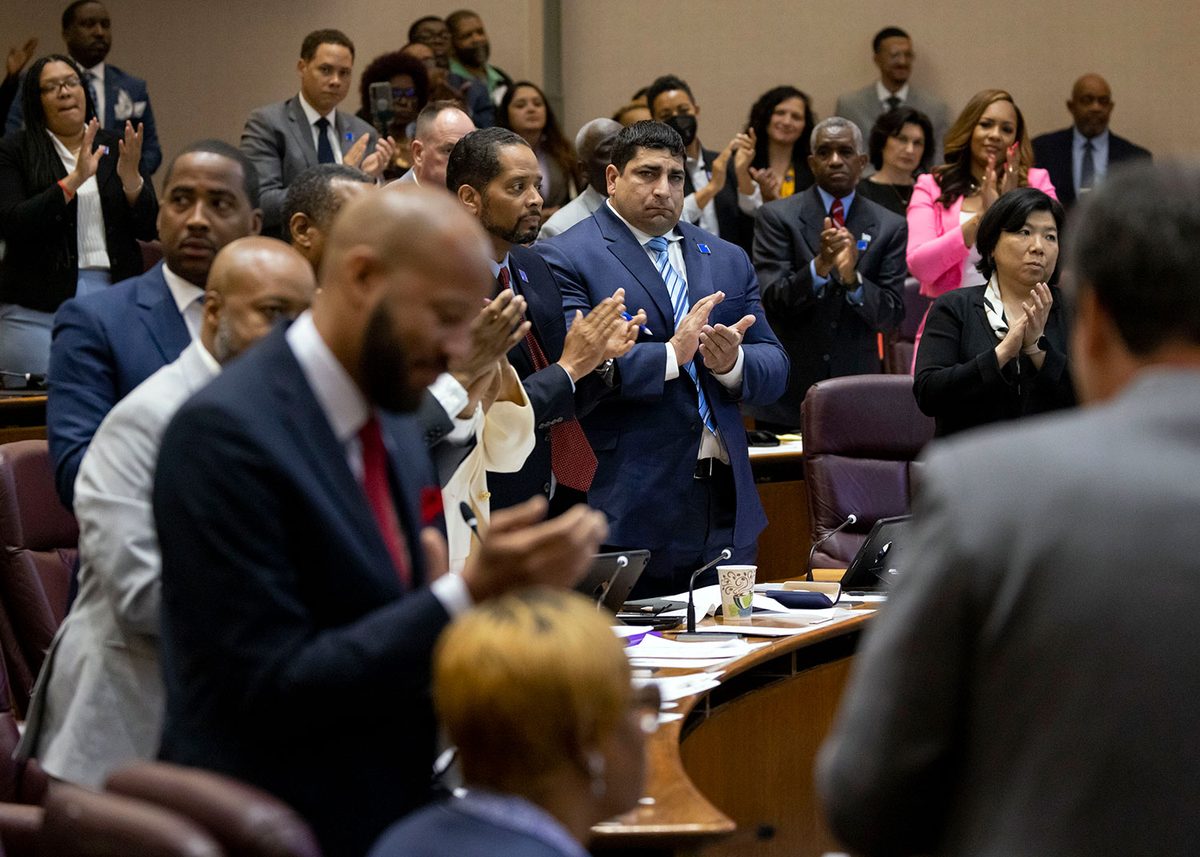
All 50 Chicago City Council members accepted their inflation-tied raise for 2027 - the first time every alderman opted in. Even the two longest holdouts, Alds. Byron Sigcho-Lopez and Rossana Rodriguez-Sanchez, signed on.

Mayor Brandon Johnson declined his own raise for a third straight year, holding his salary at $221,052. The split comes as the city keeps closing budget gaps, and all 50 incumbents soon face voters in the February 2027 municipal election.

Why it matters

Every Chicago alderman just took an automatic raise while the mayor refused his own - and all 50 face voters in February.

Monday: what changed in Chicago, IL

One short email a week with the openings, closings, permits and council votes we covered. Free. Unsubscribe in one click.

Questions about this story

Free account needed to ask — your question is kept and asked for you right after sign-up. Answers are public.

No questions yet — be the first to ask.

Key Indicators

50 of 50
Aldermen opting into the 2027 raise
First time the full council accepted the annual bump.
$221,052
Mayor Johnson's annual salary
Unchanged for the third straight year.
$155,688
Top aldermanic salary for 2026
Lowest-paid alderman, Gilbert Villegas, earns $126,000.
3
Consecutive years Johnson declined a raise
He last accepted a raise in 2024, his first year in office.

Voices

Curated perspectives — historical figures and your fellow readers.

Sign up to generate historical perspectives on this story.

People Involved

Organizations Involved

Timeline

2006 October 2026

6 events Latest: Today
Tap a bar to jump to that date
  1. All 50 aldermen opt into 2027 raise

    Today Compensation

    First time the full council accepts; Johnson declines for a third straight year.

  2. 48 aldermen take 2.4% raise for 2026

    Compensation

    Johnson declines again; Sigcho-Lopez and Rodriguez-Sanchez remain lone holdouts.

  3. Johnson and 48 aldermen take 2.24% raise for 2024

    Compensation

    Sigcho-Lopez and Rodriguez-Sanchez decline; Johnson ends 18-year mayoral freeze.

  4. Lightfoot ties citywide salaries to inflation

    Policy

    Ordinance adds mayor, clerk and treasurer to CPI-indexed raises with a 5% cap.

  5. Five aldermen decline 5.5% raise for 2022

    Compensation

    45 of 50 opt in; Villegas among five citing COVID-era shared sacrifice.

  6. Last mayoral pay raise until Johnson's 2024 bump

    Policy

    No Chicago mayor took a salary increase for 18 years.

Scenarios

1

Pay raises bite in the 2027 aldermanic elections

Possible Resolves by Apr 30, 2027

Discussed by: Chicago political observers; Block Club Chicago

Chicago holds municipal elections in February 2027, with runoffs in April. Incumbents who accepted the raise now face constituents who may see it as tone-deaf amid ongoing budget cuts. A handful of challengers could make the pay bump a wedge issue in wards where the city has closed services.

2

Council moves to cap or repeal automatic raises

Unlikely Resolves by End of 2027

Discussed by: Budget watchdog groups; civic organizations

With all 50 opting in, critics argue the automatic raise system removes accountability. A faction could introduce an ordinance to tighten the existing 5% cap or require a public vote on future bumps. The 2022 Lightfoot law sets the current mechanism, so the fight would be over amending it.

3

All-opt-in pattern holds next year

Likely Resolves by Q3 2027

Discussed by: Block Club Chicago; Chicago Tribune budget coverage

The opt-in cycle repeats in fall 2027. If aldermen again overwhelmingly accept the raise, the all-50 moment looks like a new norm rather than an anomaly. Johnson's continued decline would cement the two-tier picture: council takes raises, mayor doesn't.

Historical Context

3 moments from history that rhyme with this story — and how they unfolded.

2009-Present

Congressional pay freeze (2009-Present)

Since 2009, members of Congress have voted each year to block their automatic cost-of-living adjustment, keeping base pay at $174,000 through more than a decade of inflation.

Then

The annual vote to block raises became a routine political ritual.

Now

Congressional base pay has stayed flat since 2009 even as the cost of living rose.

Why this matters now

The mirror image of Chicago: an elected body that repeatedly declines automatic raises, while Chicago's council now takes them unanimously.

2006-2023

Chicago mayoral pay freeze (2006-2023)

No Chicago mayor took a salary increase for 18 years. The mayoral salary sat at $216,310 until Brandon Johnson accepted a 2.24% raise for 2024, his first year in office.

Then

Johnson ended the long freeze and drew immediate attention to the bump.

Now

Mayoral pay became politically sensitive; Johnson has declined raises for three straight years since.

Why this matters now

Shows why the mayor now skips his own raise even as the council takes theirs - mayoral pay carries unique political weight.

September 2021

COVID-era aldermanic pay restraint (September 2021)

Five aldermen, including Gilbert Villegas, declined their 5.5% raise for 2022 to show solidarity with constituents during the pandemic. Villegas cited "shared sacrifice."

Then

The five locked in lower salaries than their peers.

Now

Villegas remains the lowest-paid alderman at $126,000 in 2026.

Why this matters now

The same "shared sacrifice" argument has now faded: every alderman accepted the 2027 raise, including Villegas.

Sources

(5)