
Pull to refresh
Logo
CTA eliminates 13 bus stops on Damen route to speed service

CTA eliminates 13 bus stops on Damen route to speed service

Built World Chicago, IL local

The #50 Damen route loses stops along a stretch between West Town and the Lower West Side, with the agency citing standardized spacing and faster, more reliable buses.

Overview

Updated 1 hour ago

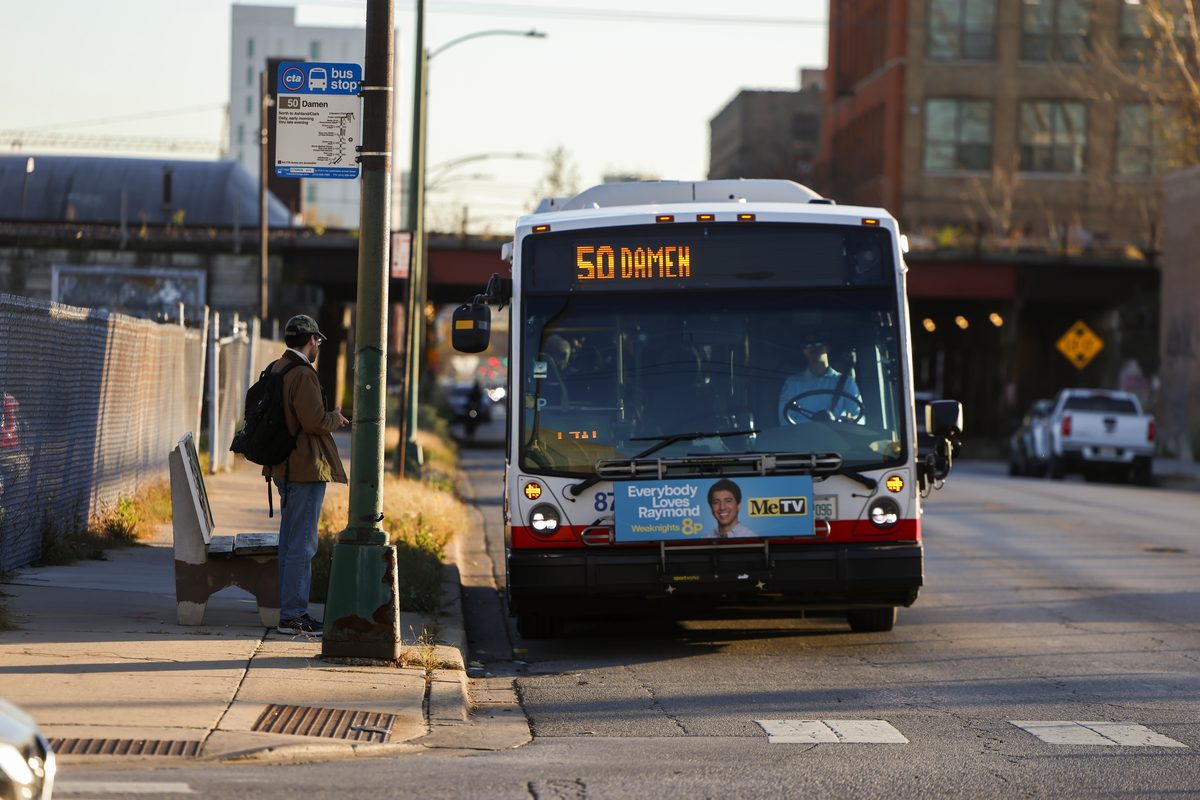
Thirteen bus stops on Chicago's #50 Damen route stopped serving riders on Monday, Nov. 16. The stops are along a stretch of Damen Avenue between West Town and the Lower West Side.

The Chicago Transit Authority says removing them standardizes spacing and helps buses move faster and more reliably. The agency has not said how much time the change saves or whether it will cut stops on other routes.

Why it matters

For riders on the #50, the tradeoff is fewer boarding points for a promised faster trip, and CTA has not quantified the speed gain.

Last Monday's email for Chicago, IL

Sent Nov 16. It carried:

Get next Monday's: one short email a week. Free. Unsubscribe in one click.

Questions about this story

Free account needed to ask — your question is kept and asked for you right after sign-up. Answers are public.

No questions yet — be the first to ask.

Key Indicators

13
Bus stops eliminated
Stops removed along the #50 Damen route.
1
Bus route affected
The #50 Damen route runs between Edgewater and the 35th Street/Archer Orange Line station.
None
Time savings announced by CTA
The agency did not provide an estimate for how much faster trips will be.

Voices

Curated perspectives — historical figures and your fellow readers.

Sign up to generate historical perspectives on this story.

Organizations Involved

Timeline

1 event Latest: Today
  1. CTA removes 13 Damen bus stops

    Today Service change

    The #50 Damen route loses 13 stops along a stretch between West Town and the Lower West Side.

Scenarios

1

CTA expands stop consolidation to another bus route

Possible Resolves by Q2 2027

Discussed by: CTA's stated goal of standardizing bus stop spacing; the agency has not ruled out similar changes.

If the Damen changes produce faster trips without sustained rider backlash, CTA could apply the same spacing standard to another route. The agency has not said whether it plans to do so.

2

CTA publishes #50 Damen speed data showing improvement

Uncertain Resolves by Q2 2027

Discussed by: CTA's stated goal of faster, more reliable service.

CTA has promised faster, more reliable buses but has not quantified the gain. A published route-level performance report would show whether the stop cuts worked.

3

CTA keeps all 13 Damen stop cuts in place through 2027

Likely Resolves by Nov 16, 2027

Discussed by: CTA's implementation of the change; no cited reporting indicates a reversal.

The stops are now out of service. Unless rider complaints or a formal review prompt restoration, the cuts remain part of the route.

Historical Context

2 moments from history that rhyme with this story — and how they unfolded.

June 2000

Los Angeles Metro Rapid (2000)

Los Angeles County Metropolitan Transportation Authority launched Metro Rapid on the Wilshire/Whittier and Ventura corridors. The service used fewer stops, signal priority, and frequent buses to cut trip times.

Then

Ridership rose and the program expanded to more corridors.

Now

Metro Rapid became a model for low-cost bus speed improvements in U.S. cities.

Why this matters now

Shows stop consolidation can speed buses when paired with signal priority and frequency, not just fewer stops.

2008

New York City Select Bus Service (2008)

New York City launched its first Select Bus Service route on Fordham Road in the Bronx. The route combined off-board fare payment, dedicated lanes, and fewer stops.

Then

Trip times fell and the model expanded to other corridors.

Now

Select Bus Service became New York City's main bus rapid transit program.

Why this matters now

Illustrates that stop removal is one tool among several; without lane priority and enforcement, gains can be limited.

Sources

(1)