



Pull to refresh
Logo
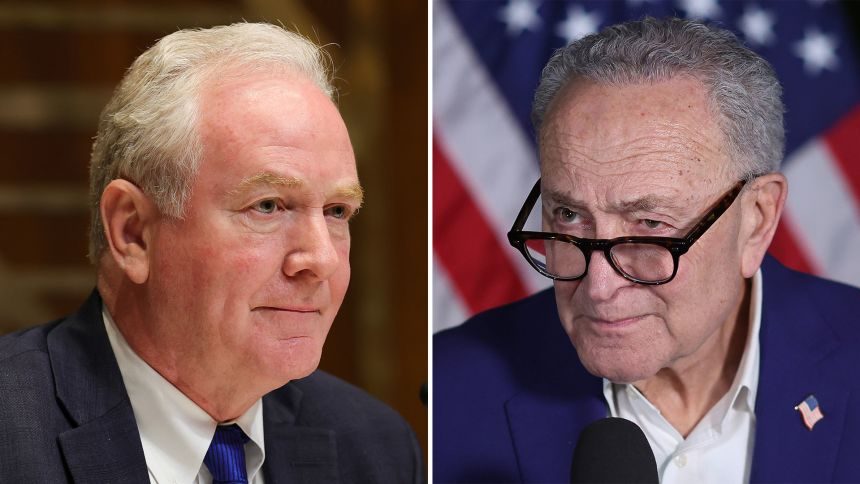
Van Hollen challenges Schumer for Senate Democratic leadership

Van Hollen challenges Schumer for Senate Democratic leadership

Rule Changes

A post-midterm power struggle over who leads a newly won 55-seat Democratic majority

Overview

Updated 1 hour ago

Democrats flipped eight Senate seats in the midterms and will enter January with at least 55 senators. On Thursday, Maryland Sen. Chris Van Hollen said he wants to lead that new majority, challenging Chuck Schumer for the top Democratic job in the Senate.

The vote is a closed-door, secret-ballot election scheduled for Dec. 1. Schumer says he has the votes. Van Hollen says he has more than 10 commitments and that the race is "very much in flux."

Why it matters

The winner sets the Senate agenda for a 55-seat Democratic majority and decides how hard to fight President Donald Trump.

Questions about this story

Free account needed to ask — your question is kept and asked for you right after sign-up. Answers are public.

No questions yet — be the first to ask.

Key Indicators

55
Democratic Senate seats
The caucus will have at least 55 senators in January after flipping eight seats.
8
Senate seats flipped
Democrats' midterm gains, according to CNN's count.
10+
Commitments Van Hollen claims
Van Hollen said he has more than 10 commitments but declined to give an exact number.

Voices

Curated perspectives — historical figures and your fellow readers.

Sign up to generate historical perspectives on this story.

People Involved

Organizations Involved

Timeline

January 2017 December 2026

6 events Latest: Yesterday
Tap a bar to jump to that date
  1. Leadership election scheduled

    Upcoming Vote

    Senate Democrats are set to choose their leader by closed ballot.

  2. Van Hollen announces challenge to Schumer

    Latest Leadership

    Van Hollen says voters called for a change from the status quo and that the party needs new leadership.

  3. Schumer says he has the votes

    Statement

    Schumer tells reporters he is confident he will be elected majority leader.

  4. Van Hollen downplays leadership bid

    Statement

    Van Hollen tells CNN that seeking the leader's job is "not my focus."

  5. Democrats win Senate majority

    Election

    Democrats flip eight seats and will enter January with at least 55 senators.

  6. Schumer becomes Senate Democratic leader

    Leadership

    Chuck Schumer takes over the caucus and holds the top Democratic Senate job for nearly a decade.

Scenarios

1

Schumer wins the Dec. 1 secret ballot

Likely Resolves by Dec 1, 2026

Discussed by: Schumer, who told reporters he has the votes, and Maine Sen. Angus King, who endorsed him.

Schumer's decade of relationships, fundraising and procedural knowledge carry the closed-door vote. Several Democrats have declined to publicly commit, but public silence does not always translate into opposition on a secret ballot. If Schumer wins, he becomes majority leader when the new Congress convenes.

2

Van Hollen unseats Schumer

Unlikely Resolves by Dec 1, 2026

Discussed by: Van Hollen, who says he has more than 10 commitments and the race is in flux, and incoming Michigan Sen. Abdul El-Sayed, who backed him.

Van Hollen converts private frustration with Schumer into a majority on the secret ballot. That would require peeling away senators who have publicly stayed neutral or backed Schumer. A win would make Van Hollen majority leader and shift the caucus toward a more confrontational posture toward Trump.

3

Leadership vote slips past Dec. 1

Possible Resolves by Dec 15, 2026

Discussed by: CNN, which reported that several returning Democrats and most incoming freshmen have declined to publicly back Schumer.

If the race stays close, the caucus could postpone the vote rather than force a divisive result before the new Congress. A delay would leave Schumer as leader for now but keep the challenge alive into January.

Historical Context

3 moments from history that rhyme with this story — and how they unfolded.

November 2016

Tim Ryan challenges Nancy Pelosi (2016)

After Donald Trump's upset win, Ohio Rep. Tim Ryan challenged Nancy Pelosi for House Democratic leader. Ryan argued the party needed a new direction after losing the White House and failing to win the House.

Then

Pelosi won the secret ballot by a wide margin and remained leader.

Now

Pelosi led House Democrats until 2022, when she stepped down and Hakeem Jeffries succeeded her.

Why this matters now

Same setup: a post-election challenge from inside the caucus against a long-serving leader. The incumbent's relationships and vote-counting usually decide it.

1979-1980

Ted Kennedy challenges Jimmy Carter (1980)

Massachusetts Sen. Ted Kennedy ran against sitting President Jimmy Carter for the Democratic nomination, drawing support from voters who wanted a more liberal direction.

Then

Carter won the nomination but lost the general election to Ronald Reagan.

Now

The challenge exposed divisions in the party and weakened Carter's standing.

Why this matters now

Intraparty challenges can fail at the ballot while still signaling real dissatisfaction with the incumbent.

November 2022

Hakeem Jeffries succeeds Nancy Pelosi (2022)

Nancy Pelosi stepped down from House Democratic leadership after two decades. Hakeem Jeffries ran to succeed her and won unopposed.

Then

Jeffries became the first Black leader of a congressional party caucus.

Now

The transition happened without a contested vote because the incumbent chose to leave.

Why this matters now

Leadership changes in Congress usually come through retirement or defeat, not a direct challenge. Van Hollen is trying the rarer path.

Sources

(10)