



1987
CRISPR repeats first observed (1987)
Yoshizumi Ishino's lab at Osaka University reported odd repeated DNA sequences in E. coli with no known function. The pattern, later named CRISPR, sat unexplained for years.
Then
The repeats were cataloged as biological curiosities; researchers had no idea they encoded an adaptive immune system.
Now
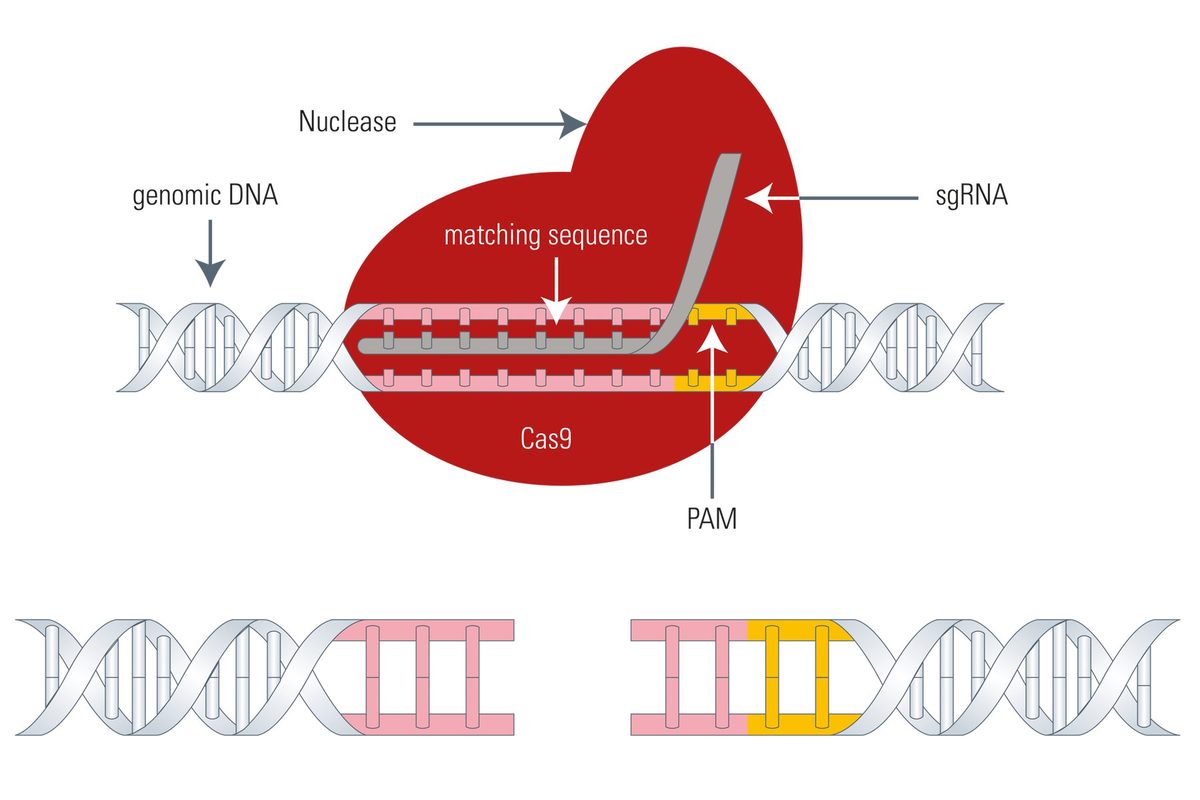
In 2012, Jennifer Doudna and Emmanuelle Charpentier showed CRISPR-Cas9 could be programmed to edit DNA, a discovery that won the 2020 Nobel Prize in Chemistry.
Why this matters now
ART is a similarly odd repeating pattern with unknown function. The open question is whether it follows CRISPR's path to utility or stays a curiosity.