



Pull to refresh
Logo
Coinkite says COLDCARD seeds came from a software generator for five years

Coinkite says COLDCARD seeds came from a software generator for five years

Money Moves

The postmortem ties 1,778.84 BTC in thefts to seeds with 40 to 72 bits of entropy, and says firmware updates cannot repair them

Overview

Updated 49 minutes ago

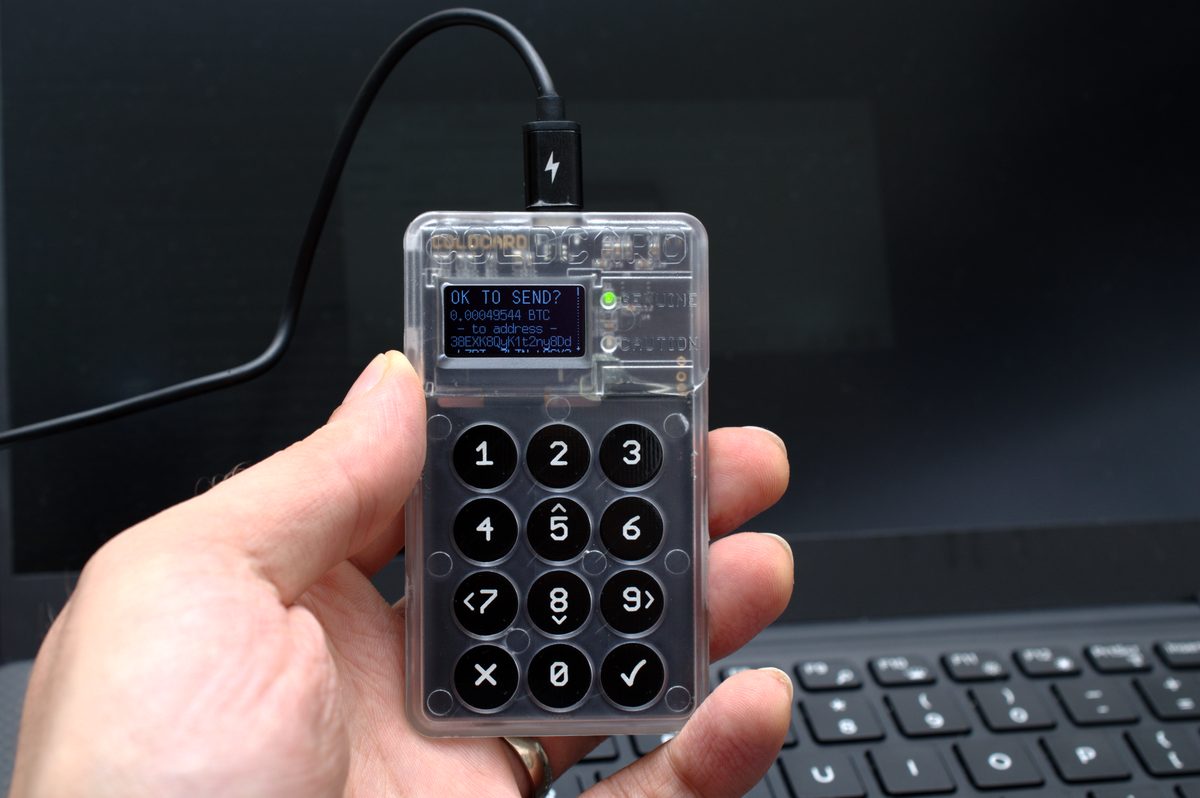
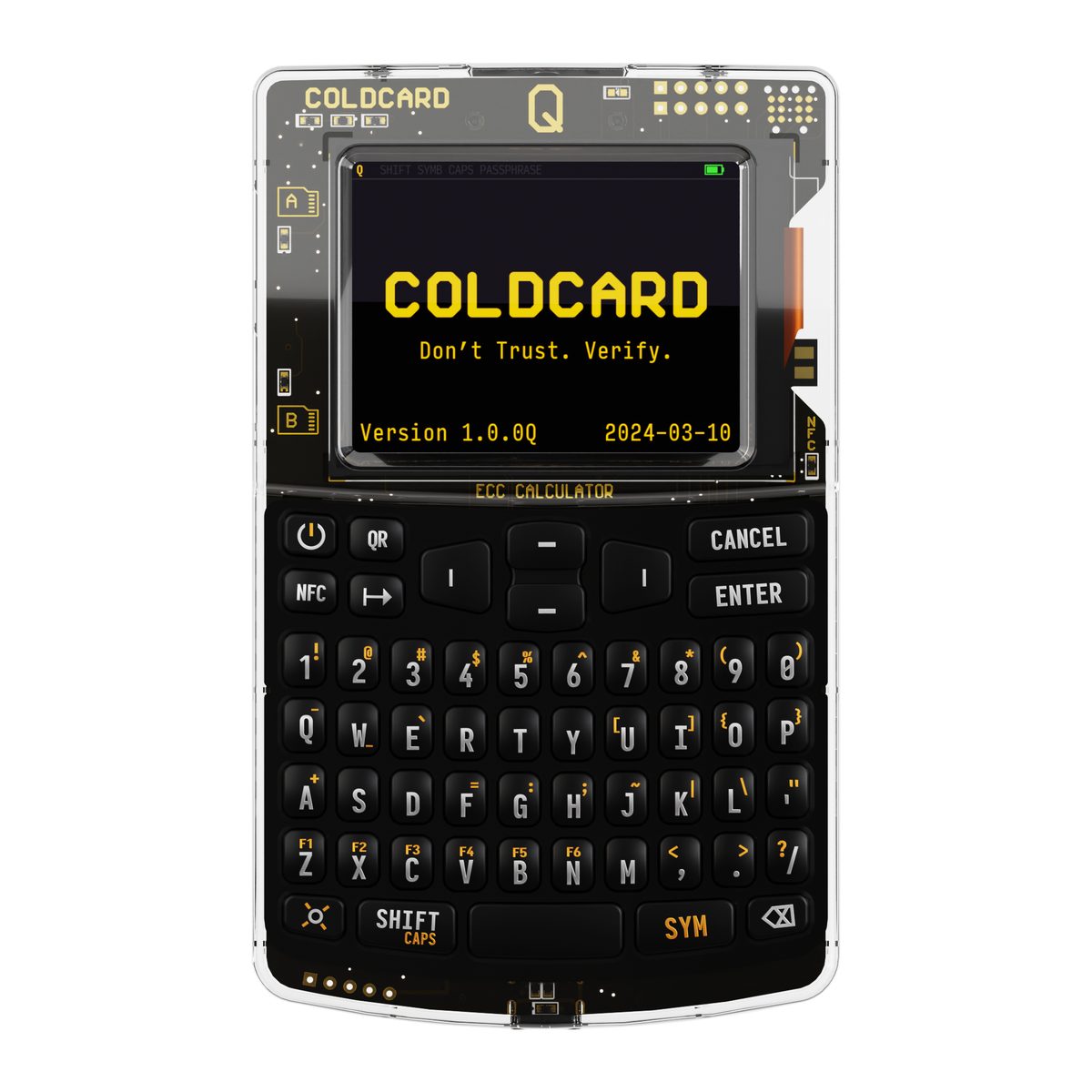
From March 29, 2021 through July 30, 2026, COLDCARD hardware wallets built their recovery seeds with a software pseudo-random generator meant for ordinary programming chores. The hardware random-number generator sat on the same chip, unused by the seed path. Coinkite, the Toronto company that makes the devices, published an 18-page postmortem on the defect. It estimates the seeds carried about 40 bits of entropy on older Mk2 and Mk3 models and about 72 bits on Mk4, Mk5 and Q models, against an intended 128 bits.

Attackers began regenerating private keys from those seeds offline on July 29, 2026, with no need to touch a device. Galaxy Research traced 1,778.84 bitcoin through more than 8,600 addresses. Coinkite has matched 300 loss reports to 242 accounts, about 0.21% of its estimated user base. Firmware released July 31 stops new weak seeds. It cannot fix old ones, so holders must generate a fresh seed and move their funds.

Why it matters

A hardware wallet's promise rests on one number being unguessable. Seventy-two bits of entropy can be ground out offline, with no device access.

Questions about this story

Free account needed to ask — your question is kept and asked for you right after sign-up. Answers are public.

No questions yet — be the first to ask.

Key Indicators

1,778.84 BTC
Bitcoin traced to the flaw
Galaxy Research total across more than 8,600 addresses following the July 2026 thefts.
8,600+
Addresses attributed
Galaxy Research counted 8,865 addresses as of August 24, 2026.
242
Accounts behind loss reports
Coinkite matched 300 support tickets to 242 requester accounts, about 0.21% of its user base.
40-72 bits
Effective seed entropy
Coinkite's estimate of what affected seeds actually carried, against a 128-bit target.
5 years
How long the flaw shipped
Defective seed generation ran from March 2021 until fixed firmware on July 31, 2026.

Voices

Curated perspectives — historical figures and your fellow readers.

Sign up to generate historical perspectives on this story.

People Involved

Organizations Involved

Timeline

March 2021 November 2026

9 events Latest: Yesterday
Tap a bar to jump to that date
  1. Postmortem makes the failure public

    Latest Report

    Coinkite's 18-page report lays out the root cause, the entropy estimates and why more than five years of checks missed it.

  2. Coinkite counts 300 loss tickets

    Disclosure

    A support review matches 300 loss-related tickets to 242 accounts, about 0.21% of the estimated user base.

  3. Keylabs review declares the defect closed

    Review

    The outside firm finds the corrected seed path sound in Mk5 5.6.3 and 5.6.2 and Q 1.5.3Q and 1.5.2Q.

  4. Galaxy Research attributes 8,865 addresses

    Analysis

    The research arm of Galaxy Digital maps stolen funds across more than 8,600 addresses tied to 1,778.84 BTC.

  5. Fixed firmware published

    Fix

    New builds draw from the hardware generator. Seeds already created on affected firmware remain weak.

  6. Coinkite identifies the defect

    Disclosure

    The company traces the shipping seed path to the software generator rather than the hardware one.

  7. First thefts as attackers regenerate keys offline

    Theft

    Attackers rebuild private keys from the weakly seeded wallets without physical access to any device, then move funds.

  8. External review examines the RNG and finds it sound

    Review

    Nick Farrow's review expressly covers weak random-number generation, concludes the path is sound, and does not find the build-integration defect.

  9. COLDCARD firmware starts building seeds from a software generator

    Technical

    A configuration setting and an ineffective library guard leave the seed path linked to MicroPython's Yasmarang generator instead of the STM32 hardware RNG.

Scenarios

1

Coinkite announces a compensation or migration support program

Possible Resolves by Q2 2027

Discussed by: Affected owners and Coinkite's own statements, which say the company is still evaluating ways to help customers

Coinkite has confirmed the flaw but has not committed to reimbursement. A program could take the form of credit toward new hardware, a funded migration service, or direct payment for documented losses. The obstacle is that Coininkite is non-custodial and has no complete ledger of who was affected, so any scheme would lean on support tickets and on-chain claims that have not been deduplicated.

2

A lawsuit is filed against Coinkite over the seed flaw

Uncertain Resolves by End of 2027

Discussed by: Victim advocates and crypto legal commentators; no filing has been reported as of the postmortem

Owners who lost funds could sue on breach of warranty or negligence grounds in Canada or the United States. The case would turn on whether a wallet advertised as drawing from a hardware random-number generator delivered that promise, and on whether the open-source, non-custodial design shifts risk to the buyer. A filing would likely seek class treatment, given the spread of losses across hundreds of accounts.

3

Loss totals climb past 2,000 BTC as more weak seeds are cracked

Likely Resolves by Q2 2027

Discussed by: On-chain analysts, including TRM Labs, which put the figure near 1,816 BTC in a November 2026 report

Estimates already differ: Galaxy Research counts 1,778.84 BTC, TRM Labs roughly 1,816 BTC. Because affected owners must move funds themselves and many may never file a ticket, continued scanning of wallets derived from weak seeds would push published totals higher. A jump past 2,000 BTC would suggest the 242-account count badly understates exposure.

Historical Context

3 moments from history that rhyme with this story — and how they unfolded.

2006-2008

Debian OpenSSL predictable keys (2006-2008)

A Debian maintainer removed code that a memory checker flagged as reading uninitialized memory, not realizing it fed OpenSSL's entropy pool. For nearly two years, every key generated on affected Debian systems drew from a tiny, predictable set of possibilities. The output looked like a normal key.

Then

Luciano Bello found the flaw in May 2008. Debian revoked affected certificates, added weak keys to blacklists, and told users to regenerate everything.

Now

The case became the standard example of a build-level change quietly shrinking an entropy source, and it pushed open-source projects toward reproducible builds and explicit entropy testing.

Why this matters now

Same shape as COLDCARD: well-formed output, a build and configuration decision nobody verified, and years of exposure before anyone looked at the right line of code.

August 2013

Android SecureRandom bitcoin thefts (2013)

A flaw in Android's Java SecureRandom implementation caused some bitcoin wallet apps to reuse the same random value when signing transactions. Reused signing values let anyone who spotted the pattern compute the private key. Researchers found the same value across transactions from hundreds of wallets.

Then

Roughly 55 BTC was stolen. Wallet developers patched their apps and urged users to upgrade and move funds to new addresses.

Now

It became a reference case for why nonce and seed generation must be tested directly, and it fed the push toward deterministic signing schemes in bitcoin software.

Why this matters now

Shows the exact failure mode here: weak randomness does not break the wallet's cryptography, it hands attackers the private key and leaves every other security layer intact.

2010

Sony PlayStation 3 signing key recovery (2010)

Sony used a constant value where its signing algorithm required a fresh random number. Because that value never changed, researchers could solve for Sony's private signing key from public signatures and publish it.

Then

The master key leaked, and the console's code-signing protection was effectively over.

Now

The episode became a teaching example that a single repeated random value can expose a private key regardless of how strong the surrounding algorithm is.

Why this matters now

Illustrates why Coinkite's 40-to-72-bit estimate matters: the search space, not the algorithm, decides whether keys can be recovered by brute force.

Sources

(5)