Anchor

Liquid Network drained of 4,000 BTC in Elements bug exploit
Money MovesPurported white-hat hackers say they'll return most funds once the bug is patched
Yesterday: SideSwap processes 4,000 L-BTC peg-outNew here? Follow stories to track developments over time. Create a free account to get updates when stories you care about change.
Overview
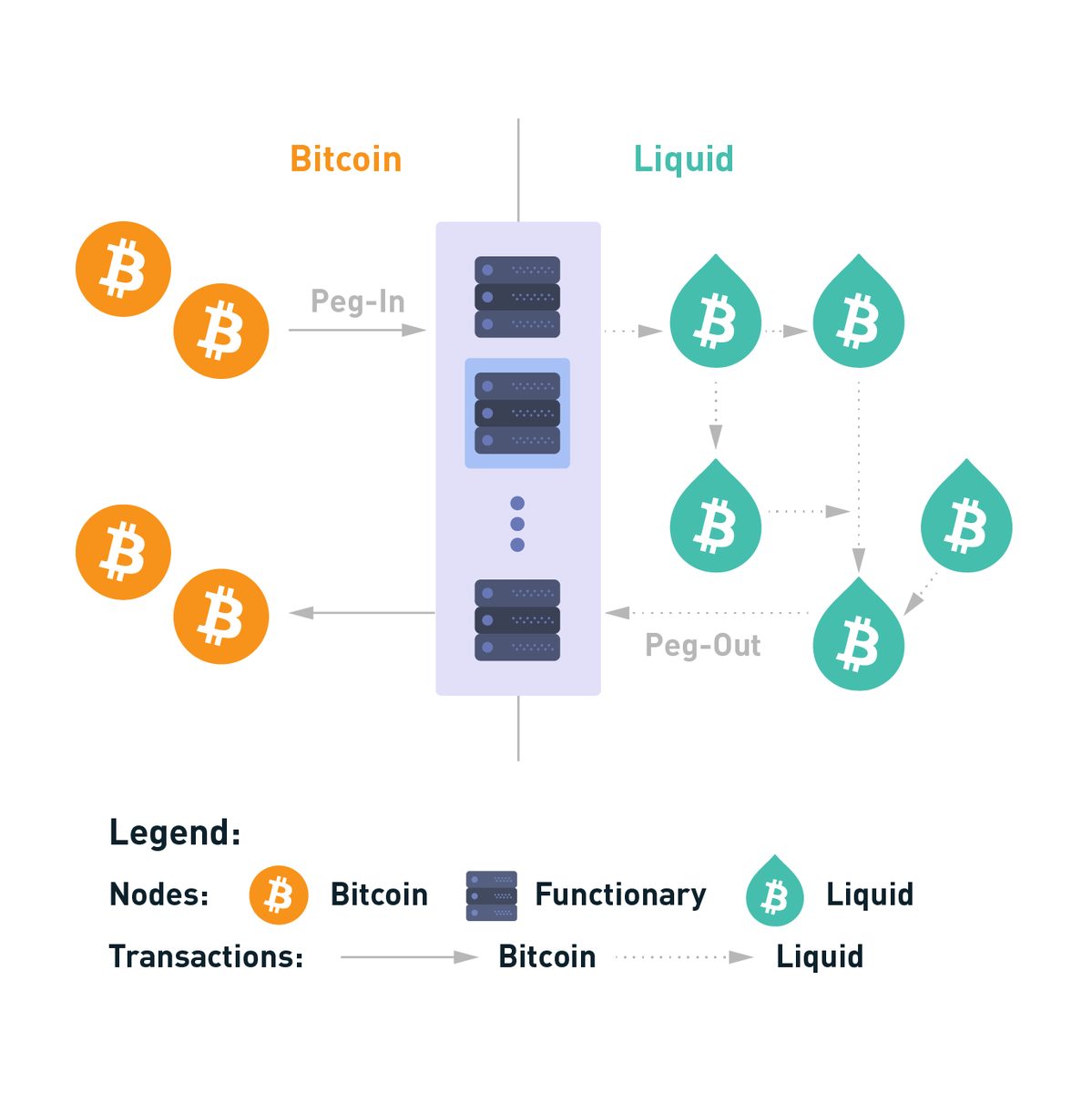
Updated 1 hour agoLiquid, a Bitcoin sidechain run by Blockstream, lost nearly all its bitcoin reserves on September 6. A single peg-out transaction moved about 4,000 BTC, worth roughly $320 million, out of the federation wallet onto the Bitcoin mainchain. The wallet held about 4,200 BTC before the transfer; it now holds roughly 200.
The withdrawal wasn't a key theft. Someone exploited a validation bug in Elements, the open-source software that powers Liquid, to create L-BTC that no real Bitcoin backed, then redeemed it through a legitimate-looking peg-out. Liquid says no federation key was compromised.
Liquid paused its bridge nodes and asked exchanges to suspend L-BTC deposits and withdrawals. The party behind the withdrawal says it's white-hat hackers who will return most of the funds once the bug is fixed on every node. Blockstream replied, 'Yes, thank you.'
Why it matters
If the bitcoin isn't returned, L-BTC holders are stuck with tokens backed by a wallet that's 95% empty.
Questions about this story
Free account needed to ask — your question is kept and asked for you right after sign-up. Answers are public.
No questions yet — be the first to ask.
Key Indicators
~4,000 BTC
Bitcoin withdrawn from the federation wallet
Worth roughly $320 million at the time of withdrawal.
95%
Share of federation reserves withdrawn
The wallet dropped from about 4,200 BTC to roughly 200 BTC.
5 weeks
How long the Elements fix was available before the exploit
Blockstream added the fix five weeks before the withdrawal, but not all nodes were patched.
Related Media
The Liquid Network: The Financial Layer for Bitcoin Capital Markets
Technical Overview

14.8K views
1:03:50
NEARLY 4000 BTC STOLEN FROM LIQUID NETWORK
João Hazim

3.9K views
4:23
How a Bug Almost Destroyed Bitcoin Forever
CoinGecko

843 views
25:20
A Hacker Broke Windows 11 Hours After the Patch
Ghost Protocol
Images from Openverse under Creative Commons licenses. Videos from YouTube.
Voices
Curated perspectives — historical figures and your fellow readers.
Play
Exploring all sides of a story is often best achieved with Play.
Most of these play right now — no account needed. Sign up to save scores, keep a streak, and unlock Debate and Predict.
Log in
Sign Up
Higher or Lower
A number from this story, against one from elsewhere in the news — guess which is bigger, then keep the chain going. 5 rounds, 3 strikes; a miss costs a strike and resets your streak.
Example
Anchor
EU tariff revenue
$52B
Big for this kind of number
Mystery
Pentagon AI contract
?
Round 1
Streak: 0
Mystery
?
Keyboard: ↓/L lower · ↑/H higher
0 pts
Best streak: 0 · Rounds: 0
0 points — sign up to put that on the leaderboard.
Now try on this story
Connections
Sixteen names from the news. Find the four hidden groups of four. Four mistakes max.
Loading today's puzzle…
0/4 groups
Mistakes
Sign up to keep a daily streak — a new puzzle lands every day.
Now try on this story
Exit debate?
Your progress in this debate will be lost.
How it works
- 1 Two AI personas square off on this story.
- 2 You predict who'll win each round — correct picks earn XP.
- 3 One crossfire question is yours to fire. Pick it carefully.
Couldn't generate a topic
Select Your Champions
Choose one persona for each side of the debate
DEBATE TOPIC
Choose personas with different perspectives for a more dynamic debate.
SIDE A (PRO)
Select debater for this side:
No debate personas available right now.
SIDE B (CON)
Select debater for this side:
No debate personas available right now.
VS
Get ready to make your prediction...
Round of
Claim
Evidence
Stakes
Crossfire Answer
Closing Statement
Claim
Evidence
Stakes
Crossfire Answer
Closing Statement
Your Crossfire Question
Generating arguments...
Who's Got This Round?
Make your prediction before the referee scores
The referee scores both sides on
Correct predictions earn +20 XP
· Press 1 or 2 to pick
Evidence
40%
Logic
30%
Detail
20%
Style
10%
Round Results
Your Pick
Not this time
(%)
Overall Score
/10
Your Pick
Not this time
(%)
Overall Score
/10
Set the Crossfire
Pick the question both personas must answer in the final round
Crafting crossfire questions...
Choosing a question earns +10 XP crossfire bonus
🏆
Total XP Earned
Cred Change
Predictions
Debate Oracle! You called every round!
Sharp Instincts! You know your debaters!
The Coin Flip Strategist! Perfectly balanced!
The Contrarian! Bold predictions!
Inverse Genius! Try betting the opposite next time!
XP Breakdown
Base completion
+20 XP
Rounds played ( rounds x 5 XP)
+ XP
Correct predictions ( correct x 20 XP)
+ XP
Crossfire bonus
+10 XP
Accuracy
%
Prediction History
Round
You picked:
✓
✗
Now try on this story
Keep debating to level up your credibility and unlock achievements
People Involved
Organizations Involved
Blockstream
Software company
Paused Liquid's bridge nodes, negotiating recovery
Developer of Liquid, a Bitcoin sidechain, and Elements, the open-source software that powers it.
Liquid Network
Bitcoin sidechain
Paused since September 6, 2026
A Bitcoin sidechain secured by a 15-member federation, used for faster and more confidential Bitcoin transfers.
SideSwap
Bridge exchange
Suspended operations during investigation
A Liquid Federation member and bridge exchange that processed the peg-out used in the exploit.
LF
Liquid Federation
Consortium
Investigating the incident
The 15 companies that jointly control and secure the Liquid Network.
Timeline
7 events
Latest: Yesterday
Tap a bar to jump to that date
-
SideSwap processes 4,000 L-BTC peg-out
Latest Security IncidentA customer's 4,000 L-BTC is burned under a valid authorization at SideSwap's bridge service.
-
Block 965,783 settles 3,996 BTC payout
Security IncidentThe federation releases 3,996 BTC from the reserve wallet in one 83-input transaction.
-
Liquid disables bridge nodes, alerts exchanges
StatementLiquid announces the withdrawal, pauses bridge nodes, and asks exchanges to suspend L-BTC.
-
Hackers identify themselves on-chain
CommunicationThe destination address broadcasts 'we are whitehats. contact us on chain' via OP_RETURN.
-
Blockstream responds, negotiations go on-chain
CommunicationBlockstream shares its security team's email; PGP-signed messages are exchanged in Bitcoin transactions.
-
Hackers set return conditions
CommunicationHackers say they'll send back most funds after the Elements bug is fixed on every node.
-
Blockstream replies 'Yes, thank you'
CommunicationBlockstream confirms the deal; roughly 3,998.5 BTC remains at the hackers' address.
Historical Context
3 moments from history that rhyme with this story — and how they unfolded.
June 2016
The DAO hack (2016)
An attacker drained about $60 million from The DAO, a smart contract on Ethereum, using a reentrancy bug. The attacker argued the code permitted the withdrawal, calling it a legitimate exercise of the contract's rules.
Then
The Ethereum community hard-forked the blockchain to reverse the theft, splitting the network into Ethereum and Ethereum Classic.
Now
The incident set a precedent that code exploits could be reversed through community consensus, and it framed the debate around whether an exploit that follows the code's letter is theft.
Why this matters now
Like the DAO, this Liquid exploit used a legitimate-looking transaction that exploited a code bug. The white-hat justification echoes the DAO attacker's argument, though this party is offering to return the funds.
March 2022
Ronin Bridge hack (2022)
Attackers stole $625 million from the Ronin bridge, which moved funds between the Axie Infinity game and Ethereum. Compromised private keys, not a code bug, allowed the drain, making it the largest DeFi hack at the time.
Then
US law enforcement recovered about $30 million and later indicted two individuals. The Securities and Exchange Commission charged the parent company, Sky Mavis.
Now
The case showed both the vulnerability of bridges and sidechains and the reach of law enforcement in recovering stolen crypto.
Why this matters now
Ronin was a sidechain bridge exploit on a massive scale, like Liquid. Its recovery came through law enforcement action rather than negotiation, offering a contrasting path to resolution.
February 2022
Wormhole bridge hack (2022)
A hacker drained $320 million, roughly the same amount as this Liquid incident, from the Wormhole bridge using a signature validation bug. Jump Crypto, which backed the project, replaced the funds within hours.
Then
Wormhole users were made whole. The attacker remained unidentified but later returned $155 million.
Now
The incident showed that a financial backer could absorb losses to protect user confidence, and that crooks sometimes return a portion of stolen funds.
Why this matters now
Wormhole's $320 million loss matches this exploit almost exactly. It illustrates the scale of bridge and sidechain hacks and one path to resolution: a deep-pocketed backer covering the loss.
Sources
(8)Related Stories
Bitcoin's post-peak reckoning
Money Moves
Updated May 29
Federal cryptocurrency custody under scrutiny
Rule Changes
Updated May 23
Brazil central bank liquidates two asset managers tied to failed Banco Master
Money Moves
Updated 3 days ago
Bank of Japan's market operations track the unwinding of its easing era
Money Moves
Updated Aug 24
Lambda raises $1B in debt to buy Nvidia chips for Microsoft
Money Moves
Updated Aug 29
US tightens financial squeeze on Hizballah's cash pipeline
Money Moves
Updated Aug 21