
Pull to refresh
Logo
DeepSeek's V4.1 Flash update takes the top of OpenRouter's usage rankings

DeepSeek's V4.1 Flash update takes the top of OpenRouter's usage rankings

New Capabilities

A numbered update to DeepSeek's budget model now carries more routed tokens than any other model on the main LLM marketplace.

Overview

Updated 1 hour ago

On October 17, DeepSeek published a numbered update to its low-cost V4.1 Flash model. Within a day it handled 3.04 trillion tokens through OpenRouter, a 345% jump.

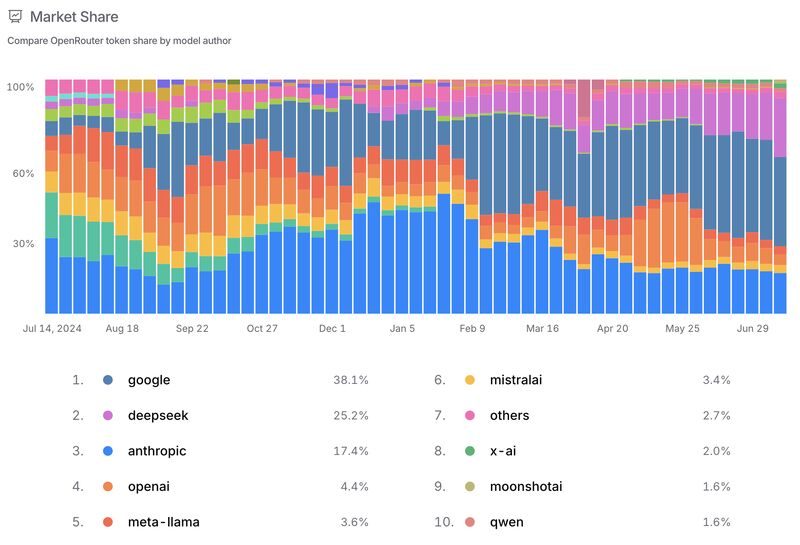
By October 29, the 1017 snapshot ranked first on OpenRouter with 42.4 trillion tokens processed, ahead of the base V4.1 Flash at 15.9 trillion. DeepSeek's models together carried 37.3% of the platform's traffic.

Why it matters

A model priced at 15 cents per million input tokens now carries more traffic than any rival on the main LLM routing market.

Questions about this story

Free account needed to ask — your question is kept and asked for you right after sign-up. Answers are public.

No questions yet — be the first to ask.

Key Indicators

42.4T
Tokens processed by V4.1 Flash 1017
OpenRouter total through October 29, 2026, the most of any model.
24.79%
Share of OpenRouter tokens
DeepSeek's top snapshot share of tracked platform traffic, per Tidelines.
345%
Single-day usage jump
Increase in routed tokens in the first 24 hours after release.
$0.15
Price per million input tokens
Output costs $0.60 per million tokens, with a 1,048,576-token context window.
77.0%
DeepSWE benchmark score
DeepSeek's reported score at about $0.20 per coding task.
188T
Weekly OpenRouter tokens
Platform-wide volume in the week ended October 25, up almost 15% week on week.

Voices

Curated perspectives — historical figures and your fellow readers.

Sign up to generate historical perspectives on this story.

Organizations Involved

Timeline

September 2026 October 2026

8 events Latest: Yesterday
Tap a bar to jump to that date
  1. Free server-side tool calls end

    Upcoming Pricing

    DeepSeek's free tool-call promotion through its harness expires.

  2. 1017 reaches No. 1 with 42.4T tokens

    Latest Usage

    The snapshot leads OpenRouter's leaderboard; the base V4.1 Flash sits second.

  3. DeepSeek tops weekly call volume

    Usage

    V4.1 Flash 1017 leads the week with 33.6 trillion tokens.

  4. MiniMax launches M3.1 Flash free endpoint

    Competition

    MiniMax's model jumps from tenth to fourth on OpenRouter in its first week.

  5. Usage jumps 345% in one day

    Usage

    The snapshot routes 3.04 trillion tokens in 24 hours, a platform record for the month.

  6. DeepSeek publishes V4.1 Flash 1017

    Product launch

    A numbered update ships to Hugging Face, ModelScope and DeepSeek's API.

  7. OpenRouter lists the new snapshot

    Distribution

    OpenRouter prices it at $0.15 input and $0.60 output per million tokens.

  8. DeepSeek releases the base V4.1 Flash

    Product launch

    DeepSeek ships the first V4.1 Flash model, later updated by the 1017 build.

Scenarios

1

DeepSeek holds the top OpenRouter spot into 2027

Likely Resolves by Jan 31, 2027

Discussed by: OpenRouter rankings data and Tidelines tracking

The 1017 snapshot has led since late October and the base V4.1 Flash sits second. If the shared API alias keeps serving the newer build, the two DeepSeek rows should stay near the top through the holiday quarter. DeepSeek's combined share of platform traffic passed 37% in late October.

2

A rival overtakes DeepSeek on routed tokens

Possible Resolves by Jan 31, 2027

Discussed by: OpenRouter rankings data; coverage of free-launch surges

The leaderboard has churned before. MiniMax M3.1 Flash jumped from tenth to fourth in its first week after a free launch, and GLM 5.3 Flash sits third. A new free endpoint or a deeper price cut could move a rival ahead of DeepSeek.

3

DeepSeek's share falls back below 30%

Possible Resolves by End of 2026

Discussed by: Analysts noting label migration and free-token effects

Part of the surge is traffic moving between DeepSeek labels, not new usage. The base and snapshot entries compete for the same rolling seven-day window. If free tool-call promotions end and the alias settles, DeepSeek's combined share could fall back below 30%.

Historical Context

3 moments from history that rhyme with this story — and how they unfolded.

January 2025

DeepSeek R1 app surge (2025)

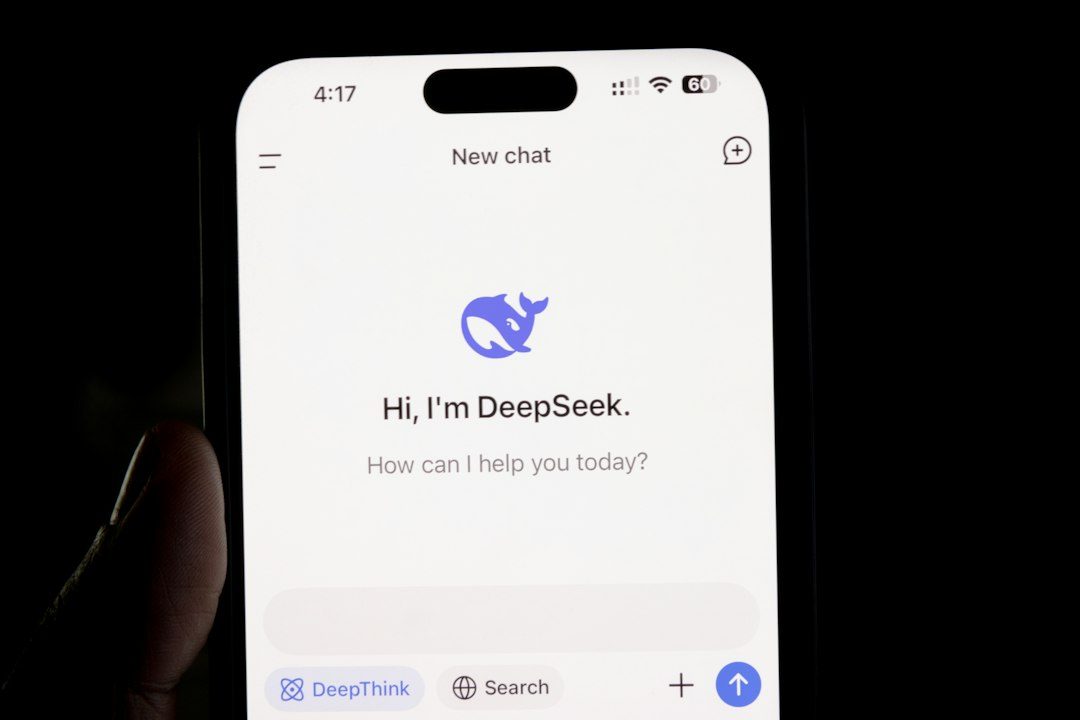
DeepSeek's R1 chatbot became the top free app on Apple's US App Store on January 27, 2025. Nvidia fell 17% that day, losing about $589 billion in market value, as investors questioned spending on premium AI chips.

Then

DeepSeek's app downloads spiked and US tech stocks sold off for a day.

Now

The episode established that a cheap Chinese model could capture global attention quickly, though app downloads did not translate into lasting consumer market share.

Why this matters now

It shows how fast a low-cost Chinese model can move a public ranking, and how little a download or token count says about durable revenue.

2008-2011

Android passes Symbian (2010-2011)

Google gave Android to phone makers for free starting in 2008. By the fourth quarter of 2010, Android had passed Nokia's Symbian as the world's best-selling smartphone operating system, according to Canalys.

Then

Android's unit share rose quickly across many handset brands.

Now

Apple kept most of the industry's profit even as Android led on device count.

Why this matters now

Free distribution can win a usage count while rivals keep the revenue, which is the same distinction OpenRouter's token table draws.

1995-1996

Apache web server takes the lead (1995-1996)

The Apache HTTP Server was released as free software in 1995. Within about a year it had become the most-used web server in Netcraft's monthly survey, displacing the commercial and academic servers that came before it.

Then

Web hosting costs fell as a free server became the default.

Now

Apache held majority share for years while commercial vendors sold support and features.

Why this matters now

A free component can dominate a usage survey without capturing the spending, the same caveat that applies to OpenRouter's token rankings.

Sources

(9)