
Pull to refresh
Logo
Detroit unveils car-free Monroe Street in Greektown after $20M rebuild

Detroit unveils car-free Monroe Street in Greektown after $20M rebuild

Built World Detroit, MI local

The 19-month project closes the block to cars, adds Wi-Fi and 124 police-linked cameras — and one business owner is seeking legal action over event fencing.

2 days ago: Monroe Streetscape officially unveiled

Overview

Updated 1 hour ago

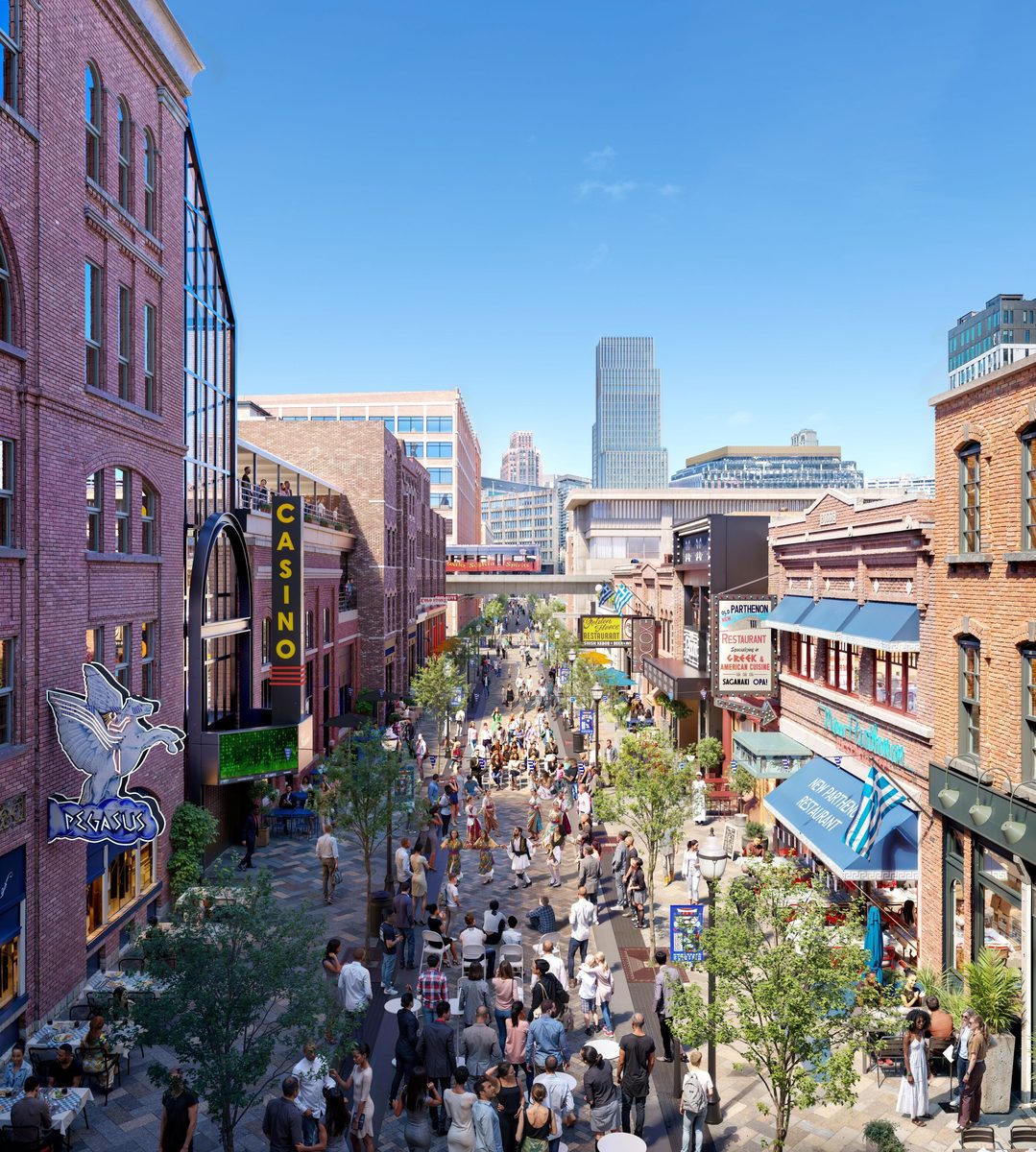
After 19 months of construction, Greektown's Monroe Street reopened Wednesday as a car-free plaza from Brush to St. Antoine. The $20 million state-funded redesign adds granite paving, 50 trees, 50 smart lampposts with cameras, and free public Wi-Fi from Cronus Internet. Greektown's 124 security cameras run on Cronus's network and feed Detroit police's Real Time Crime Center.

Tasso Teftsis, vice president of the Greektown Neighborhood Partnership, estimated business on Monroe fell 40-50% during construction and has risen 10-15% since the street began reopening. Athens Liquor owner Ather Butris is seeking legal action against the Partnership over security fencing that he says blocked his entrance during summer events.

Why it matters

Monroe's businesses rode out 19 months of closure, with business down an estimated 40-50%; the finished block is where they now try to win it back.

Monday: what changed in Detroit, MI

One short email a week with the openings, closings, permits and council votes we covered. Free. Unsubscribe in one click.

Questions about this story

Free account needed to ask — your question is kept and asked for you right after sign-up. Answers are public.

No questions yet — be the first to ask.

Key Indicators

$20M
Project cost
State-funded redesign of Monroe Street in Greektown.
124
Security cameras in Greektown
Cameras feed Detroit Police's Real Time Crime Center via Cronus Internet.
50
New trees
Part of the pedestrian improvements along the car-free block.
19 months
Construction duration
Monroe closed to vehicles from Brush to St. Antoine during the build.

Voices

Curated perspectives — historical figures and your fellow readers.

Ever wondered what historical figures would say about today's headlines?

Sign up to generate historical perspectives on this story.

People Involved

Organizations Involved

Timeline

March 2025 October 2026

4 events Latest: 2 days ago
Tap a bar to jump to that date
  1. Monroe Streetscape officially unveiled

    Latest Dedication

    Officials, business owners, and residents celebrate the completed car-free block with a plate-breaking ceremony.

  2. Summer events start on Monroe

    Program

    The Greektown Neighborhood Partnership begins hosting events on the street this summer, before the build is finished.

  3. Construction begins on Monroe Streetscape

    Construction

    Work starts on the $20M redesign; Monroe closes to vehicles between Randolph and the I-375 Service Drive.

Scenarios

1

Butris sues Greektown Partnership over event fencing, wins

Possible Resolves by Q2 2027

Discussed by: WXYZ, Hour Detroit

Athens Liquor owner Ather Butris, who said security fencing blocked his entrance during summer events, files suit against the Greektown Neighborhood Partnership. A favorable ruling or settlement would force the Partnership to redesign event layouts or compensate him — casting doubt on the scale of future plaza programming.

2

Gunshot detection goes live on Monroe Street

Likely Resolves by End of 2027

Discussed by: Cronus Internet CEO Tom Paparaptis, speaking to Hour Detroit

Paparaptis says Cronus has 'future plans to do gun detection' on the Monroe network, with AI models for mass congestion already in the works. If deployed, the 124 cameras would automatically alert DPD's Real Time Crime Center when a gunshot is detected — making the street a testbed for police-linked public surveillance.

3

Monroe Street businesses recover to pre-construction revenue

Uncertain Resolves by Oct 14, 2027

Discussed by: Tasso Teftsis of Astoria Pastry Shop, Greektown Neighborhood Partnership

Teftsis estimated business was down 40-50% during construction and up 10-15% since reopening. If the car-free street draws enough visitors, businesses across the strip could return to or exceed pre-construction levels within a year. Slow recovery would threaten the political case for similar pedestrian projects elsewhere in Detroit.

Historical Context

3 moments from history that rhyme with this story — and how they unfolded.

Feb 2009 - ongoing

Times Square Pedestrian Plaza (2009)

New York City closed Broadway to cars in Times Square and Herald Square in 2009, drawing fierce opposition from taxi drivers and some businesses. The city later reported fewer pedestrian injuries and rising foot traffic in the area.

Then

Initial business complaints softened as foot traffic rose; several opponents became supporters.

Now

Times Square became a permanent car-free zone and a national model for pedestrian plazas.

Why this matters now

Shows that car-free conversions often face business resistance before proving their economic case — the same test Monroe Street now faces.

Nov 2004 - ongoing

Campus Martius Park, Detroit (2004)

Detroit converted the intersection of Woodward and Michigan Avenues into a public park in 2004, a roughly $20 million public-private effort. It became a gathering space credited with anchoring downtown's revival.

Then

The park drew visitors and spurred nearby development.

Now

Campus Martius is widely credited with helping catalyze two decades of downtown Detroit investment.

Why this matters now

A local precedent for a major public-space bet paying off — and a reminder that outcomes take years to measure.

Nov 1962 - ongoing

Copenhagen's Strøget (1962)

Copenhagen converted its main shopping street, Strøget, to pedestrian use in 1962 over business owners' objections. Retail sales rose in the following years, and the street became a tourist draw.

Then

Store owners initially feared lost trade; sales instead increased.

Now

Strøget became one of the world's best-known pedestrian streets and a model for European cities.

Why this matters now

The classic case where business fears about car-free streets proved unfounded — the upside Monroe hopes to capture.

Sources

(4)