


Pull to refresh
Logo
Detroit issues permits for first new apartments in Parkside public housing rebuild

Detroit issues permits for first new apartments in Parkside public housing rebuild

Built World Detroit, MI local

Two buildings with 102 units break ground as part of a $180 million plan to quadruple housing on the 52-acre site.

6 days ago: Detroit issues permits for two Parkside apartment buildings

Overview

Updated 1 hour ago

The City of Detroit issued building permits for two new apartment buildings at 5250 Conner St., a key step in the long-stalled Villages at Parkside redevelopment. The permits, valued at $20 million in construction costs, authorize four-story structures with 102 combined apartments.

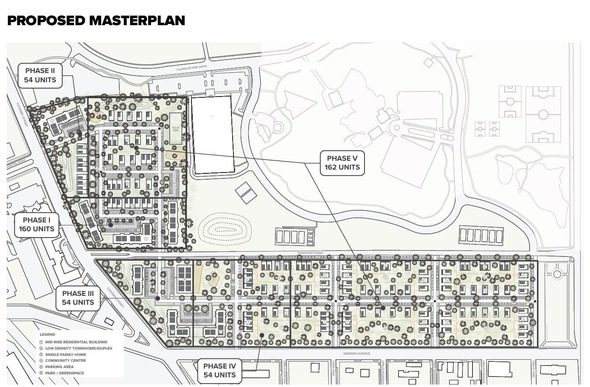
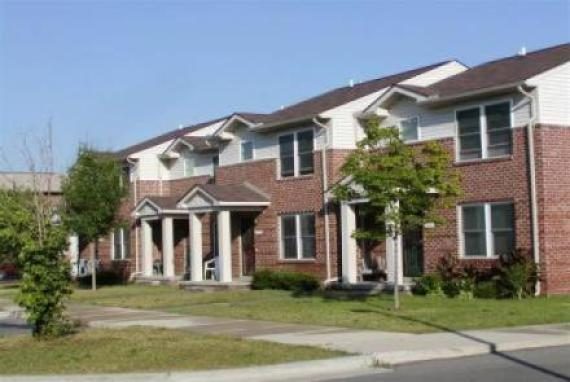
The project aims to replace the aging 1930s public housing complex with 480 mixed-income units, quadrupling the 125 currently occupied residences. The first two phases, which include these buildings, are set to break ground this fall with $73 million in funding from tax credits and city investment.

Why it matters

This rebuild will nearly quadruple the number of affordable homes on a prime site in a city with a severe affordable housing shortage.

Questions about this story

Free account needed to ask — your question is kept and asked for you right after sign-up. Answers are public.

No questions yet — be the first to ask.

Key Indicators

$20M
Permit construction estimate
Combined estimated cost of the two building permits.
102
Apartments in this permit
Total units across both permitted buildings.
480
Planned total units
Total apartments planned for the redevelopment across six phases.
125
Currently occupied units
Occupied units in the aging Parkside complex before redevelopment.
$180M
Total project cost
Total estimated investment for the six-phase redevelopment.

Voices

Curated perspectives — historical figures and your fellow readers.

Ever wondered what historical figures would say about today's headlines?

Sign up to generate historical perspectives on this story.

People Involved

Organizations Involved

Timeline

1 event Latest: 6 days ago
  1. Detroit issues permits for two Parkside apartment buildings

    Latest Permit

    City's building department approves construction of two four-story buildings with 102 units at 5250 Conner St., the first permits for the Villages at Parkside redevelopment.

Scenarios

1

First two phases complete by late 2028

Likely Resolves by End of 2028

Discussed by: Detroit Housing Commission expected timeline

The two permitted buildings are part of phases 1 and 2, which are scheduled to be completed within two years of breaking ground this fall. If construction stays on schedule, residents will move into the 214 new units by late 2028.

2

Cost overruns force redesign or delay

Possible Resolves by Jun 1, 2027

Discussed by: Construction industry analysts

Rising material and labor costs could push the $73 million phase 1–2 budget over. If cost growth exceeds 20%, the city may redesign the buildings or extend the timeline, delaying occupancy.

3

Later phases stall due to funding shortfall

Possible Resolves by End of 2027

Discussed by: MSHDA and housing advocates

Phases 3-6 depend on additional low-income housing tax credits. If MSHDA doesn't award credits by late 2027, the project may be reduced in scope or paused.

Historical Context

3 moments from history that rhyme with this story — and how they unfolded.

1937-1939

Parkside Homes construction (late 1930s)

Detroit built its first public housing project, Parkside Homes, on 52 acres east of downtown to house working-class families during the Great Depression. It originally contained 274 units across low-rise buildings.

Then

Provided affordable housing for decades.

Now

Deteriorated due to underfunding, leaving only 125 units occupied by 2026.

Why this matters now

The current redevelopment replaces this aging complex with modern mixed-income housing.

1992-2010

HOPE VI program (1992)

Congress created HOPE VI to demolish severely distressed public housing and replace it with mixed-income communities. It funded redevelopments in cities like Chicago, Atlanta, and Baltimore.

Then

Many high-rise projects were torn down.

Now

Mixed-income developments reduced concentrated poverty but often cut total units and displaced residents.

Why this matters now

Parkside's redevelopment follows the HOPE VI mixed-income model, though it increases density rather than reducing it.

2012-present

Rental Assistance Demonstration (2012)

HUD launched RAD to let public housing agencies convert to long-term project-based rental assistance contracts, unlocking private capital for repairs. Since then, over 200,000 units have converted.

Then

Agencies gained funds for renovations.

Now

Shift from direct public ownership to a voucher-based system.

Why this matters now

Parkside uses RAD to convert its Section 9 subsidy to Section 8, enabling the private redevelopment partnership with Ginosko.

Sources

(3)

More from Detroit, MI

Openings, permits and council decisions in Detroit, MI, in your inbox every Monday.