



Pull to refresh
Logo
Sweden signs agreement to settle large-value payments on Eurosystem's T2 platform

Sweden signs agreement to settle large-value payments on Eurosystem's T2 platform

Built World

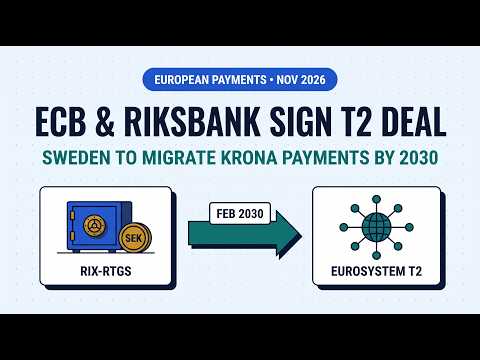
Riksbank targets February 2030 to move RIX-RTGS onto shared European infrastructure, with payments still in kronor and central bank money

Overview

Updated 54 minutes ago

Around 700,000 large-value payments worth 13 trillion Swedish kronor move between Swedish banks every month. They settle on RIX-RTGS, a system the Riksbank runs itself. By February 2030, they are slated to settle on T2, the platform the eurozone's central banks share.

The agreement signed in Frankfurt on 25 November 2026 does not put Sweden in the euro. Payments stay in kronor and in central bank money. What changes is who runs the machinery: the Eurosystem supplies the application and the operations, and Swedish settlement becomes one currency on a platform that already carries euros and Danish kroner.

Why it matters

Sweden keeps the krona but moves its payment plumbing onto shared European infrastructure, the model other non-euro central banks are now expected to follow.

Questions about this story

Free account needed to ask — your question is kept and asked for you right after sign-up. Answers are public.

No questions yet — be the first to ask.

Key Indicators

700,000
Large-value payments settled monthly in RIX-RTGS
Riksbank figure for interbank payments processed each month before the move.
SEK 13,000bn
Monthly value settled in RIX-RTGS
Total value of large-value payments cleared in Swedish kronor each month.
1
Non-euro currencies in T2 before Sweden
The Danish krone is the only non-euro currency T2 settles today.
February 2030
Target date for RIX-RTGS migration
Date both institutions aim for; not yet a commitment with penalties.

Voices

Curated perspectives — historical figures and your fellow readers.

Sign up to generate historical perspectives on this story.

People Involved

Organizations Involved

Timeline

November 2007 November 2026

5 events Latest: Yesterday
Tap a bar to jump to that date
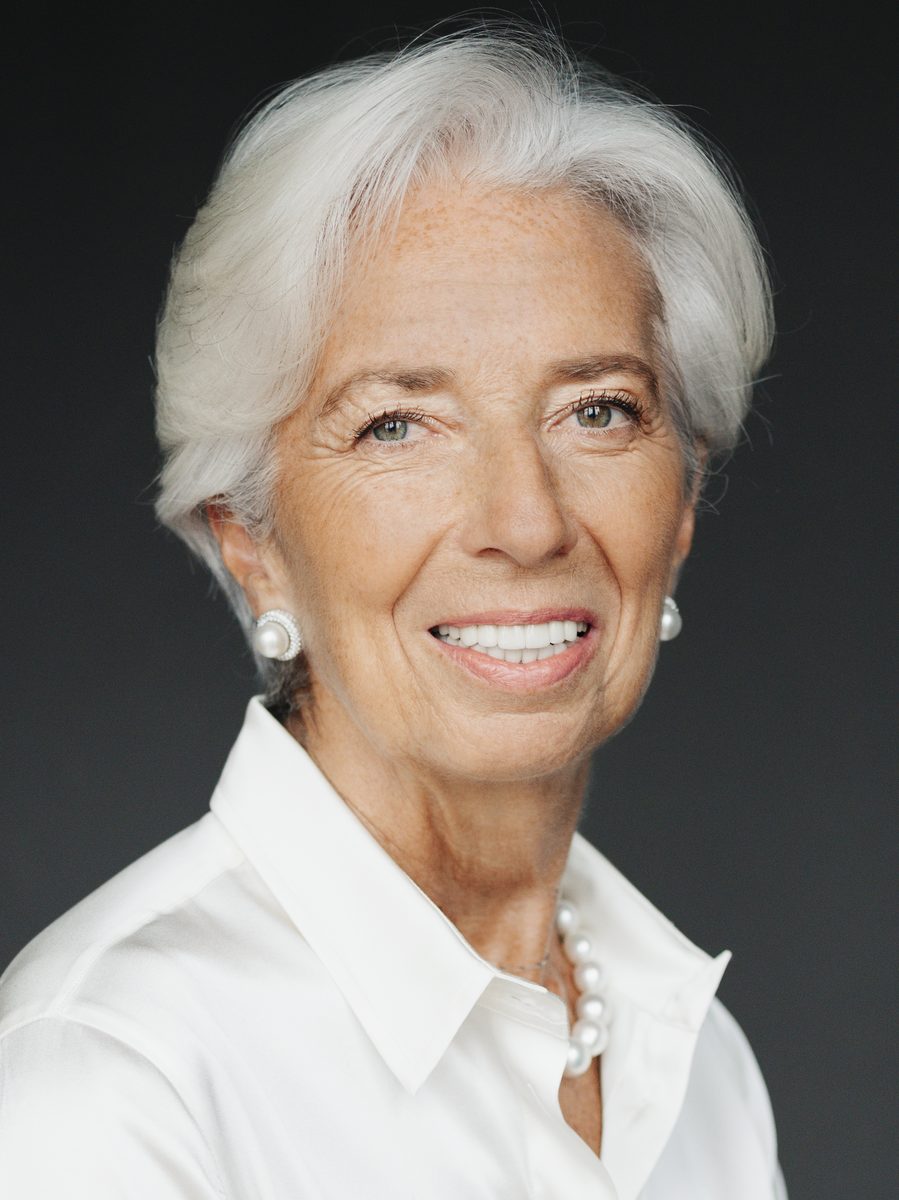
  1. Lagarde and Thedéen sign the T2 agreement

    Latest Agreement

    The ceremony at the ECB sets a February 2030 target for moving Swedish krona settlement onto T2.

  2. TARGET SEK programme launched

    Programme

    Work begins adapting Riksbank systems and building a Swedish-controlled continuity solution.

  3. Riksbank board authorises talks with the Eurosystem

    Decision

    The Executive Board sets conditions for negotiating a move onto T2.

  4. T2 launches with Danish kroner aboard

    Infrastructure

    The successor system opens as the first to settle a non-euro currency, the Danish krone.

  5. TARGET2 puts euro settlement on one shared platform

    Infrastructure

    Eurozone central banks consolidate their separate national systems onto a single technical platform.

Scenarios

1

Kronor settle on T2 in February 2030

Likely Resolves by Q2 2030

Discussed by: ECB and Sveriges Riksbank, in their joint announcement and the Riksbank's negotiation memorandum

Both institutions treat February 2030 as the migration date. The remaining work is technical: adapting the Riksbank's collateral and back-office systems, agreeing what collateral backs a Swedish continuity solution, and filing a change request to T2 itself. If those land on schedule, RIX-RTGS stops running on a Swedish platform and Swedish banks settle in kronor on shared European infrastructure.

2

Continuity work pushes migration past 2030

Possible Resolves by End of 2030

Discussed by: The Riksbank's own feasibility analysis, which flags unresolved questions on system adaptations and the national continuity solution

The Riksbank tied its agreement to a Swedish-controlled fallback that works during prolonged outages, crises or heightened alert. That system does not exist yet. If building it, or adapting the collateral and back-office systems, runs long, the February 2030 target slips and RIX-RTGS keeps running in parallel for another stretch.

3

Another non-euro central bank signs up for T2

Uncertain Resolves by End of 2029

Discussed by: The ECB's new cost-recovery clause, which the Riksbank says will apply to all non-euro countries joining TARGET services in future

The agreement sets a template: minimum guaranteed revenue against Eurosystem costs, confidentiality rules, and a seat in T2 governance for a central bank outside the euro. Sweden would be the second currency to use it. A third signature would show the model scales beyond the two Nordic kroner.

Historical Context

3 moments from history that rhyme with this story — and how they unfolded.

March 2023

Denmark's krone enters T2 (2023)

When the Eurosystem replaced TARGET2 with T2, Danmarks Nationalbank connected from day one, making the Danish krone the first currency other than the euro to settle on the shared platform. Denmark is not in the euro area and kept its own monetary policy.

Then

Danish large-value payments moved from a national system onto the Eurosystem's application and operational staff.

Now

The arrangement proved a non-euro currency could sit on the platform, giving the Riksbank a working model to copy.

Why this matters now

Sweden would be the second non-euro currency on T2, using terms negotiated along the lines Denmark already operates under.

September 2003

Sweden's euro referendum (2003)

Swedish voters rejected adopting the euro in a referendum, and Sweden has kept the krona since. The country has no scheduled path into the currency union, though it is bound by European Union treaty obligations.

Then

Sweden stayed outside the euro area and kept monetary policy at the Riksbank.

Now

The krona became a lasting feature of Swedish policy rather than a transitional arrangement.

Why this matters now

It explains why the T2 agreement is about plumbing, not currency: Sweden settles in kronor on European infrastructure without joining the euro.

November 2007

TARGET2 consolidates euro settlement (2007)

Eurozone central banks replaced a patchwork of linked national systems with TARGET2, a single shared technical platform. National central banks kept their roles but stopped running separate settlement engines.

Then

Migrating every national system took months of staged cutovers and careful testing.

Now

The consolidation cut duplicated investment and became the template for later shared TARGET services.

Why this matters now

Sweden's move repeats the pattern at a smaller scale: one country's system folding into a platform many central banks pay for together.

Sources

(8)