



Pull to refresh
Logo
Democrats win Congress as local votes restrict data centers

Democrats win Congress as local votes restrict data centers

Rule Changes

Midterm gains give Democrats both chambers and governorships, while 40 of 41 local data center measures add restrictions.

Overview

Updated 2 hours ago

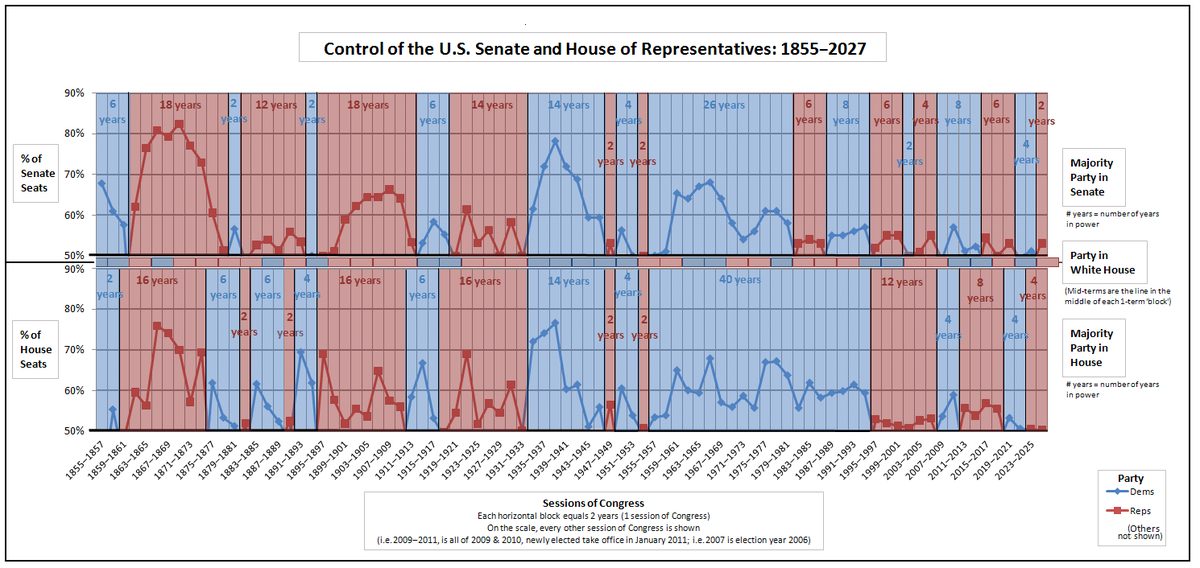
Democrats won control of the U.S. House and Senate in the Nov. 3 midterms, with results reported through Nov. 5. They also won governorships in Texas, Georgia, Ohio, Wisconsin and Iowa.

The change puts Democrats in charge of committee agendas and infrastructure spending. It also comes as voters approved new data center restrictions in 40 of 41 local ballot measures.

Why it matters

Democratic control of Congress changes which infrastructure projects get funded and how closely data center construction is scrutinized.

Questions about this story

Free account needed to ask — your question is kept and asked for you right after sign-up. Answers are public.

No questions yet — be the first to ask.

Key Indicators

237
House seats won by Democrats
Democrats had won 237 House seats as of Nov. 4, against 139 for Republicans.
54
Senate seats won by Democrats
Democrats led the Senate count 54 to 44 as of Nov. 4.
40 of 41
Local data center measures approving restrictions
Voters approved 40 of 41 local ballot measures setting new restrictions on data centers.
90%
Year-over-year growth in data center construction
The Associated General Contractors of America reported data center construction surged 90% year over year.
$11.25B
California Proposition 1 housing bond
The bond package funds income-qualified state and veterans housing programs and related infrastructure.
$36.8B
Infrastructure advance appropriations sought by Cantwell
Sen. Maria Cantwell has pushed Congress to approve $36.8 billion in advance appropriations for infrastructure grants.

Voices

Curated perspectives — historical figures and your fellow readers.

Sign up to generate historical perspectives on this story.

People Involved

Organizations Involved

Timeline

5 events Latest: Today
Tap a bar to jump to that date
  1. ENR details changed construction agenda

    Today Report

    Engineering News-Record reports Democratic wins and data center ballot limits.

  2. Johnson declines minority leadership bid

    Statement

    Speaker Mike Johnson says he will not seek the minority leader post.

  3. Democrats win House and Senate

    Election

    Democrats capture both chambers and several governorships, including Texas.

  4. Voters back data center restrictions

    Ballot measures

    All but one of 41 local data center measures pass, setting new restrictions.

  5. Construction group reports data center building surge

    Industry data

    The Associated General Contractors of America says data center construction is up 90% year over year.

Scenarios

1

Congress restores $36.8 billion in infrastructure advance appropriations

Possible Resolves by Q3 2027

Discussed by: Sen. Maria Cantwell, as reported by Engineering News-Record

Cantwell has pushed Congress to approve $36.8 billion in advance appropriations for infrastructure grants. With Democrats controlling both chambers, she is positioned to move the funding through the Senate Commerce Committee. The test is whether it survives the full appropriations process.

2

House Oversight opens formal DHS contracting investigation

Likely Resolves by Q1 2027

Discussed by: Rep. Robert Garcia, as reported by Engineering News-Record

Garcia vowed before the election to investigate alleged pay-to-play in Department of Homeland Security contracting. As expected Oversight chair, he can issue subpoenas and hold hearings. The trigger is a formal committee announcement or subpoena.

3

More states adopt data center construction limits

Possible Resolves by Nov 5, 2027

Discussed by: Engineering News-Record and local ballot results

Voters approved 40 of 41 local data center restrictions, and New York and Texas already have statewide pauses. If the pattern spreads, more state legislatures could take up siting rules or moratoria. The measure is whether at least five additional states enact statewide limits.

Historical Context

3 moments from history that rhyme with this story — and how they unfolded.

November 1994

Republican Revolution (1994)

Republicans won the House and Senate for the first time in 40 years, powered by the Contract with America. Newt Gingrich became Speaker and committees launched investigations of President Bill Clinton.

Then

Clinton shifted right on welfare and crime, and the two sides fought two government shutdowns in 1995 and 1996.

Now

Republicans held Congress until 2006, and the wave set a template for nationalized midterm campaigns.

Why this matters now

Shows how a midterm wave changes committee chairs and oversight, as Democrats are about to do.

November 2006

Democratic takeover of Congress (2006)

Democrats won both chambers amid the Iraq war and Republican scandals. Nancy Pelosi became the first female Speaker, and committees investigated the Bush administration.

Then

Democrats passed a minimum wage increase and pushed for Iraq withdrawal, while President George W. Bush used vetoes to block some bills.

Now

The Democratic majorities helped pass the Affordable Care Act in 2009 and 2010.

Why this matters now

The closest parallel: a two-chamber Democratic win after a Republican presidency, with oversight and infrastructure on the agenda.

November 2018

Democratic House win (2018)

Democrats won the House but not the Senate, giving them subpoena power and committee gavels. They launched investigations into President Donald Trump and later impeached him.

Then

The House passed bills that stalled in the Republican Senate, and oversight fights dominated Washington.

Now

The 2018 win previewed how a single chamber can drive investigations even without full control of Congress.

Why this matters now

Shows what a House majority alone can do; Democrats now have the Senate as well.

Sources

(8)