
Pull to refresh
Logo
FDA approves first drug to target muscle loss in spinal muscular atrophy

FDA approves first drug to target muscle loss in spinal muscular atrophy

New Capabilities

Scholar Rock's Isembyld wins first-in-class approval after a manufacturing setback delayed it

Today: US commercial shipments announced as imminent

Overview

Updated 1 hour ago

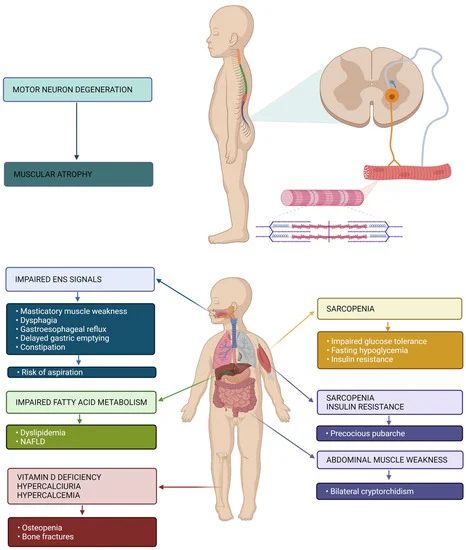
Patients with spinal muscular atrophy (SMA) have had drugs that keep motor neurons alive for a decade. None stopped the muscle wasting that defines advanced disease. On September 11, 2026, the FDA approved the first treatment built to do that.

Isembyld (apitegromab-mstn), from Cambridge-based Scholar Rock, is a monoclonal antibody that blocks myostatin, a protein that limits muscle growth. It works alongside existing SMA drugs, not instead of them. In a 52-week trial, children who got it improved motor function while placebo patients declined. The wholesale price is $11,659 a vial, roughly $310,000 a year for a typical patient.

Why it matters

SMA patients past the point of independent movement now have a drug that rebuilds muscle, not just neurons, at roughly $310,000 a year.

Questions about this story

Free account needed to ask — your question is kept and asked for you right after sign-up. Answers are public.

No questions yet — be the first to ask.

Key Indicators

$310,000
Estimated annual net cost per patient
Wholesale price is $11,659 per vial; a typical 35-45 kg patient receives about three vials every four weeks.
$11,659
Wholesale price per single-use vial
Dosage is calculated by patient age and weight, so the final cost varies.
34.2%
Treated patients with clinically meaningful improvement
Versus 13.5% in the placebo group at one year, among patients aged 2 to 12.
6,600
Estimated eligible SMA patients in the US
Scholar Rock's estimate of patients who qualify under the current label.

Voices

Curated perspectives — historical figures and your fellow readers.

Ever wondered what historical figures would say about today's headlines?

Sign up to generate historical perspectives on this story.

People Involved

Organizations Involved

Timeline

2025 September 2026

6 events Latest: Today
Tap a bar to jump to that date
  1. US commercial shipments announced as imminent

    Today Commercial

    Scholar Rock confirms product will ship in coming days and launches a support program to help patients work with insurers.

  2. Scholar Rock prices the drug and begins its launch

    Commercial

    The company sets a wholesale price of $11,659 per vial and says a typical patient costs about $310,000 net per year.

  3. FDA approves Isembyld, the first muscle-targeted SMA therapy

    Approval

    Approval for adults and children two and older on SMN2-targeted treatment comes about two weeks early, with a priority review voucher.

  4. Scholar Rock refiles with a new manufacturing site

    Regulatory Filing

    The company removes the troubled facility from its application and arranges commercial supply from another site.

  5. FDA rejects the application over manufacturing problems

    Setback

    The FDA issues a complete response letter citing violations at a Catalent plant in Indiana, where inspectors found traces of mammalian hair.

  6. Scholar Rock files its application for apitegromab

    Regulatory Filing

    The company submits a Biologics License Application for the SMA drug, its first.

Scenarios

1

Isembyld wins approval for infants under two

Likely Resolves by End of 2027

Discussed by: Scholar Rock's own pipeline communications; a Phase 2 trial in patients under two is already underway

The current label covers ages two and up, but SMA is most aggressive in infants. If the Phase 2 study shows benefit and safety in children under two, Scholar Rock would seek a label expansion, tapping the sickest segment of the patient population.

2

Subcutaneous Isembyld reaches the market

Possible Resolves by Q2 2028

Discussed by: Company disclosures; mid-stage development of an injectable version

The approved drug is a 60-120 minute intravenous infusion every four weeks. A subcutaneous version would cut that to a quick injection, easing the burden on patients and caregivers and widening the addressable market if it reaches approval.

3

High price and infusion burden slow US uptake

Possible Resolves by Q1 2027

Discussed by: Reuters and analysts focused on rare-disease reimbursement

At roughly $310,000 a year net, payer coverage decisions will shape adoption. Four-times-a-month infusions add logistics and cost. If insurers restrict access or patients struggle with out-of-pocket costs, early sales could fall well short of the eligible 6,600-patient pool.

Historical Context

3 moments from history that rhyme with this story — and how they unfolded.

December 2016

Spinraza approval (2016)

The FDA approved nusinersen (Spinraza), the first treatment for spinal muscular atrophy, a genetic disease that destroys motor neurons. Developed by Ionis and Biogen, the drug is injected into spinal fluid and fixes how the body uses the backup SMN2 gene.

Then

Spinraza became the standard of care and sharply improved survival and motor function in infants and children.

Now

It created the SMN2-targeted drug class that today's SMA patients take as the foundation of their care.

Why this matters now

Isembyld is approved only for patients already on an SMN2-targeted therapy. Spinraza built that base.

May 2019

Zolgensma gene therapy (2019)

The FDA approved onasemnogene abeparvovec (Zolgensma), a one-time gene therapy from Novartis that delivers a working copy of the SMN1 gene. At $2.1 million it was then the most expensive drug ever approved.

Then

It offered a single-dose alternative to lifelong spinal injections for children under two.

Now

It cemented the debate over how to price and cover extremely expensive rare-disease treatments.

Why this matters now

Isembyld's roughly $310,000-a-year price lands in that same coverage and cost conversation.

2000s-2010s

Failed myostatin inhibitors (2000s)

Myostatin, a protein that limits muscle growth, has been a drug target for two decades. Wyeth's stamulumab (MYO-029) failed a 2008 trial in muscular dystrophy, and blockers from Novartis and Pfizer struggled in later-stage testing.

Then

Most programs were abandoned or repurposed.

Now

Directly treating muscle loss kept failing in trials, which is part of why apitegromab's approval is notable.

Why this matters now

Isembyld is the first myostatin inhibitor to reach approval, after two decades of failed attempts at the same mechanism.

Sources

(10)