
Logo
Daily Brief
Following
Why
Louisiana's $745 Million Coastal Verdict Hangs on WWII Contracts

Louisiana's $745 Million Coastal Verdict Hangs on WWII Contracts

Supreme Court weighs whether oil companies can dodge state courts by invoking 80-year-old federal wartime agreements

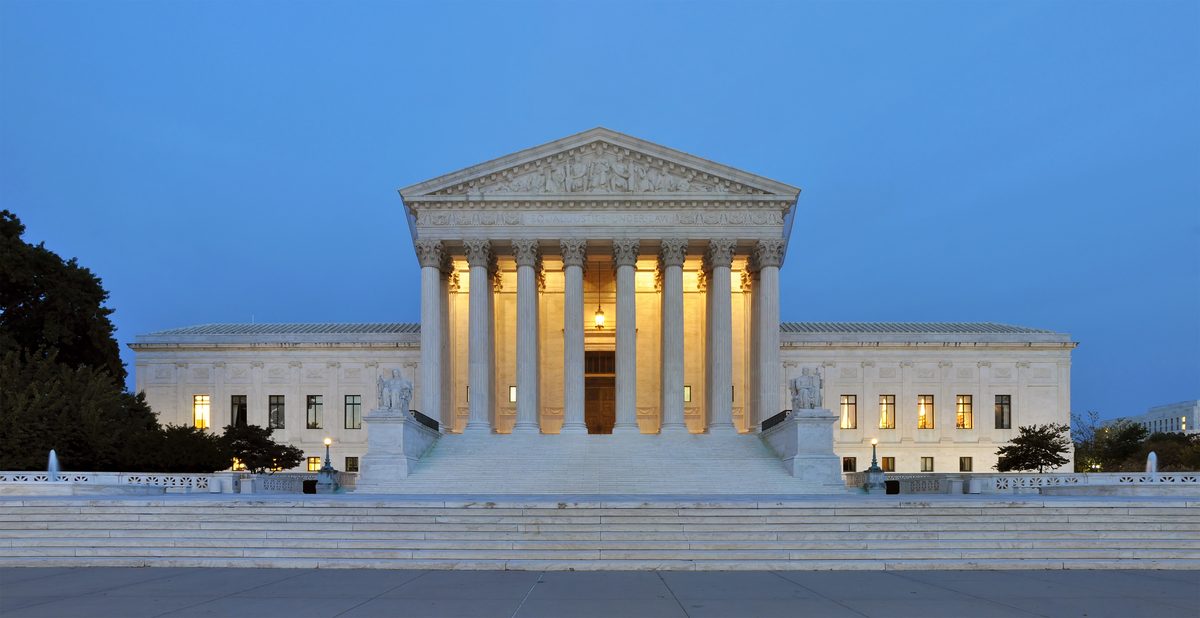
Today: Supreme Court Hears Oral Arguments

Overview

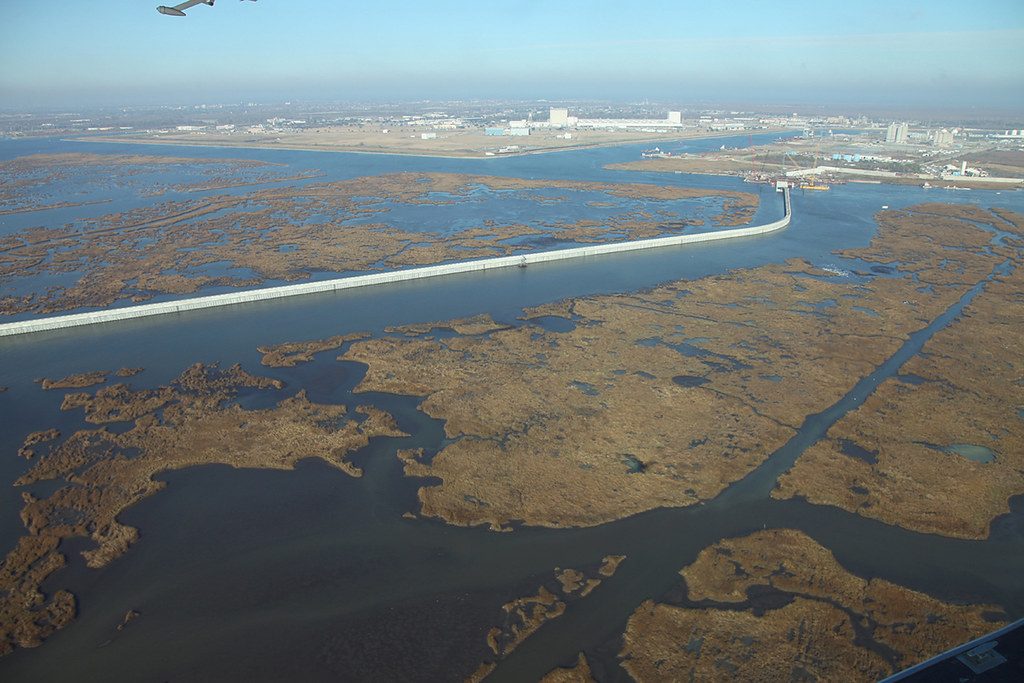
A Louisiana jury ordered Chevron to pay $745 million in April 2025 for wrecking coastal wetlands through decades of oil drilling. Now the Supreme Court will decide if that verdict stands—or if Chevron can escape to federal court by claiming it was acting under federal orders when it refined aviation fuel during World War II. The catch: the lawsuit concerns oil production, not refining, and much of the damage happened decades after the war ended.

At stake is not just Chevron's verdict but the fate of 40 similar lawsuits seeking billions from energy companies across Louisiana's disappearing coast. The legal question is narrow—when can private contractors invoke an 1815 statute to move state lawsuits to federal court? But the practical impact is enormous: if the Supreme Court sides with Chevron, federal courts could dismiss the cases under precedent that's friendlier to industry than Louisiana state judges.

Key Indicators

$745M
Jury verdict against Chevron
Awarded April 2025 for coastal wetland restoration in Plaquemines Parish
~40
Similar pending lawsuits
Filed by Louisiana coastal parishes against oil companies since 2013
1,900 sq mi
Louisiana wetlands lost since 1930s
90% of all coastal marsh loss in the lower 48 states
80+ years
Time since WWII contracts
Oil companies claim wartime agreements justify federal jurisdiction today

People Involved

Samuel Alito
Samuel Alito
Supreme Court Justice (Recused) (Recused due to ConocoPhillips stock holdings)
Jeff Landry
Jeff Landry
Louisiana Governor (Former Attorney General) (Supporting parishes despite pro-industry background)
William Barr
William Barr
Former U.S. Attorney General (Critic of Louisiana lawsuits)
Paul Clement
Paul Clement
Former U.S. Solicitor General, Chevron's Attorney (Arguing for Chevron before Supreme Court)
Liz Murrill
Liz Murrill
Louisiana Attorney General (Defending state court jurisdiction)

Organizations Involved

PL
Plaquemines Parish Government
Louisiana Parish Government
Status: Plaintiff and verdict winner

Louisiana coastal parish that won $745 million verdict against Chevron in April 2025.

CH
Chevron USA Inc.
Major Oil Company
Status: Defendant seeking federal court removal

Second-largest U.S. oil company, fighting to move Louisiana coastal damage cases to federal court.

Petroleum Administration for War
World War II Federal Agency (Defunct)
Status: Historical agency central to legal dispute

WWII agency that controlled oil production and refining to support war effort.

Supreme Court of the United States
Federal Judiciary
Status: Deciding jurisdictional question

Hearing arguments on whether WWII contracts allow federal court removal.

Timeline

  1. Supreme Court Hears Oral Arguments

    Court Proceeding

    Justices question whether oil production relates to WWII refining contracts enough to justify federal jurisdiction.

  2. Justice Alito Recuses Himself

    Court Action

    Alito steps aside six days before arguments due to ConocoPhillips stock holdings.

  3. Chevron Files Supreme Court Brief

    Legal

    Former Solicitor General Paul Clement argues 2011 statutory amendment allows removal for WWII-era contracts.

  4. Supreme Court Grants Certiorari

    Court Decision

    High court agrees to hear appeal on federal officer removal statute, resolving circuit split.

  5. Jury Awards $745 Million Against Chevron

    Court Decision

    After four-week trial, Plaquemines Parish jury finds Chevron liable for wetlands damage and orders restoration payment.

  6. Fifth Circuit Affirms State Court Jurisdiction

    Court Decision

    Appeals court rules 2-1 that WWII contracts don't justify federal removal, clearing way for trial.

  7. District Court Reopens Case in State Court

    Court Decision

    After Supreme Court denies certiorari on initial removal attempt, case proceeds in Louisiana state court.

  8. Fifth Circuit Rejects Federal Removal

    Court Decision

    Appeals court unanimously holds oil companies identified nothing more than 'merely being subject to federal regulations.'

  9. Attorney General Jeff Landry Intervenes

    Political

    Louisiana AG joins parish lawsuits despite pro-industry background, citing state's coastal restoration interests.

  10. Six Parishes File 42 Lawsuits Against Oil Companies

    Legal

    Plaquemines, Cameron, Jefferson, and other parishes sue 98 companies for coastal wetlands damage under state law.

  11. Louisiana Enacts Coastal Zone Management Act

    Legislation

    State law requires oil companies to obtain permits and restore land damaged by drilling operations.

Scenarios

1

Supreme Court Rules for Chevron: $745M Verdict Vacated, Cases Move to Federal Court

Discussed by: Washington Legal Foundation, industry advocates, former AG William Barr

The Court holds that the 2011 amendment's 'relating to' language allows removal when contractors acted under comprehensive federal wartime agreements. All 40 Louisiana coastal lawsuits transfer to federal court, where Fifth Circuit precedent on preemption likely results in dismissal. The $745 million Plaquemines verdict is vacated. Oil companies avoid billions in potential state court liability. Louisiana parishes lose their main legal avenue for coastal restoration funding, though the ruling establishes nationwide precedent protecting federal contractors from state court judgments for work connected to government contracts.

2

Supreme Court Affirms Fifth Circuit: Cases Stay in Louisiana State Courts

Discussed by: Louisiana AG Liz Murrill, environmental advocates, parish attorneys

The Court rules that oil production decades after WWII doesn't sufficiently 'relate to' wartime refining contracts, or that contractors weren't truly 'acting under' federal officers. The narrow federal removal exception doesn't apply. The $745 million verdict stands and remaining 40 cases proceed in Louisiana state courts, where juries have proven sympathetic to coastal damage claims. Oil companies face billions in potential liability. The ruling reaffirms state sovereignty over environmental enforcement and limits contractors' ability to escape state courts by invoking ancient federal contracts.

3

Court Splits 4-4: Fifth Circuit Ruling Stands by Default

Discussed by: SCOTUSblog analysts noting Alito recusal

With Justice Alito recused due to ConocoPhillips holdings, the remaining eight justices deadlock along ideological lines. A 4-4 tie affirms the Fifth Circuit's decision to keep cases in state court without setting national precedent. The $745 million verdict stands and Louisiana cases proceed, but the jurisdictional question remains unresolved for future cases in other circuits. The tie satisfies neither side fully—parishes win this round but lack definitive Supreme Court backing, while oil companies preserve arguments for future removal attempts elsewhere.

4

Narrow Ruling on Statutory Interpretation, Case Remanded

Discussed by: Legal scholars specializing in federal jurisdiction

The Court issues a narrow decision clarifying the test for 'acting under' federal officers after the 2011 amendment but remands to the Fifth Circuit to apply the new standard. The decision addresses whether a 'causal nexus' or 'contractual direction' test applies and what level of federal control suffices. The $745 million verdict remains on hold. Lower courts spend years applying the new framework to individual cases, creating prolonged uncertainty. This technical ruling resolves the circuit split on statutory interpretation without clearly favoring either parishes or oil companies in the underlying disputes.

Historical Context

Watson v. Philip Morris (2007)

2007

What Happened

The Supreme Court rejected Philip Morris's attempt to remove state lawsuits over 'light' cigarette marketing to federal court under the federal officer removal statute. Philip Morris claimed it was 'acting under' federal officers because it followed FTC testing protocols. The Court held that merely complying with federal regulations doesn't create the 'acting under' relationship required for removal—contractors must provide 'affirmative assistance' in executing federal duties under actual direction or control.

Outcome

Short Term

Supreme Court ruled against Philip Morris, keeping state lawsuits in state courts.

Long Term

Congress responded in 2011 by amending the statute to expand removal rights, changing 'for any act' to 'for or relating to any act.'

Why It's Relevant Today

Chevron argues the 2011 amendment overturned Watson's narrow reading. The parishes counter that even under the amended statute, oil production decades after WWII doesn't sufficiently 'relate to' wartime refining contracts to justify removal.

Massachusetts v. EPA (2007)

2007

What Happened

Twelve states sued the EPA in federal court to force regulation of greenhouse gas emissions under the Clean Air Act. The Supreme Court recognized Massachusetts's 'well-founded desire to preserve its sovereign territory'—including protecting coastline from climate impacts—as establishing standing to sue. The Court sided with states seeking stronger federal environmental enforcement.

Outcome

Short Term

EPA was ordered to regulate greenhouse gases if they endanger public health.

Long Term

Established that states have special sovereign interests in protecting their territory and natural resources from environmental harm.

Why It's Relevant Today

While Massachusetts sought federal regulation, Louisiana parishes are asserting state sovereignty to enforce their own coastal protection laws against federal interference. Both cases involve coastal states claiming special authority to protect disappearing shorelines.

BP Deepwater Horizon Settlements (2010-2016)

2010-2016

What Happened

After the 2010 Gulf oil spill, BP faced thousands of lawsuits consolidated in federal court under multidistrict litigation. The company ultimately paid approximately $69 billion in settlements, cleanup costs, and penalties. Louisiana received over $8 billion for coastal restoration from the settlement, including funding for the $3 billion Mid-Barataria Sediment Diversion project in Plaquemines Parish.

Outcome

Short Term

BP settled most claims without prolonged trials, avoiding extended litigation.

Long Term

Louisiana gained massive coastal restoration funding but the Barataria project has stalled due to local opposition.

Why It's Relevant Today

The BP settlement shows oil companies sometimes prefer quick federal settlements over state court trials. It also demonstrates the enormous sums at stake in coastal restoration—context for why Chevron is fighting so hard to avoid the $745 million verdict and potential billions more from pending cases.

10 Sources: